.png)
.png)

.png)
.png)


The U.S. restaurant industry navigated a challenging first quarter in 2026, marked by macroeconomic headwinds, unfavorable weather, and cautious consumer spending. Yet, within the breakfast-first sector, a clear narrative is emerging: The era of the traditional legacy diner is fading, making way for premium, experience-driven concepts. And at the forefront of this shift is First Watch. Armed with a differentiated culinary menu, rapid but disciplined expansion, and a highly resilient consumer base, the brand is not only defying broader casual dining trends but is fundamentally rewriting the playbook for daytime dining.
Over the past few years, the breakfast-first restaurant category has bifurcated into two distinct camps: premium and experience-driven concepts capturing visit share, and legacy diner-style chains, many of which are struggling to keep up. While Q1 2026 proved to be a tighter traffic environment overall amid macroeconomic uncertainty and unfavorable weather conditions across the U.S., several experience-focused brands and resilient fan-favorites continued growing their footprints – and their audiences.
First Watch led the pack in overall visit growth as it continued expanding its store count, while average visits per location held steady – demonstrating its ability to scale without diluting demand at existing locations – while Snooze saw a 1.1% increase in visits per location.
Conversely, the steepest laggards in the segment were legacy diner chains IHOP, Denny’s, and Huddle House, all of which saw overall visits decline as they continued rightsizing their footprints, with visits per location also modestly down. These brands are increasingly tracking closer to casual dining peers like Applebee’s and Outback Steakhouse, which have faced significant headwinds in recent months.
Still, among legacy diners, Waffle House stood out as a clear outperformer in Q1 2026, likely due in part to its status as a regional institution across much of the South. And the chain’s operational resilience may have also played a role: While Winter Storm Fern pushed the so-called “Waffle House Index” into the red across much of the region in late January, the brand’s unique disaster-readiness appears to have enabled some locations to reopen quickly or avoid closure entirely.
Ultimately, despite a challenging macroeconomic environment, brands that leverage a differentiated culinary menu, high-touch customer service, or fierce brand loyalty are successfully navigating the highly fragmented daypart much better than their traditional diner counterparts.
While several premium concepts have successfully carved out a lucrative niche in breakfast-first dining, First Watch has redefined the category. By blending the elevated, chef-driven culinary experience of a localized brunch spot with the operational efficiency of a national powerhouse, First Watch has created a model that sees success across multiple regions of the U.S. This unique positioning provides the brand with a massive structural advantage, fueling a physical growth trajectory that far outpaces its competitors.
Importantly, visitation data also reinforces that First Watch’s restaurant classes from 2024 and 2025 have consistently kept pace with the maturity curve of recent openings. An analysis of visit-per-location trends for First Watch locations opened in 2024 and 2025 versus the chain’s nationwide fleet reveals that the class of 2024 outpaced nationwide trends, while the 2025 cohort – even when factoring in the high volume of openings that took place in Q3 2025 – has also kept pace. These are incredibly positive indicators for a brand rapidly scaling its national footprint.
First Watch has set a long-term goal of reaching more than 2,200 restaurants across the United States – an ambitious target that would more than triple its current size. Reaching this milestone is achievable, but it will require the brand to meaningfully deepen its penetration in large coastal and Sun Belt metros, where it remains under-penetrated relative to its proven suburban strongholds. Placer.ai foot traffic data across more than 100 Core Based Statistical Areas (CBSAs) reveals that First Watch's unit economics are remarkably consistent, confirming the model works across multiple geographies. While newer markets like New York, Chicago, Boston, and Las Vegas currently generate lower visits per capita than the chain's core Sun Belt and Midwest suburban markets, there are significant opportunities for expansion. First Watch's breakfast-first model, strong unit-level economics, and growing brand recognition give it a credible platform to aggressively capture market share in these new territories.
Despite slowing early-spring trends, First Watch remains well-positioned to hit its 2026 same-store sales growth target of 1% to 3%. This confidence is rooted in a few key factors. First, the brand benefits from a resilient core consumer who is materially less sensitive to macroeconomic pressures than the traditional diner customer, providing a much higher floor for baseline traffic. Second, First Watch leverages reliable pricing power, as its premium positioning and highly anticipated seasonal menu rotations consistently drive check growth. Finally, the company's commitment to operational excellence through its company-owned model ensures that execution remains strong and the guest experience is uncompromised, even during slower traffic periods. By driving outsized performance from its newest units and maintaining a highly loyal customer base, the brand is not merely surviving the breakfast category's headwinds; it is actively redefining what leadership in daytime dining looks like.
For more data-driven dining insights, follow Placer.ai/anchor.
Placer.ai leverages a panel of tens of millions of devices and utilizes machine learning to make estimations for visits to locations across the US. The data is trusted by thousands of industry leaders who leverage Placer.ai for insights into foot traffic, demographic breakdowns, retail sale predictions, migration trends, site selection, and more.

The fast-casual sector has long been defined by its sweet spot within the restaurant industry, combining the convenience of fast food and the quality of casual dining. For years, CAVA and sweetgreen have stood as the standard-bearers of the health-forward movement, expanding their store footprint while building fiercely loyal followings among affluent consumers. However, Q1 2026 foot traffic data suggests that these two brands are now on diverging trajectories. While overall visits to both chains grew – thanks in part to ongoing expansions – CAVA saw its average visits per venue grow as well, while sweetgreen's per-location traffic remained flat YoY.
The contrast between same-store visit trends is even more striking. Over the past six months, same-store visits to CAVA have been uniformly positive – and 2026 traffic was particularly strong. Meanwhile, sweetgreen has seen consistently negative same-store visit declines, with March 2026 same-store visits down 7.6% compared to CAVA's 6.8% increase. This represents a meaningful spread between two brands competing for the same premium consumer.
This divergence is the result of structural differences in menu mix and value perception. Over the past six months, CAVA has rolled out strategic menu enhancements designed to reengage with middle-income consumers who may have turned away from fast-casual options in recent months and elevate its overall value perception.
Leaning heavily into its warm, protein-forward architecture, the brand has introduced additions like premium glazed salmon as a protein option alongside new variations of its highly successful spicy chicken and steak offering. Alongside these protein upgrades, CAVA has refreshed its seasonal roasted vegetable lineups and also introduced smaller items like harissa pita chips, sides, and dips. This ensures that the menu remains dynamic enough to drive incremental visits and avoid customer fatigue while maintaining the highly customizable, assembly-line efficiency that protects its strong unit economics. The diversity of CAVA’s menu – both in terms of innovation and pricing – have helped to drive down the chain’s captured trade area median household income the past four quarters, according to data from STI: Popstats combined with Placer data.
To close this widening gap, Sweetgreen has also planned several menu changes in 2026 focused on operational simplicity, value perception, and a major new category expansion. The brand kicked off the year by highlighting its health-forward roots through a limited-time menu collaboration with Dr. Mark Hyman that utilized existing ingredients, followed by the launch of the seasonal Winter Harvest Bowl and the highly requested return of shredded cheese to the core menu. However, the most significant news is Sweetgreen's planned mid-2026 rollout of wraps.
Currently undergoing rigorous stage-gate testing in Los Angeles, the Midwest, and Manhattan, the wrap platform – featuring accessible price points starting at $10.95 and capping below $15 for in-store pickup – is designed to aggressively target consumer value sensitivity. Management noted that wraps are intended to build upon their 2025 efforts (which included increased protein portions and $12 Daily Greens) to prove to budget-conscious, quality-driven diners that Sweetgreen can deliver a compelling, high-value meal without compromising its premium brand identity.
Ultimately, the Q1 2026 data serves as a critical inflection point. CAVA is actively gaining share in a contracting category by mastering geographic diversification, daypart breadth, and perceived value. Sweetgreen has the brand identity, the affluent customer base, and the regional runway to recover, but the strategic decisions made over the next 12 to 18 months will dictate whether this current slump is a temporary setback or a permanent competitive reality.
For more data-driven dining insight, visit placer.ai/anchor
Placer.ai leverages a panel of tens of millions of devices and utilizes machine learning to make estimations for visits to locations across the US. The data is trusted by thousands of industry leaders who leverage Placer.ai for insights into foot traffic, demographic breakdowns, retail sale predictions, migration trends, site selection, and more.

Events are foundational to New Orleans’ identity and economic model. From the Sugar Bowl to Jazz Fest and Mardi Gras, to conferences, conventions, exhibitions and meetings of all sizes, the city operates on a year-round cycle of large-scale gatherings that drive consistent visitor inflows. Over the past 12 months, 64.6% of weekend visitors to New Orleans’ downtown, including the French Quarter, Central Business District (CBD), and Arts District, were domestic tourists coming from more than 250 miles away. And as travel behavior continues to evolve post-COVID – making it more difficult to predict attendance patterns from prior-year trends – the complexity of hosting at scale requires increasingly sophisticated, data-driven operational coordination.
Perhaps no event demonstrates this model – and this need – more clearly than Mardi Gras. Running from January 6th through Mardi Gras Day, the carnival season culminates in a surge of parades and celebrations that bring major crowds downtown (French Quarter, CBD, Arts District) and all along the uptown parade route.
Crucially, many of those visitors come from within Louisiana, making the festival a powerful vehicle for strengthening ties between the city and surrounding communities: During the final 12 days of Mardi Gras 2026, 54.2% of them came from within Louisiana, compared to 23.5% during the rest of the year.
And despite an uncertain macroeconomic environment, Mardi Gras’ audience continues to expand. From the Krewe of Cleopatra on February 6 through Mardi Gras Day on February 17, out-of-market visits to downtown New Orleans (French Quarter, CBD, Arts District) increased 10% year over year, reaching their highest level since 2020.
Data also shows that Mardi Gras draws a surprisingly diverse audience. To be sure, young revelers are a big part of the story – on Mardi Gras Day, the French Quarter sees an influx of “Contemporary Households”, a young-skewing segment that includes singles, couples without children, and non-family households. The median household income of the Quarter’s trade area also declines on the big day, as students and early-career professionals crowd into the neighborhood to party.
But some of the season's more family-friendly parades – like the Krewe of Bacchus which took place this year on Sunday, February 15th – have a decidedly different vibe.
On the day of the parade, families gather early along St. Charles Avenue, setting up tents and picnic tables and sharing traditional local food ahead of the evening procession. And surrounding neighborhoods such as the Garden District experience a measurable rise in affluent family segments and median household income, highlighting Mardi Gras’ broad and diverse appeal.
Of course, managing an event of this magnitude requires coordination across agencies, stakeholders, and neighborhoods. And in a post-pandemic environment where past attendance patterns cannot always serve as reliable benchmarks, data has become a critical tool for decision-making.
Audience insights now play a central role in operational planning – identifying where visitors congregate, estimating crowd volumes, and informing preparation by law enforcement, city officials, and other city stakeholders. When large gatherings are anticipated in specific corridors or blocks, recent visitation trends provide actionable context that helps partners allocate resources efficiently and prepare accordingly.
Few cities are as synonymous with celebration as New Orleans. And by combining tradition, diversity, and data-driven operational precision, the city has built the capacity to host complex, high-volume gatherings with consistency and coordination year after year.
.avif)
With roughly one in eight Americans now using GLP-1 medications for weight loss, their rapid adoption is shaping up to be one of the most consequential behavioral shifts in recent memory – with wide-ranging implications for businesses tied to how people spend their time and money.
We analyzed the data to understand how GLP-1 usage may be influencing real-world retail and dining foot traffic. How is grocery store visitation changing? What’s happening in limited-service dining? And which other categories are gaining from a heightened focus on health and wellness – further accelerating trends that began to take hold after the pandemic?
Research from Cornell University shows that GLP-1 users reduce household grocery spending by an average of 5.3% within six months of starting a medication, with the most significant pullbacks concentrated in calorie-dense, processed categories. At the same time, a handful of health-oriented foods – including yogurt, fresh fruit, nutrition bars, and meat snacks – are seeing increased spend.
And foot traffic data points to a parallel shift in where consumers are shopping, with a growing share of grocery visits flowing toward fresh-format stores like Trader Joe’s and Sprouts Farmers Market that emphasize high-quality perishables, curated health-oriented assortments, and an elevated in-store experience. While this pivot has been underway for several years, reflecting a broader post-pandemic focus on health and wellness, its recent acceleration coincides with the rise in GLP-1 use.
From Q1 2022 to Q1 2026, these chains steadily expanded their share of overall grocery foot traffic, with momentum accelerating beginning in Q1 2024, even as some experienced per-store softness amid a challenging consumer environment. Over the same period, the median household income within fresh-format chains’ captured markets, which had remained largely stable through early 2024, began to decline. This trend suggests a broadening customer base, as households across income brackets increasingly prioritize higher-quality food and allocate a larger share of their grocery trips to fresh formats.
The reallocation of spending also extends beyond the grocery aisle. Foot traffic data points to a meaningful reordering of food-away-from-home visits over the past three years, with healthier dining segments outperforming more indulgent ones – underscoring a broader shift toward more nutritious options that GLP-1 adoption may be helping to reinforce.
Frozen yogurt chains outpaced ice cream shops in year-over-year visit growth in both 2024 and 2025, as consumers gravitated toward lighter frozen treats. Smoothie and juice chains also captured growing demand, buoyed by expanding footprints from brands like Tropical Smoothie Cafe, Smoothie King, and Playa Bowls, while fast-casual similarly pulled ahead of QSR.
Fitness participation has been on the rise since the pandemic, and the data suggests gym habits are becoming more consistent over time – a trend that GLP-1 users, who often incorporate structured exercise into their routines, may be helping to reinforce.
Between Q1 2023 and Q1 2026, the share of visitors to leading gyms stopping by at least three times in an average month rose from 44.8% to 46.8%, while the share visiting at least four times rose from 37.3% to 39.1%. For a growing segment of the population, going to the gym has become a regular part of the weekly routine – with implications for fitness brands and the broader ecosystem of health-oriented businesses competing for this newly routine-driven consumer.
As consumers deepen their focus on health and fitness, the body transformations associated with GLP-1 use are also reshaping apparel demand. Alongside a growing need for wardrobe replenishment, GLP-1 users are investing more in their appearance and rediscovering the experience of shopping for clothes.
And this trend aligns with recent foot traffic data. Even as discretionary spending continues to face headwinds in a challenging macroeconomic environment, clothing retailers are seeing consistent year-over-year visit growth, driven in large part by the off-price sector – with each year outpacing the broader discretionary retail category by a widening margin. Apparel is pulling away from the pack, likely driven in part by a consumer whose relationship with their body – and with shopping – has fundamentally changed.
The GLP-1 era is still in its early stages – but as programs like Amazon’s new GLP-1 management program expand access, these drugs are likely to continue reshaping shopping behavior in the months and years ahead. The data points to a consumer who is eating differently, moving more, and spending in ways that reflect a new set of priorities, further amplifying the focus on health and wellness that has emerged over the past several years.
For more data-driven retail and dining insights, visit Placer.ai/anchor.

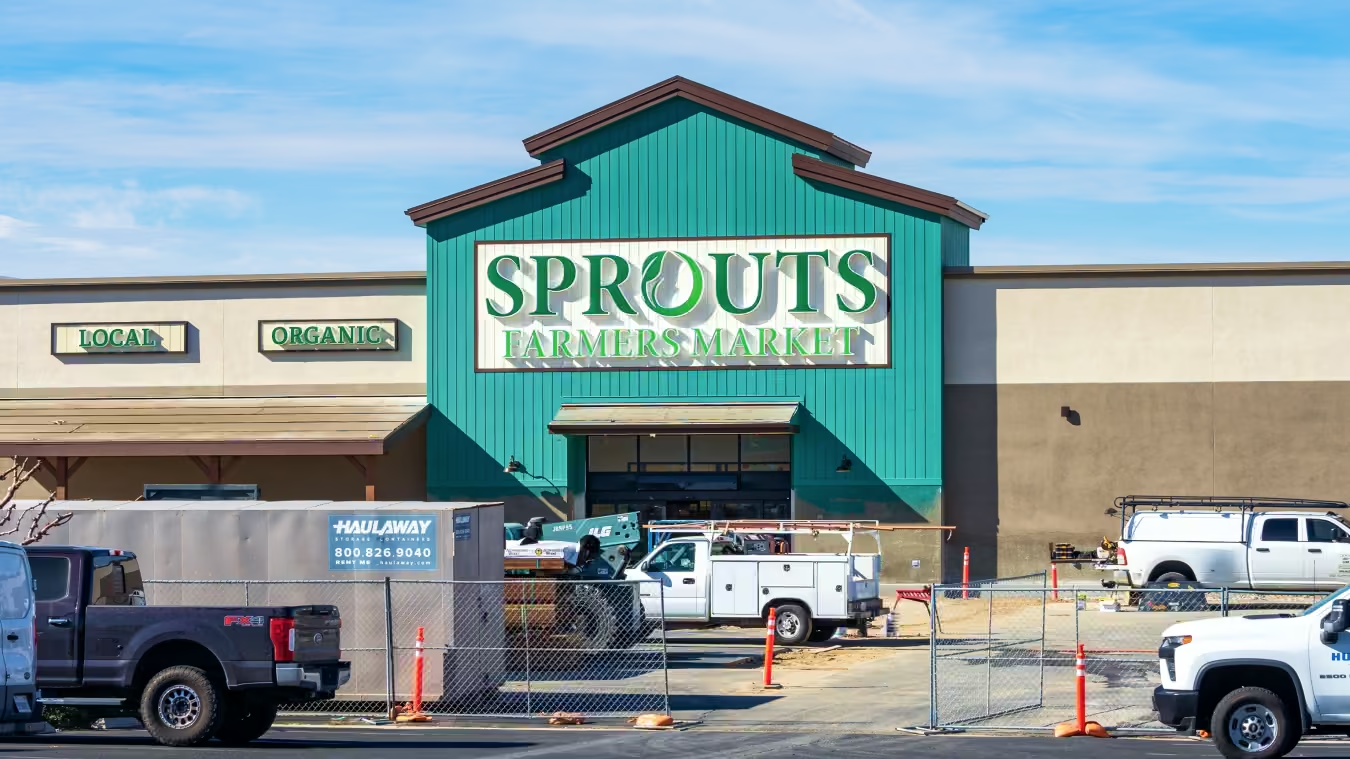
Sprouts Farmers Market entered 2026 expecting a challenging quarter – and Q1 foot traffic trends bore that out. Against a Q1 2025 comparison where comps surged 11.7% year over year (YoY), the company guided Q1 2026 comparable sales to decline between -3.0% and -1.0%, citing both the tough lap and continued pressure on grocery shoppers from elevated food prices. And same-store visits also dropped, falling between -3.0% and -6.0% YoY in Q1.
Still, overall foot traffic rose 1.8%, supported by the 37 stores opened in fiscal 2025 and additional locations added in early 2026, which helped offset softness at existing stores.
Against this backdrop, Sprouts is making several forward-looking investments that could support a traffic recovery later this year. Continued expansion, a new loyalty program launched in 2025, and ongoing merchandising innovation – alongside its transition to self-distribution for fresh meat – all position the company to compete on both quality and value as macro conditions evolve.
Will Sprouts return to same-store visit growth in Q2?
Visit Placer.ai/anchor to find out.
Placer.ai leverages a panel of tens of millions of devices and utilizes machine learning to make estimations for visits to locations across the US. The data is trusted by thousands of industry leaders who leverage Placer.ai for insights into foot traffic, demographic breakdowns, retail sale predictions, migration trends, site selection, and more.
.avif)
In February 2026, Chipotle unveiled its "Recipe for Growth" plan to reverse declining sales by improving operations, boosting marketing, and refreshing its menu. And though the plan has only been in place for a couple of months, traffic data suggests that it may already be having a positive impact on foot traffic to the chain.
After three consecutive quarters of year-over-year declines in average visits per location, Chipotle's foot traffic trends are showing signs of recovery. In Q1 2026, average visits per location were nearly flat (-0.2% YoY), while overall visits grew 5.8% – the strongest growth seen over the past year.
Several branding and menu innovations likely contributed to Chipotle's traffic recovery, including the high protein menu launched in late December 2025 and partnerships with athletes and sporting events. The biggest single driver, however, appears to have been the return of Chicken al Pastor on February 10, 2026 – a fan-favorite protein that had generated more social media requests for its comeback than any other LTO in the chain's history. In the month of its launch, overall visits rose 10.1% YoY and same-store visits grew 5.1%.
Still, the following month, overall visits were up just 3.6% and same-store visits were flat – suggesting that popular menu items can generate meaningful visit spikes, but those spikes may not automatically translate into lasting traffic bumps.
Chipotle appears to be leaning into this dynamic rather than fighting it. Starting April 28, the chain is rotating out Chicken al Pastor in favor of Honey Chicken – its best-performing LTO ever – effectively betting that a steady drumbeat of novelty and scarcity can sustain traffic where any single item cannot.
Another pillar of the company's "Back to Growth" plan entailed creating "new occasions that drive demand into our restaurants" – and Chipotle seems to have accomplished just that with its successful "Tatted Like a Chipotle Bag" BOGO promotion.
On March 13, 2026, from 3 to 4 PM local time, Chipotle offered an in-store BOGO entrée to any customer sporting a tattoo – real, temporary, or hand-drawn – a nod to the iconic tattoo-style graphics on a Chipotle bag. The one-hour activation drove a 55.3% spike in visits above the year-to-date average, with the highest daily visit count recorded since Placer.ai began tracking Chipotle's traffic in 2018. Chipotle also reported March 13th 2026 as the highest daily sales day in the chain's history.
That a single one-hour, in-store promotion could shatter the chain's all-time sales record speaks to the power of Chipotle's brand equity and the effectiveness of leaning into what makes it culturally distinct.
The early results suggest that Chipotle's 'Recipe for Growth' is already working – Q1's traffic recovery was built on a potent mix of menu innovation, viral activations, and renewed cultural relevance. But while the chain's strategy of cycling LTOs and engineering shareable moments has clearly rekindled consumer excitement – whether this delivers consistent same-store visit growth will be the real measure of "Recipe for Growth" success.
For more data-driven dining insights, visit placer.ai/anchor

This report includes data from Placer.ai Data Version 2.0, which implements improvements to our extrapolation capabilities, adds short visit monitoring, and enhances visit detection.
The first American mall opened in 1956 and reinvented retail – within a decade there were over 4,500 malls across the country. But a rise in e-commerce coupled with the oversaturation of mall options across the country paved the way for mall visits to slow, and many predicted that malls would go the way of the dinosaur.
But although malls were hit hard over the past few years as lockdowns and rising costs contributed to a significant drop in foot traffic, shopping centers have proven resilient. Leading players in the space have consistently reinvented themselves and explored alternate ways to draw in crowds – and as inflation cools, malls are bouncing back as well.
This white paper analyzes the Placer.ai Shopping Center Industry – a collection of over 3000 shopping centers across the United States – as well as the Placer.ai’s Mall Indexes, which focus on top-tier Indoor Malls, Open-Air Shopping Centers, Outlet Malls. The report examines how visits are shifting and where behaviors are changing – and where they’re staying the same – and takes a closer look at the strategies malls are using to attract shoppers in 2024.
Malls experienced a rocky few years as pandemic-related restrictions and economic headwinds kept many shoppers at home, and visits to all mall types in 2021 were between 10.7% to 15.3% lower than in 2019. But foot traffic trends improved significantly in 2022 – likely due to the fading out of COVID restrictions.
By 2023, visits to the wider Shopping Center Industry were just 2.3% lower than they had been in 2019, and the visit gaps for Indoor Malls and Open-Air Shopping Centers had narrowed to 5.8% and 1.0% lower, respectively. Outlet Malls also saw visits ticking up once again, with the visit gap compared to 2019 narrowing to 8.5% in 2023 after having dropped to 11.3% in 2022. This more sustained foot traffic dip may stem from consumers’ desire to save on gas costs or the impacts of inclement weather. However, the narrowing visit gaps suggest that shoppers are increasingly returning to the segment, and foot traffic may yet pick up again in 2024.
COVID-19 impacted more than just visit numbers – it also changed in-store consumer behavior. And now, with the Coronavirus a distant memory for many, some of these pandemic-acquired habits are fading away, while other shifts appear to be holding steady.
One visit metric that appears to have reverted to pre-COVID norms is the share of weekday vs. weekend visits. Weekday visits had increased in 2021 – at the height of COVID – as consumers found themselves with more free time midweek, but the balance of weekday vs. weekend visits has now returned to 2019 levels.
In 2023, the Shopping Center Industry, which includes a number of grocery-anchored centers along with open-air shopping centers and their relatively large variety of dining options, saw the largest share of weekday visits, followed by Indoor Malls. Outlet Malls received the lowest share of weekday visits – around 55% – likely due to the longer distances usually required to drive to these malls, making them ideal destinations for weekend day trips.
While the day of the week that people frequent malls hasn't changed significantly since 2019, there is one notable difference in mall foot traffic pre- and post-pandemic. Almost all mall categories are seeing fewer during the late morning-midday and late evening dayparts, while the amount of people heading to a mall in the afternoon and early evening has increased.
In 2019, Indoor Malls saw 20.1% of visits occurring between 10:00am and 1:00pm, but that share decreased to 18.6% in 2023. Meanwhile, the share of visits between 4:00-7:00 pm rose from 29.1% in 2019 to 32.4% in 2023. Similar patterns repeated across all shopping center categories, with the 1:00-4:00pm daypart seeing a slight increase, the 4:00-7:00 pm daypart receiving the largest boost and the 7:00-10:00 pm daypart seeing the largest drop. So although changes in work habits have not altered the weekly visit distribution, it seems like hybrid workers are taking advantage of their new, and likely more flexible schedules to frequent malls in the afternoon instead of reserving their mall trips for after work. The significant numbers of Americans moving to the suburbs in recent years may also be contributing to the decline of late night visits, with these suburban newcomers perhaps less likely to spend time outside the house during the evening hours.
Although malls have enjoyed consistent growth in foot traffic over the past two years, visits still remain below 2019 levels. How can shopping centers attract more shoppers and recover their pre-COVID foot traffic?
Some malls are attracting visitors by looking beyond traditional retail with offerings such as gyms, amusement parks, and even entertainment complexes. And with more traditional mall anchors shutting their doors than ever, even smaller shopping centers are adding lifestyle experiences options in newly vacant spaces – and incorporating unique elements into traditional retail spaces.
In September 2023, the Chandler Fashion Center in Arizona opened a giant SCHEELS store in its mall. The 250,000-square-foot sporting goods store boasts more than just sneakers – visitors can ride on a 45-foot Ferris Wheel or marvel at a 16,000-gallon saltwater aquarium. And monthly visitation data to the mall reveals the power of this new retail destination, with foot traffic to the mall experiencing a major jump from October 2023 onward. The excitement of the new SCHEELS seems to be sustaining itself, with February 2024 visits 23.3% higher than the same period of 2023.
Restaurants, too, can help bring people into malls. The Southgate Mall in Missoula, Montana, experienced a jump in monthly visits following the opening of a Texas Roadhouse steakhouse in November 2023. Customers seem to be receptive to this new addition – the mall saw a sustained increase in foot traffic from November 2023 onward, with year-over-year (YoY) visit growth of 17.0% in February 2024.
The addition of Texas Roadhouse provides Missoula residents with a family-friendly dining experience while tapping into the evergreen popularity of steakhouses.
Malls that don’t want to choose between adding a dining option and incorporating a novel entertainment venue can blend the two and go the “eatertainment” route. One shopping center – North Carolina’s Cross Creek Mall – is proving just how effective these concepts can be for a mall looking to grow its foot traffic.
Eatertainment destination Main Event opened at the mall in August 2023, bringing laser tag, video games, virtual reality, and 18 bowling lanes with it. Main Event’s opening also provided a boost in foot traffic to the mall – monthly visits to Cross Creek Mall surged following the opening. And this foot traffic boost sustained itself, particularly into the colder winter months – January and February 2024 saw YoY growth of 12.3% and 25.1%, respectively.
Integrating entertainment options at malls is one strategy for driving visits, but there are plenty of other ways to bring people through the doors. Pop-ups have been a particularly popular option of late, especially as more online brands venture into the world of physical retail. And malls, which typically tend to leave a small portion of their storefronts vacant, can be the perfect place to host a retailer for a limited time.
One brand – Shein – has been a leader in the pop-up space, bringing its affordable fashion to malls in Las Vegas, Seattle, and Indianapolis. These short-term residencies – typically no longer than three to four days – allow shoppers to try the popular online retailer’s products before they buy.
Shein has enjoyed success with its mall residencies, evidenced by the foot traffic at the Woodfield Mall in Illinois, which hosted a three-day pop-up from December 15-17, 2023. The retail event was hugely popular, with visits reaching Super Saturday (the last weekend before Christmas) proportions – even though this year’s Super Saturday coincided with Christmas Eve Eve (December 23rd) and drove unusually high traffic spikes.
Shein pop-ups are typically very short – no more than three to four days. This format, known for creating a sense of urgency among shoppers, has proven powerful in driving store visits. But can longer-lasting pop-ups find success as well?
Foot traffic data from pop-ups hosted by Swedish home furnisher IKEA suggests that yes – longer-term residencies can be successful. The chain is working on growing its presence across the country, particularly in malls. To that end, IKEA has been experimenting with mall pop-ups, beginning with a six-month residency at the Rosedale Center in Roseville, Minnesota.
IKEA opened its store on February 16, 2024, and visits to the mall increased significantly immediately after. The first week of the pop-up saw a 12.9% growth in visits compared to a January 1-7, 2024 baseline. And by the third week of the pop-up, there were still noticeably more people frequenting the mall than before the launch.
The luxury retail segment has had a great few years, and malls are tapping into this popularity. Nearly 40% of new high-end store openings in 2023 were in mall settings, many in Sunbelt states like Texas, Florida, and Arizona, perhaps driven in part by demand from an influx of wealthy newcomers to those states.
A comparison of upscale shopping malls to standard shopping centers across Sunbelt States reveals just how popular high-end retail is in the region. Malls with a high percentage of luxury and designer stores like the Lenox Square Mall in Georgia or the NorthPark Center in Texas saw considerably more YoY visit growth than the average visit growth for shopping centers in their respective states.
Lenox Square Mall saw foot traffic increase 31.2% YoY in 2023, while shopping centers in Georgia saw their visits grow by just 2.7% YoY in the same period. Similar trends repeated in Louisiana, Arizona, California, and Florida. And while some of this growth may be due to the resilience of these wealthier shoppers in the face of inflation, one thing is clear – luxury is here to stay.
Malls are thriving, carving out spaces for themselves in a competitive retail environment. By prioritizing experiential retail, entertainment, pop-up shops, and luxury offerings, shopping centers across the country are remaining relevant in a rapidly changing retail world. And mall operators that recognize the power of innovation and evolve along with their customers can hope to meet with continued success.

Consumer preferences have shifted over the past five years. COVID-19 and inflation impacted shopping habits and behaviors across the retail space – and while some of the changes were short-lived, others appear to have more staying power. Now, with memories of the lockdowns fading, and as the inflation that plagued much of 2022 and 2023 wanes (hopefully), we analyzed location intelligence data to understand what the retail and dining landscape looks like today.
This report leverages historical and current foot traffic data and trade area analysis to better understand the current retail and dining landscape and reveal consumer trends likely to shape 2024 and beyond. Which segments have benefited most from the shifts of the past five years? How are legacy brands staying on top of current shopping and dining trends? Where are people shopping and dining in 2024? And what characterizes the modern consumer?
One of the major retail stories of the past five years has been the rise of Discount & Dollar Stores. Category leaders such as Dollar General and Dollar Tree expanded significantly prior to the pandemic, which helped these essential retailers attract large numbers of customers during the initial months of lockdowns.
During this period, many Discount & Dollar Stores invested in more than just their store count – several leading chains also expanded their grocery selection, allowing these companies to compete more directly for Grocery and Superstore shoppers. As Discount & Dollar Stores continued growing their store fleets – and as the pandemic gave way to inflation concerns – shoppers looking for more affordable consumables options gravitated to this segment.
Location intelligence shows that the rapidly opening stores and stocking them with fresh groceries is working – since 2019, Discount & Dollar Stores have slowly but steadily grown their visit share relative to the Grocery and Superstore sectors.
In 2019, Discount & Dollar retailers captured 15.1% of the visit share between the three categories analyzed. This number grew by a full percentage point between 2019 and 2020 and the trend has continued, with the category enjoying 16.6% of the relative visit share in 2023. Meanwhile, Superstores’ relative visit share decreased during the same period, dropping from 41.7% in 2019 to 40.0% in 2023, while the relative visit share of Grocery Stores remained mostly stable.
Still, consumers are not giving up their regular Grocery or Superstore run quite yet – over 80% of combined visits to Grocery Stores, Superstore, and Discount & Dollar Store sectors still go to Grocery Stores and Superstores. But the data does indicate that some shoppers are likely choosing to shop for groceries and other consumables at Discount & Dollar Stores. And CPG companies and category managers looking to reach customers where they shop may want to consider adding Discount & Dollar Stores to their distribution channels.
The key question that remains is how much of the gained visit share can the Discount & Dollar leaders maintain as the economic environment improves. This metric will be the strongest sign of whether the short term gains made within a favorable context drove long term value.
Superstores’ visit share may be shrinking somewhat in the face of Discount & Dollar Stores’ growth. But diving into the Superstore leaders reveals that these macro-shifts are having a different impact on the various sub-categories within the wider Superstore segment.
Walmart remains the undisputed Superstore leader thanks to its 61.8% share of overall visits to Walmart, Target, Costco, Sam’s Club, and BJ’s in 2023. But 61.8% is still lower than the 66.3% relative visits share that the Superstore behemoth enjoyed in 2019. Meanwhile, Target grew its relative visit share from 17.3% in 2019 to 19.3% in 2023, while the combined visit share of the three membership club brands increased from 16.5% in 2019 to 18.9% in the same period.
Some of the shift in visit share can be attributed to Walmart closing several locations while Target, Costco Sam's Club, and BJ's expanded their fleet – but other factors are likely at play.
Costco and Target attract the most affluent clientele of the five chains analyzed, which could explain why these chains have seen significant growth at a time when many consumers are operating with tighter budgets. The success of these companies also suggests that there are enough consumers willing to spend beyond the basics – as shown with Target’s Stanley Cup success (more on that below) – to support a varied product selection that includes higher-priced options. It also speaks to a high upside on a per customer basis for chains that have proven effective at providing higher-end products alongside those with a value orientation. This speaks to a unique capacity to effectively address “the middle” – an audience that is defined neither solely by value-seeking nor by high-end product proclivities.
Sam's Club and BJ’s also give shoppers an opportunity to save by buying in bulk and cutting down on shopping trips – and related gas expenses – which may also have contributed to their success. The increase in the relative visit share of wholesale clubs indicates that today’s consumer might react positively to more options for bulk purchases in non-warehouse club chains as well.
Retail is not the only sector that has seen slow and steady shifts in recent years – the dining space was also significantly impacted by pandemic restrictions of 2020-2021 and the inflation of 2022-2023. Location intelligence reveals shifts in both the types of establishments favored by consumers and in the in-store behaviors of dining consumers.
Convenience stores’ dining options have evolved in recent years, with today’s consumers heading to Wawa for a freshly made specialty hoagie or to Buc-ee’s to enjoy the chain’s variety of specialty snacks.
Analyzing the visit distribution among C-Stores and other discretionary dining categories (Fast Food and QSR, Restaurants, and Breakfast & Coffee, not including Grocery and Superstores) showcases the growing role of C-Stores in the dining space. Between 2019 and 2023, C-stores' visit share relative to the other discretionary dining categories jumped from 24.2% to 27.1%. The relative visit share of Breakfast, Coffee, Bakeries & Dessert Shops also grew slightly during the period. Meanwhile, Restaurants’ relative visit share dropped from 13.8% to 11.7% and Fast Food & QSR’s dipped from 51.8% to 50.6%.
Several factors are likely driving this evolution. Most Restaurants shuttered temporarily at the height of the pandemic while C-Stores remained open – and consumers likely took the opportunity to get acquainted with C-Stores’ food-away-from-home options. And many C-Stores expanded their footprint in recent years, while some dining chains downsized, which likely also contributed to the changes in relative visit share between the segments.
But the continued growth of C-Stores between 2021 and 2022, and again between 2022 and 2023, indicates that many diners are now embracing C-Store food out of choice and not just due to necessity. The rise of the Breakfast, Coffee, Bakeries & Dessert Shops category alongside C-Stores in the past five years may also highlight the current appetite for affordable grab-and-go food options. And with C-Store operators embracing the shifts brought on by the pandemic and actively expanding their food options, diners are increasingly likely to consider C-Stores for their portable meals and packaged snacks.
C-Store visitors are increasingly receptive to trying new products at their local c-store. So how can C-Store operators and CPG companies determine which products will best appeal to customers? Analyzing the trade areas of seven major chains – 7-Eleven, Wawa, Casey’s, QuikTrip, Cumberland Farms, Plaid Pantry, and Buc-ee’s – using the Spatial.ai: FollowGraph dataset reveals significant variance in food preferences between the chains’ visitor bases.
For instance, Plaid Pantry visitors were 55% more likely than the nationwide average to fall into the “Asian Food Enthusiasts” segment in 2023, in contrast with Casey’s visitors who are 7% less likely to belong to this psychographic. Residents of the trade areas of QuikTrip and Buc-ee’s rank highest for "Fried Chicken Lovers," while Cumberland Farms and Plaid Pantry visitors register the least interest. C-Store operators, QSR franchisees, packaged food manufacturers, and other stakeholders can leverage these insights to optimize food offerings, identify promising partnership opportunities, and find new venues for product testing.
While C-Stores stores may be the exciting story of the day, Full-Service Restaurants continue to play a major role in the wider dining landscape. And despite the ongoing economic headwinds, several dining brands and categories are seeing growth – although location intelligence suggests that in-restaurant behavior may be changing as well.
For example, the hourly visits distribution for leading steakhouse chains has shifted over the past five years: Between 2019 and 2023, Texas Roadhouse, LongHorn Steakhouse, and Outback Steakhouse all saw a jump in the share of visits occurring between 2:00 PM and 6:00 PM – not typical steak eating hours.
Outback and Texas Roadhouse offer early bird dinner specials while LongHorn has a happy hour, so some diners may be choosing to visit these restaurant chains earlier in the evening in order to stretch their eating out budget. Other consumers who are still working from home most of the week may also be eating on a more flexible schedule, and these diners may be having more late lunches in 2023 when compared to 2019. Restaurant operators, drink providers, and menu developers may want to adapt their offerings to this emerging mid-afternoon rush.
The data examined above shows changes within key retail and dining segments over the past five years. So what do these shifts reveal about today’s consumer? What are shoppers and diners looking for in 2024?
The beginning of 2024 was marked by an Arctic blast and plunging temperatures. Consumers, unsurprisingly, hunkered down at home – and foot traffic to many retail categories took a dip. But the declines were short-lived, and by the fourth week of January 2024 foot traffic had rebounded across major categories.
Still, zooming into weekly visit performance for key retail and dining categories for the first eight weeks of the year reveals that the cold did not impact all segments equally – and the subsequent resurgence boosted some sectors more than others.
Discount & Dollar Stores had the strongest start to 2024, with YoY visits up almost every week since the start of the year, and the category showing even more substantial growth once the cold spell subsided. The Grocery category also succeeded in exceeding 2023 weekly visit levels almost every week, although its visit increases were more subdued than those in the Discount & Dollar Store segment.
Superstore and C-Store experienced relatively muted YoY declines in early January and saw significant weekly visit growth as Q1 progressed, with C-Stores outperforming Superstores by late January 2024. And Dining – which suffered a particularly heavy blow in early 2024 – also rebounded with gusto, offering another strong indicator of the resilience of today’s consumer.
Like in the wider Dining industry, weekly YoY visits to the QSR segment quickly rebounded following the unusual cold of the first three weeks of January 2024. And three chains from across the QSR spectrum – legacy chain Wingstop, rapidly expanding Raising Cane’s, and regional cult favorite Whataburger – are seeing particularly strong foot traffic performances.
Diving deeper into the location intelligence reveals that the three chains’ success may be due in part to their visitor base composition: The trade areas of all three brands included a larger share of four-person households compared to the nationwide average of 24.6%.
Wingstop, Raising Cane’s, and Whataburger’s menus all include larger orders to create shareable meals. And larger households seem to be particularly receptive to dining options that allow them to save money, which could explain the significant share of 4+ person households that visit these chains.
The success of these diverse QSR chains also indicates that, although larger households may have more expenses – and might therefore be more impacted by inflation – they can also drive visits to brands that cater to their needs. So dining operators and food manufacturers looking to attract family demographics may consider offering larger meal combos or larger packaging to help larger households splurge on affordable luxuries without breaking the bank.
Perhaps the most significant sign that today’s consumers are still willing to spend money on non-essentials is the recent success of the Starbucks X Stanley “Pink Cup”. The cup has caused such a sensation that re-sellers ask for up to six times the original $50 price – and for those unwilling to shell out the big bucks on the cup, enterprising cup owners offer photo shoots with the product for $5.
The Starbucks X Stanley “Pink Cup” was released on January 3rd, 2024 and could only be bought at Starbucks kiosks located inside a Target. Viral videos of the release circulated on social media, showing eager crowds lining up early in the morning for the chance to be first to grab their cup. Location intelligence reveals that these early morning visits were significant enough to change Target’s typical hourly visit pattern.
Foot traffic between 7:00 AM and 9:00 AM on January 3rd, 2024 accounted for 4.4% of daily visits, compared to 2.6% of daily visits occurring during that time slot on a typical Wednesday in January or February. And demand for the pink Stanley cup drove a spike in daily visits as well – overall daily visits to Target on January 3rd were 18.7% higher than the average Wednesday visits in January and February 2024.
The visit trends to Target on Pink Cup Day are particularly impressive given the freezing weather in some regions of the country and because consumers were coming off the holiday shopping season. And the success of the cup shows that 2024’s shopper is willing to show up – especially for a viral product. Creating buzzy marketing campaigns, then, may be the key to driving retail success.
The retail changes of the past few years have left their mark on how people shop, eat, and spend. And keeping ahead of these changes allows companies and product managers to ensure they can tailor their offerings – whether product selection or marketing campaigns – to the right audience.

The Placer.ai Nationwide Office Building Index: The office building index analyzes foot traffic data from some 1,000 office buildings across the country. It only includes commercial office buildings, and commercial office buildings with retail offerings on the first floor (like an office building that might include a national coffee chain on the ground floor). It does NOT include mixed-use buildings that are both residential and commercial.
This white paper includes data from Placer.ai Data Version 2.0, which implements improvements to our extrapolation capabilities, adds short visit monitoring, and enhances visit detection.
The remote work war is far from over – and as the labor market cools, companies are ramping up efforts to get workers back in the office. But even those employers that are cracking down on WFH aren’t generally insisting that employees come in five days a week – for the most part.
Indeed, a growing consensus seems to posit that though in-person work carries important benefits, plugging in remotely at least part of the time also has its upsides. Nixing the daily commute can put the ever-elusive work/life balance within reach. And there’s evidence to suggest that remote work can enhance productivity – limiting distractions and letting workers lean into their individual biological clocks (so-called “chronoworking”).
But the precise contours of the new hybrid status-quo are still a work in progress. And to keep up, relevant stakeholders – from employers and workers to municipalities and local businesses – need to keep their fingers on the pulse of how this fast-changing reality is evolving on the ground.
This white paper dives into the data to explore some of the key trends shaping the office recovery. The analysis is based on Placer.ai’s Nationwide Office Index, which examines foot traffic data from more than 1,000 office buildings across the country. What was the trajectory of the post-COVID office recovery in 2023? What impact did return-to-office (RTO) mandates have on major cities nationwide, including New York, Dallas, San Francisco, and others? And how has the demographic and psychographic profile of office-goers changed since the pandemic?
Analyzing office building foot traffic over the past several years suggests that the office recovery story is still very much being written. After plummeting during COVID, nationwide office visits began a slow but steady upward climb in 2021, reaching about 70.0% of January 2019 levels in August 2023.
Since then, the recovery appears to have stalled – with some observers even proclaiming the death of RTO. But looking back at the office visit trajectory since 2019 shows that the process has been anything but linear, with plenty of jumps, dips, and plateaus along the way. And though office foot traffic tapered somewhat between November 2023 and January 2024, this may be a reflection of holiday work patterns and of January’s unusually cold and stormy weather, rather than of any true reversal of RTO gains. Indeed, if 2024 is anything like last year, office visits may yet experience an additional boost as the year wears on.
TGIF Vibes
But for now, at least, a full return to pre-COVID work norms doesn’t appear to be in the cards. And like in 2022, last year’s hybrid work week gave off some serious TGIF vibes.
On Tuesdays, Wednesdays, and Thursdays, office foot traffic was just 33.2% to 35.3% lower than it was pre-COVID. But on Mondays and Fridays, visits were down a whopping 46.0% and 48.9%, respectively. From a Year-over-year (YoY) perspective too, the middle of the week experienced the most pronounced visit recovery, with Tuesday, Wednesday, and Thursday visits up about 27.0% compared to 2022.
The slower Monday and Friday office recovery may be driven in part by workers seeking to leverage the flexibility of WFH for extended weekend trips. (Indeed, hybrid work even gave rise to a new form of nuptials – the remote-work wedding.) So-called super commuters, many of whom decamped to more remote locales during COVID, may also prefer to concentrate visits mid-week to limit time on the road. And let’s face it – few people would object to easing in and out of the weekend by working in their pajamas. Whatever the motivating factors – and despite employer pushback – the TGIF work week appears poised to remain a fixture of the post-pandemic working world.
Analyzing nationwide office visitation patterns can shed important light on evolving work and commuting norms. But to really understand the dynamics of office recovery, it is crucial to zoom in on local trends. RTO in tech-heavy San Francisco doesn’t look the same as it does in New York’s financial districts. And commutes in Dallas are very different than in Chicago or Washington, D.C.
Overall, foot traffic to buildings in Placer.ai’s Nationwide Office Index was down 36.8% in 2023 compared to 2019 – and up 23.6% compared to 2022. But drilling down into the data for seven major markets shows that each one experienced a very different recovery trajectory.
In New York and Miami, offices drew just 22.5% and 21.9% less visits, respectively, in 2023 than in 2019 – meaning that they recovered nearly 80.0% of their pre-COVID foot traffic. In New York, remote work policy shifts by major employers like Goldman Sachs and JPMorgan appear to have helped set a new tone for the financial sector. And Miami may have benefited from Florida’s early lifting of COVID restrictions in late 2020, as well as from the steady influx of tech companies over the past several years.
San Francisco, for its part, continued to lag behind the other major cities in 2023, with office building foot traffic still 55.1% below 2019 levels. But on a YoY basis, the northern California hub experienced the greatest visit growth of any analyzed city, indicating that San Francisco’s office recovery is still unfolding.
To better understand the relationship between employees’ occupational backgrounds and local office recovery trends, we examined the share of Financial, Insurance, and Real Estate sector workers in the captured markets of different cities’ office buildings. (A POI’s captured market is derived by weighting the census block groups (CBGs) in its True Trade Area according to the share of actual visits from each CBG – thus providing a snapshot of the people that actually visit the POI in practice). We then compared this metric to each city’s year-over-four-year (Yo4Y) office visit gap.
The analysis suggests that the finance sector has indeed been an important driver of office recovery. Generally speaking, cities with greater shares of employees from this sector tended to experience greater office recovery than other urban centers. And for New York City in particular, the dominance of the finance industry may go some way towards explaining the city’s emergence as an RTO leader.
Regional differences notwithstanding, office foot traffic has yet to rebound to pre-COVID levels in any major U.S. market. But counting visits only tells part of the RTO story. Stakeholders seeking to adapt to the new normal also need to understand the evolving characteristics of the in-office crowd. Are office-goers more or less affluent than they were four years ago? And is there a difference in the employee age breakdown?
To explore the evolution of the demographic and psychographic attributes of office-goers since COVID, we analyzed the captured markets of buildings included in the Placer.ai Office Indexes with data from STI (Popstats) and Spatial.ai (PersonaLive). And strikingly, despite stubborn Yo4Y office visit gaps, the profiles of last year’s office visitors largely resembled what they were before COVID – with some marked shifts. This may serve as a further indication that 2023 brought us closer to an emerging new normal.
The median household income (HHI) of the Office Indexes fell during COVID. But by 2022, the median HHI in the trade areas of the Office Indexes was climbing back nationwide in all cities analyzed, and fell just 0.6% short of 2019 levels in 2023. And in some cities, including San Francisco and Dallas, the median HHI of office-goers is higher now than it was pre-pandemic.
Better-paid, and more experienced employees often have more access to remote and hybrid work opportunities – and at the height of the pandemic, it was these workers that disproportionately stayed home. But as COVID receded, many of them came back to the office. Now, even if high-income workers – like many other employees – are coming in less frequently, their share of office visitors has very nearly bounced back to what it was before COVID.
Who are the affluent employees driving the median HHI back up? Foot traffic data suggests that much of the HHI rebound may be fueled by “Educated Urbanites” – a segment defined by Spatial.ai PersonaLive as affluent, educated singles between the ages of 24 and 35 living in urban areas.
For younger employees in particular, fully remote work can come at a significant cost. A lot of learning takes place at the water cooler – and informal interactions with more experienced colleagues can be critical for professional development. Out of sight can also equal out of mind, making it more difficult for younger workers that don’t develop personal bonds with their co-workers and to potentially take other steps to advance their careers.
Analyzing the trade areas of offices across major markets shows that – while parents were somewhat less likely to visit office buildings in 2023 than in 2019 – affluent young professionals are making in-person attendance a priority. Indeed, in 2023, the share of “Educated Urbanites” in offices’ captured markets exceeded pre-COVID levels in most analyzed cities – although the share of this segment still varied between regions, as did the magnitude of the shift over time.
Miami and Dallas, both of which feature relatively small shares of this demographic, saw more dramatic increases relative to their 2019 baselines – but smaller jumps in absolute terms. On the other end of the spectrum lay San Francisco, where the share of “Educated Urbanites” jumped from 47.8% in 2019 to a remarkable 50.0% in 2023. New York office buildings, for their parts, saw the share of this segment rise from 28.8% in 2019 to 31.0% in 2023.
Other segments’ RTO patterns seem a little more mixed. The share of “Ultra Wealthy Families” – a segment consisting of affluent Gen Xers between the ages of 45 and 54 – is still slightly below pre-COVID levels on a nationwide basis. In 2023, this segment made up 13.0% of the Nationwide Office Index’s captured market – down slightly from 13.3% in 2019. In New York and San Francisco, for example – both of which saw the share of “Educated Urbanites” exceed pre-COVID levels last year – the share of “Ultra Wealthy Families” remained lower in 2023 than in 2019. At the same time, some cities’ Office Indexes, such as Miami, Dallas, and Los Angeles, have seen the share of this segment grow Yo4Y.
Workers belonging to this demographic tend to be more established in their careers, and may be less likely to be caring for small children. Well-to-do Gen Xers may also be more likely to be executives, called back to the office to lead by example. But employees belonging to this segment may consider the return to in-person work to be a choice rather than a necessity, which could explain this cohort’s more varied pace of RTO.
COVID supercharged the WFH revolution, upending traditional commuting patterns and offering employees and companies alike a taste of the advantages of a more flexible approach to work. But as employers and workers seek to negotiate the right balance between at-home and in-person work, the office landscape remains very much in flux. And by keeping abreast of nationwide and regional foot traffic trends – as well as the shifting demographic and psychographic characteristics of today’s office-goers – stakeholders can adapt to this fast-changing reality.