Thank you! Your submission has been received!
Oops! Something went wrong while submitting the form.
0
0
0
0
----------
0
0
Articles
Article
Best Buy: Fully Charged for 2025
Best Buy has long been a go-to destination for consumers looking for the latest tech – but like many retailers, it has faced challenges in recent years. We dove into the data to explore the latest visitation trends for Best Buy and the demographics of visitors that are driving traffic to the chain. 
Ezra Carmel
Feb 26, 2025
4 minutes

Best Buy has long been a go-to destination for consumers looking for the latest tech – but like many retailers, it has faced challenges in recent years. We dove into the data to explore the latest visitation trends for Best Buy and the demographics of visitors that are driving traffic to the chain. 

Best Buy Bounces Back

Best Buy’s visits lagged in 2024 (7.0% below 2023 levels), but the company continues to invest in a real estate strategy aimed at improving consumer engagement. To leverage its store fleet most efficiently, Best Buy is closing traditional large-format stores while opening smaller-format ones to provide a tailored experience to consumers – often in small and midsized markets previously untapped by the retailer. 

And Best Buy may already be reaping the benefits of this strategy; in January 2025, the retailer received a 0.4% YoY boost in foot traffic. As the chain continues to optimize its real estate footprint, it could be on track to drive more visit growth in the near future – particularly as more shoppers replace consumer electronics purchased during the pandemic.

Daily Holiday Spikes

Drilling down to daily visitation over the holiday season further highlights Best Buy’s momentum going into 2025. Best Buy consistently drives traffic during critical retail moments, and 2024 was no exception. 

On Black Friday 2024, the retailer saw a 473.1% visit boost compared to the daily average for 2024. And the foot traffic surge continued the following day (Black Saturday, 162.4%) as consumers likely continued to take advantage of the weekend’s discounts. 

And as was the case in previous years, Best Buy’s traffic picked up as Christmas 2024 neared, with significant visit spikes on Super Saturday (199.0%), Panic Sunday (151.3%), and Christmas Eve Eve (171.7%). Best Buy also saw elevated traffic post-Christmas traffic on Boxing Day (128.0%), when consumers likely looked to exchange gifts or set up their new tech with the help of the renowned Geek Squad

Plugging in to Family Foot Traffic

Of course, Best Buy is more than just a holiday shopping destination. And analysis of audience segmentation for the retailer reveals that families are overrepresented in the chain’s captured* market relative to its potential* market – indicating that this segment in particular drives significant traffic year-round.

According to the AGS: Demographic Dimensions dataset, in 2024, the average household size in Best Buy’s potential market was 2.49 people compared to 2.64 people in the chain’s captured market. Married couples with children were also more heavily represented in the chain’s captured market (33.4%) compared to its potential market (32.0%), suggesting a relatively larger share of visitors from family households among Best Buy’s visitors.

Further analysis of audience segments within the chain’s captured and potential markets indicates that visitors from a variety of family types are drawn to Best Buy. According to the Spatial.ai: PersonaLive dataset, residents belonging to the “Wealthy Suburban Families”, “Upper Suburban Diverse Families”, “Near-Urban Diverse Families”, and “Blue Collar Suburbs” segments were all over-represented in Best Buy’s captured market compared to its potential market. This suggests that visitors from different types of family households – working-class, wealthy, urban, and suburban – are driving traffic to Best Buy. 

Perhaps families are drawn to Best Buy’s expanding experiential format, where visitors of all ages can get hands-on with LEGO and explore home theater set ups worthy of a family movie night. 

*A chain or venue’s potential market is derived by the census block groups (CBGs) from which the retailer draws its visitors weighted by the population size of each, whereas a captured market is derived from the same CBGs weighted by the share of visits from each, and thus reflects the population that actually visits the chain or venue.

The Best is Yet to Come

Best Buy’s ability to drive traffic through strategic store formats, holiday shopping surges, and family households highlights the company’s ongoing relevance in the evolving consumer electronics landscape. With early signs of a foot traffic resurgence, Best Buy appears to have positioned itself for continued success in 2025.

Want more data-driven retail insights? Visit Placer.ai.

Article
Shopping Centers Provide Havens for Residents Affected by the LA Fires
Our hearts go out to all those affected by the recent Los Angeles wildfires. Many Angelenos, in search of a sense of normalcy and diversion, have turned to a familiar and comforting place—the mall. 
Caroline Wu
Feb 25, 2025
3 minutes

Our hearts go out to all those affected by the recent Los Angeles wildfires. Many Angelenos, in search of a sense of normalcy and diversion, have turned to a familiar and comforting place—the mall. 

Los Angeles Malls Provide Escape to Displaced Palisadians

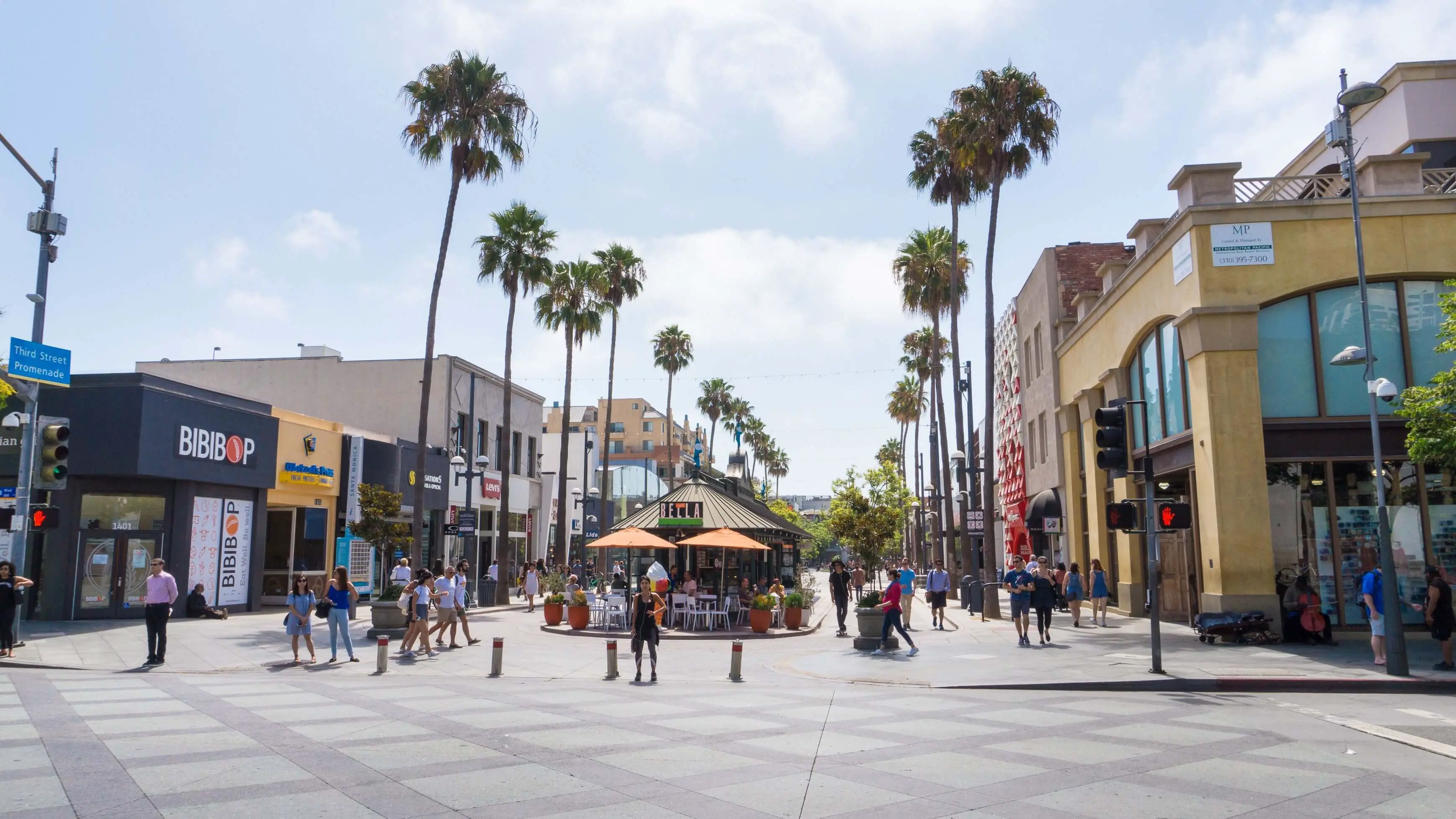
On the west side of Los Angeles, Third Street Promenade in Santa Monica experienced a significant surge in weekly visitation compared to a baseline of January 6th-12th 2025. This increase is not surprising, as many Palisadians fled south to Santa Monica hotels and rentals, allowing them to stay close to their neighborhoods, children’s schools, and social circles.

Westfield Century City and The Grove also saw increased foot traffic, as both malls serve as key gathering spots in their communities and feature state-of-the-art movie theaters, providing a few hours of escape. Additionally, their upgraded HVAC systems—enhanced post-pandemic—may offer an added layer of comfort for visitors. Similarly, Westfield Topanga, a familiar shopping destination for residents of the San Fernando Valley, saw an uptick in visits during the second half of January. And traffic at these shopping destinations was still elevated as of mid-February, suggesting that at least some displaced residents are likely staying in the area in the more medium-term. 

Some Palisadians have opted to relocate much farther south, though this migration appears to have had a more dispersed effect on shopping patterns. As a result, we do not see a significant impact on visitation to South Bay shopping centers like Manhattan Village and Del Amo Fashion Center.

While reports have mentioned some Palisadians moving to Newport Beach—a community that shares similar demographics with the Palisades—the influx does not appear to be large enough to meaningfully shift mall visitation patterns in January. Additionally, given the circumstances, it is unlikely that many displaced residents would be making frequent trips to Fashion Island or South Coast Plaza. Instead, those who have temporarily relocated to the area are likely settling in as newly arrived locals.

Visits to Third Street Promenade from Pacific Palisades Increased in January 2025

If we examine the year-over-year (YoY) change in visits from specific ZIP codes, Placer data reveals a significant surge in visitation to Third Street Promenade from the Pacific Palisades during January 2025, with visits increasing by 20.4% compared to the same period last year.

Third Street Promenade Drew More Families and Affluent Visitors

Demographic analysis of the Third Street Promenade’s trade area also indicates that the shopping corridor drew a higher proportion of family households and more affluent audience segments – perhaps thanks to the influx of visitors from the Palisades.

Shopping Centers Serve As Oases of Normalcy 

Amid the disruption caused by the wildfires, shopping centers have stepped in as steady community spaces rather than just retail venues. The uptick in foot traffic at locations like Third Street Promenade and Westfield Century City shows that these malls are serving as reliable hubs for daily routines and social connection, offering residents practical support as they navigate uncertain times.

Article
National Retail Chains Utilize Stores to Support LA Fire Relief Efforts
Retailers have played a crucial role in providing relief, comfort, and community for those impacted by the devastating wildfires across the greater Los Angeles area. Location analytics provide a glimpse into some of the ways retailers stepped up to meet their community's needs.
Elizabeth Lafontaine
Feb 24, 2025
3 minutes

In the wake of the devastating wildfires across the greater Los Angeles area, retailers—both local and national—have played a crucial role in providing relief, comfort, and a sense of community for those impacted. Retail is an industry that touches consumers’ lives daily, often more frequently than most other businesses. Because retailers fulfill a wide range of needs, they have become essential partners in supporting communities facing unimaginable crises.

Retailers Transform Stores into Donation Hubs 

In the immediate aftermath of the Palisades and Eaton Fires, retailers transformed their stores into donation hubs, offering displaced individuals essential items such as clothing and N95 masks. Major brands, including J.Crew, Gap Inc., and Free People, quickly repurposed their stores to serve as distribution centers. Free People even opened an entirely new shop in Santa Monica—Free Shop by Free People and FP Movement—where affected residents could book time slots to browse and collect necessary items. Beyond national retailers, Los Angeles-based brands also stepped up to support fire victims. Babyletto, a juvenile furniture brand, donated cribs to displaced families, while apparel company Big Bud Press launched new collections with proceeds benefiting the Pasadena Jobs Center.

While retail depends on consumerism, its role over the past month has extended beyond sales, making a profound impact on the local community. Many retailers in the discretionary sector opened their doors to directly assist affected families, demonstrating that physical retail spaces can be used for more than just commerce. By taking action on the ground rather than simply offering monetary donations, retailers provided immediate, tangible support to those in need.

Relief Initiatives at Gap, Babylist, and Alo Yoga 

Three specific retail locations in Los Angeles exemplified this effort, with Placer’s data revealing just how meaningful their initiatives were. Gap’s Santa Monica store was among the first to pivot toward relief efforts, distributing new Gap merchandise and PPE to community members beginning on January 11th. Alo Yoga’s Beverly Hills location provided care kits to impacted residents between January 14th and 16th. Meanwhile, Babylist, an online registry service with a physical showroom in Beverly Hills, hosted donation days on January 21st and 28th, allowing displaced families to shop for free and replace lost items.

Placer’s foot traffic estimates suggest that these relief efforts were well-received and widely utilized. Each of these locations saw an increase in visits during the weeks their relief initiatives took place, surpassing the average January baseline. The data underscores how critical these retailer-driven efforts were in supporting Los Angeles families and providing much-needed aid during a difficult time.

More Visits From Greater Los Angeles Area During Alo Yoga’s Donation Event 

During Alo Yoga’s donation event from January 14th to 16th, there was a noticeable increase in visitation from across the greater Los Angeles area, drawing new traffic beyond the Beverly Hills neighborhood. Compared to January baseline trends, the week of January 13th saw a higher share of visits originating from 3 to 10 miles away. More significantly, visits also increased from 10 to 30 miles away, likely including individuals affected by the Eaton Fire. In contrast, visits from over 250 miles away declined, underscoring the sharp drop in tourism to Los Angeles during the peak of the wildfire crisis.

Babylist’s Donation Efforts Help Young Families and Grandparents

Babylist’s LA showroom opened its doors to families in need, offering a space to replace essential baby items lost in the fires. These relief events attracted a different visitor mix than the store typically sees, providing immediate support for young families and grandparents. According to PersonaLive’s visitor segmentation, during the weeks Babylist hosted its relief events, there was a higher distribution of visits from Educated Urbanites, Young Professionals, and Sunset Boomers. In contrast, the full-month January data showed a greater share of visits from Ultra Wealthy Families. This shift highlights how retailer-led relief efforts were actively utilized by those in need, reinforcing the critical role local businesses can play in supporting communities during crises.

Brick-and-Mortar Stores As Essential Community Assets 

Retailers play a vital role in the communities they serve, and their ability to provide immediate support in Los Angeles through physical stores allowed for faster distribution of donations and aid. The best-in-class relief strategies implemented by these retailers should serve as a blueprint for others to follow, reinforcing the importance of brick-and-mortar stores as essential community assets during times of crisis and recovery.

Article
Restaurant Success in 2025: Experience, Convenience, and Familiarity
Find out how restaurant operators can position their brands for long-term success in an increasingly competitive landscape.
R.J. Hottovy
Feb 21, 2025
5 minutes

2024 was a challenging year for the restaurant industry, marked by increased competition from other food retail channels, intensified value wars, and rising operational costs, all of which contributed to a surge in bankruptcies. The start of 2025 has been equally difficult

Despite these challenges, our data continues to show strong consumer demand for dining out. However, the way consumers interact with restaurants is evolving more than ever before. Below, we highlight several key shifts in consumer behavior that restaurant operators, suppliers, and investors should consider in the year ahead.

How to Balance Convenience Versus Experience?

With Starbucks' renewed focus on its coffeehouse roots under CEO Brian Niccol, an important question emerges: have today’s restaurants become too complex? Starbucks originally built its brand as a “third place” away from home and work – an inviting space for customers to gather. However, this focus began shifting about a decade ago with the rollout of Mobile Order and Pay. As e-commerce surged in the early 2010s, consumers became accustomed to making purchases online or via mobile apps, making digital ordering a necessity for most retailers and restaurants. Yet, prioritizing convenience through mobile ordering and pickup created a disconnect with Starbucks’ experience-driven identity, leading to friction between its convenience-oriented and experience-focused customers.

This tension between experience and convenience has been a challenge for many restaurant operators in recent years. It explains why QSR chains have reduced store footprints while expanding drive-thru capacity, why fast-casual and casual-dining restaurants have increasingly adopted pickup and drive-thru windows, and why many chains now allocate dedicated space for delivery orders. Even Darden, long resistant to third-party delivery, ultimately embraced it to adapt to changing consumer behavior.

Visitation trends in 2024 reinforced the difficulty of balancing experience and convenience within the same restaurant model. Among chains with more than 100 locations, those with the highest year-over-year (YoY) growth in visits per location were largely drive-thru specialists, such as Raising Cane’s, In-N-Out Burger, 7 Brew Coffee, and PJ’s Coffee. Meanwhile, non-drive-thru leaders like CAVA and Chipotle thrived by focusing on customization, underscoring that consumers are willing to pay a premium for personalized experiences that align with their preferences.

The rise of convenience-based restaurants does not signal the end of experiential dining – far from it. Below, we’ve outlined monthly year-over-year (YoY) visit trends for major restaurant categories in 2024. While QSR value wars dominated industry headlines throughout the year, casual- and fine-dining chains actually outperformed the QSR segment in YoY visit growth.

Some of this success can be attributed to well-executed promotions, such as Chili’s "3 for Me" deal – which helped the chain finish just behind Raising Cane’s in visit-per-location growth for 2024 – and Buffalo Wild Wings’ "All You Can Eat Wings" promotion. However, the strong YoY performance of fine-dining chains further underscores that experience-driven dining remained highly in demand throughout the year.

We also see this trend reflected in dwell time across the restaurant industry. With the rise of drive-thru and takeout orders during and after the pandemic, combined with advancements in mobile ordering technology, it’s no surprise that dwell times for limited-service restaurants have remained below pre-pandemic levels (below). However, the opposite is happening in full-service restaurant categories, where dwell times are on par with or even exceeding pre-pandemic levels.

While many casual dining chains have seen an increase in takeout and delivery orders over the past few years, the growth of experiential dining concepts like Kura Sushi and GEN Korean BBQ, along with the continued expansion of eatertainment venues such as Topgolf, Puttshack, and Pinstripes—where dwell times often exceed 90 minutes—has helped maintain overall category dwell times. Meanwhile, the increase in dwell time for fine-dining establishments suggests that guests are making the most of their time when dining out, reinforcing the growing consumer preference for experience over convenience.

“Familiarity” and Its Impact on New Store Contribution

We've previously highlighted the importance of familiarity in consumer dining decisions, particularly in a challenging macroeconomic environment. With years of elevated inflation across food, rent, healthcare, and insurance, consumers have fewer discretionary dollars to spend. As a result, when they choose to dine out, they gravitate toward brands they know and trust.

In collaboration with the team at Bloomberg Second Measure, we analyzed data on the percentage of revenue generated from new customers at both full-service and limited-service restaurants. Our findings revealed a noticeable decline in new customer revenue during the second half of 2024, further reinforcing the idea that consumers are prioritizing familiarity when making dining choices.

This preference for familiar brands may be creating challenges for restaurant chains expanding into new markets. Traditionally, a new restaurant location in an unfamiliar market could expect to generate around 75% of the sales/visits seen in an established market—after an initial “honeymoon” phase when consumers try the brand for the first time. However, our data suggests that visit trends for restaurants entering new markets are now significantly lower than historical averages. Unsurprisingly, many operators have told us that their 2025 expansion plans will prioritize in-filling existing markets rather than expanding into new ones.

Portillo’s—the Chicago-based chain known for its Chicago-style hot dogs, Italian beef sandwiches, and char-grilled burgers—has experienced mixed visit trends when entering new markets. Below, we present visit per location trends for Portillo’s nationwide, in its home market of Chicago, and in several states where it has expanded in recent years. In its latest investor presentation, Portillo’s acknowledged that its average unit volumes are highest in its home market ($11.3 million in sales per location), compared to other Midwest markets ($6.0 million) and Sunbelt locations ($6.6 million). While these figures are still strong, they reflect the broader challenge that many restaurant brands face when expanding beyond their core markets.

Conclusion

As the restaurant industry navigates 2025, operators must strike a delicate balance between convenience and experience while adapting to shifting consumer preferences. The demand for dining out remains strong, but consumers are making more intentional choices, favoring trusted brands and prioritizing either speed and efficiency or immersive, experiential dining. At the same time, new market expansion presents growing challenges, with visit trends suggesting a preference for familiarity over novelty. As brands refine their strategies, those that successfully integrate innovation with operational excellence—whether through streamlined digital convenience, compelling promotions, or differentiated in-store experiences—will be best positioned for long-term success in an increasingly competitive landscape.

Article
Dutch Bros. & Sprouts: Beverage-Led Success
Find out what's been driving the continued success at Sprouts at Dutch Bros.
Bracha Arnold
Feb 20, 2025
3 minutes

Sprouts Farmers Market and Dutch Bros. have seen impressive foot traffic growth over the past few years. We analyzed their visitation metrics for 2024 to understand what’s driving their continued success.

Continued Visit Dominance

Both Sprouts and Dutch Bros. posted impressive visitation numbers throughout 2024, with visits for the full year elevated by 7.3% and 15.8%, respectively, compared to 2023. This momentum caps off several years of sustained growth – particularly for Dutch Bros. – which has expanded rapidly while maintaining consistent foot traffic increases. And though average visits per location at Dutch Bros. were slightly down YoY in 2024, the visit gaps were relatively modest – indicating that the chain is succeeding in expanding with minimal cannibalization to its existing venues.   

Sprouts also expanded with dozens of new stores over the past year – and the chain’s foot traffic metrics suggest strong shopper interest in these openings. The health-forward grocer saw visits per location rise in the second half of the year, capping off Q4 2024 with a 5.0% YoY increase.

The two chains have kept their visit growth going into the new year. Weekly visits to both Sprouts and Dutch Bros. grew all weeks analyzed, a promising sign as 2025 gets underway. 

New Smoothie Kings

Smoothies are having a major moment, fueled by the growing nationwide focus on health and wellness – an area where Sprouts has successfully positioned itself as a leader. Now, the chain is doubling down on its wellness-focused strategy by introducing smoothies at select locations.

Many Sprouts locations offer smoothies to go – but the chain has also been investing in in-store smoothie bars, allowing shoppers to enjoy a fresh, healthy drink while browsing or take one on the go. Visits to a Cerritos, California location jumped following the introduction of a smoothie bar in January 2025, with YoY monthly visits exceeding the Sprouts nationwide average for the first time in the analyzed period – perhaps thanks to excited reviews posted on social media

By offering smoothies that are more affordable than some of the viral options trending online, Sprouts is solidifying itself as a go-to destination for shoppers seeking wellness-driven choices without breaking the bank.

Dutch Bros.’ Morning Brew 

While Sprouts is expanding into new beverage categories, Dutch Bros is focusing on building out its food offerings. The chain has traditionally been strongest in the afternoon and evening, bucking the usual trends for caffeine-focused brands. To that end, Dutch Bros. has focused on attracting more morning visitors, both by expanding its mobile ordering capabilities and by testing a new food menu in select locations. 

The data suggests that the company’s focus on the morning daypart may amplify changes in Dutch Bros. consumer behavior that are already underway. Between January 2024 and January 2025, the share of visits during morning hours saw a small but meaningful uptick. The share of visits during the 6:00 AM to 11:00 AM daypart grew from 28.4% to 29.5% of daily visits, while the share of evening visits (4:00 PM to 9:00 PM) decreased. While the brand still maintains a strong presence later in the day, this shift could be a sign that Dutch Bros is successfully nudging consumers toward earlier-day coffee runs.

Drink To That

Sprouts and Dutch Bros. are thriving by gearing their offerings to their customer bases. By leaning into health-forward beverages and early-morning visits, the two chains are driving visits and interest.

For more data-driven insights, visit Placer.ai.

Article
Off-Price Apparel: Off to a Strong Start in 2025
The off-price apparel space remains well-positioned as consumers continue to favor budget-friendly retailers. We dive into the latest location intelligence for category leaders Burlington, Marshalls, Ross Dress for Less, and T.J. Maxx – to explore how the segment closed out 2024 and began 2025.
Ezra Carmel
Feb 19, 2025
4 minutes

The off-price apparel space remains well-positioned as consumers continue to favor budget-friendly retailers. We dive into the latest location intelligence for the space – and category leaders Burlington, Marshalls, Ross Dress for Less, and T.J. Maxx – to explore how the segment closed out 2024 and started off in 2025. 

Increased Visitation to Off-Price Leaders

The leaders of the off-price apparel space – Burlington, Marshalls, Ross Dress for Less, and T.J. Maxx – drove the success of the category last year. In 2024, Burlington’s visits increased (7.9%), as did visits to Marshalls (5.3%), Ross (0.7%) and T.J. Maxx (4.9%).

Zooming into H2 2024 reveals that Burlington, Marshalls, and T.J. Maxx saw consistent YoY visit growth. And although Ross Dress for Less saw mild visit gaps for some of the period, all four off-price apparel chains analyzed started the new year on a high note with January 2025 visits up across the board compared to the previous year. 

Marmaxx, Ross, and Burlington expanded their real estate footprints in 2024 – likely contributing to the chains’ YoY visit increases. And all four retailers’ have plans to continue their expansion strategies in the coming years – putting them on a foot traffic growth trajectory for 2025.

Off-Price Tips the Scales

The foot traffic growth of Burlington, Marmaxx, and Ross plays a significant role in the success of the off-price category, which has steadily increased its share of total apparel visits. 

In Q4 2024, the off-price apparel category claimed a majority of the combined off-price and our traditional apparel category visits (51.9%) for the first time since at least 2019. This demonstrates the segment’s strong holiday performance and continued resilience in the face of economic headwinds for both consumers and retailers.

Regional Paths to Success

Diving deeper into the foot traffic for Burlington, Ross, Marshalls, and T.J. Maxx highlights robust nationwide visits as well as several regional preferences among consumers. 

Nationwide, Ross claimed the lion’s share of visits between the four chains in Q4 2024 (31.0%), followed by T.J. Maxx (28.0%), Marshalls (23.1%), and Burlington (17.9%).

Analysis of the chains’ share of visits by CBSA reveals that Ross claimed the greatest share of visits in a majority of the West and Southwest, as well as in many large metropolises. Meanwhile, T.J. Maxx appeared to be the most-visited brand in many CBSAs throughout the Eastern United States, while Marshalls appeared to be the preferred brand in the Mid-Atlantic.

And despite claiming 17.9% of combined visits to the four off-price apparel chains, Burlington received the largest share of visits in only two CBSAs – Midland, TX and Anchorage, AK, which could be due to the brand’s long-term smaller-format strategy. While a smaller-format store may have less physical real estate (and therefore visitor potential) than the typical Marmaxx and Ross location, it affords Burlington the flexibility to source locations with strong economics that can drive productivity for the brand in markets nationwide

All four brands have a robust presence nationwide, yet regional preferences and variations in real estate footprints highlight the different paths to success in the off-price space.

Taking Off

The off-price apparel segment is thriving in 2025, with Burlington, Marshalls, Ross, and T.J. Maxx leading the charge. Consumers continue to prioritize value, fueling steady foot traffic growth and cementing off-price retailers as key players in the apparel space. Each brand is carving out its own regional strongholds while expanding its footprint, setting the stage for even greater success in the year ahead.

Want more data-driven insights? Visit Placer.ai

Reports
INSIDER
Q4 2023 Quarterly Index
Find out how the Fitness, Beauty & Self Care, Discount & Dollar Stores, Superstores, Grocery Stores, and Dining categories fared during last year’s all-important holiday shopping season.
February 15, 2024
6 minutes

Overview of Categories: Q4 2023 and Yearly Review

Last year ended on a high note for many retailers, with cooling inflation and rebounding consumer confidence contributing to a robust holiday season. Still, 2023 was a year of headwinds for the sector, as consumers traded down and cut back on unnecessary indulgences. 

In the midst of these challenges, some segments thrived. Continued prioritization of health and wellness by consumers drove strong visit growth for the Fitness and Beauty & Self Care segments – which emerged as 2023 winners and enjoyed positive foot traffic growth in Q4. At the same time, price consciousness drove foot traffic to Discount & Dollar Stores and Superstores, both of which made inroads into the affordable grocery space during the year. 

The Grocery category, too, saw a 4.3% jump in visits last year compared to 2022, as well as a slight uptick in Q4 visits. And even the discretionary Dining sector held its own, with a 2.1% year-over-year (YoY) annual increase in foot traffic, and a Q4 quarterly visit gap of just 1.8%.

Fitness: Not Just for New Year’s Resolutions Anymore

Fitness had a particularly strong 2023, buoyed by consumers’ sustained interest in self-care and wellness. Since the pandemic, gym memberships have graduated from a discretionary expense to something of a necessity – an important investment in health and wellbeing. The category has also likely continued to benefit from the post-COVID craving for experiences

And quarterly data shows that the Fitness segment is positively flourishing. Throughout most of Q4 2023, Fitness venues experienced YoY weekly visit growth ranging from 8.8% to 12.2%. (The unusual visit spike and dip during the last two weeks of the quarter are due to calendar discrepancies: The week of December 18th, 2023 is being compared to the week of December 19th, 2022, which included Christmas Day – while the week of December 25th, 2023 is being compared to the week of December 26th, 2022, which did not). 

Budget and Premium Fitness on the Rise

Drilling down into the data for several leading fitness chains shows that there’s plenty of success to go around. Crunch Fitness – ranked by Entrepreneur as 2024’s top fitness franchise – led the pack with a remarkable 28.2% YoY annual increase in visits, partly fueled by the steady expansion of its fleet. And while other value gyms like Planet Fitness also saw robust visit growth, the boost wasn’t limited to budget options. Given the Fitness sector’s already-impressive 2022 performance, the category’s strong YoY showing is especially noteworthy.

Beauty & Self Care: Wellness-Driven Success

Beauty & Self Care was another category to benefit from 2023’s obsession with wellness – as well as the “lipstick effect”, which sees consumers treating themselves to fun, affordable luxuries when money’s tight. Driven in part by the evolving preferences of Gen Z consumers, cosmetics leaders have embraced wellness-focused approaches to cosmetics that prioritize self-care and self-expression. This strategy continues to prove successful: Throughout Q4 2023, Beauty & Self Care chains saw steady YoY weekly visit growth, especially in November and early December – perhaps highlighting Beauty’s growing role in the holiday shopping frenzy. 

Ulta Beauty Stays Ahead of the Pack

One brand leading the cosmetics pack in 2023 was Ulta Beauty – which drew growing crowds with its diverse product selection. Everybody loves makeup, and Ulta makes sure to have something for everyone – from discount fare to more upscale products. Buff City Soap, which now pairs its signature offerings with experiential vibes at some 270 locations across 33 states, also experienced YoY annual visit growth of 14.7%. And Bath & Body Works, which made the Wall Street Journal’s list of best-managed companies for 2023, also saw visit strength, with an overall increase in annual foot traffic, even as Q4 visits saw a slight decline. 

Discount & Dollar Stores: Entering the Mainstream

If wellness was a key retail buzzword in 2023, value was an equally discussed topic. And Discount & Dollar Stores – ideal destinations for cash-strapped consumers seeking bargain merchandise – made the most of this opportunity. Shoppers frequented these chains year-round for everything from groceries to home goods, propelling the category firmly into the mainstream

And in Q4 2023, shoppers flocked to discount chains in droves to snag food items, stocking stuffers, and other holiday fare – fueling near-uniform positive YoY foot traffic growth throughout the quarter. The week of October 30th seems to have kicked off the Discount & Dollar holiday shopping season, perhaps showcasing the segment’s growing role as a Halloween candy and costume hotspot.

Five Below Above the Rest

Every discount chain is somewhat different – and the success of the various Discount & Dollar chains can be attributed to a range of factors. Dollar Tree and Dollar General likely benefited from the broadening and diversification of their grocery selections – while Ollie’s (“Get Good Stuff Cheap!”) solidified its position as a place to find relatively upscale items at a bargain. All three chains – and particularly Dollar General and Ollie’s – also grew their footprints over the past year. Family Dollar (also owned by Dollar Tree) also came out ahead on an annual basis – despite the comparison to a strong 2022. 

Of all the Discount & Dollar chains, Five Below saw the biggest surge in foot traffic, partly as a result of its increasing store count. But the retailer’s offerings – affordable toys, party supplies, and other fun splurges – also appear to have been tailor-made for 2023’s retail vibe. 

Superstores: Capturing the Crowds

During the fourth quarter of the year, Superstores saw a slight YoY increase in visits – including during the all-important week of Black Friday, beginning on November 20th. (This week was compared with the week of November 21st, 2022, which also included Black Friday). Like Discount & Dollar chains, Superstores saw an appreciable YoY visit uptick during the week of Halloween. 

Members Only, Please

On an annual basis, Superstore mainstays Walmart and Target experienced visit increases of 2.8% and 4.7%, respectively. But while all the major category players enjoyed a successful year, membership warehouse chains’ YoY visit numbers were especially strong. As perfect venues for mission-driven shopping expeditions, Costco, Sam’s Club, and BJ’s likely drew shoppers eager to load up on both inexpensive gifts and essentials. 

Grocery Stores: Holding Onto Gains

The traditional Grocery sector also held its own during Q4 2023. Notably, grocery stores saw positive visit growth for most weeks of November and December, a period encompassing the critical Turkey Wednesday milestone – no small feat given the disruptions experienced by the category. 

Value Grocers Lead the Way

Unsurprisingly, it was discount grocery chains that saw some of the greatest YoY visit growth, as shoppers – including higher-income segments – sought to counter inflation with lower-priced food-at-home alternatives. Whether through opportunistic buying models, private label merchandising, or no-frills customer experiences, value supermarkets proved once again that even quality specialty items don’t have to carry high price tags.

Dining: Staying the Course

Eating out can be expensive – and when money’s tight, restaurants and other discretionary categories are often first to feel the crunch. But the Dining category seems to have emerged from 2023 relatively unscathed, with overall yearly visits up 2.1% compared to 2022 despite the modest YoY weekly visit gaps in Q4 2023. And given the myriad challenges out-of-home eateries had to contend with in 2023 – from inflation to labor shortages – even the minor weekly gaps are quite an attainment. (As noted, the last two weeks of the quarter reflect calendar discrepancies).  

Success Across Dining Sub-Categories

Foot traffic data shows that dining success could be found across sub-categories. Wingstop, Shake Shack, and Jersey Mike’s Subs rocked Fast Casual and QSR, with annual YoY visit growth ranging from 11.8% to 20.3%, partly fueled by the chains’ growing footprints. Full-Service Restaurants also had their bright spots, including all-you-can-eat buffet star Golden Corral and two steak venues: Texas Roadhouse and LongHorn Steakhouse. 

And in the Coffee, Breakfast, and Bakeries space, Playa Bowls led the charge. The superfruit bowl chain’s affordable, wellness-oriented treats seem to have been created with 2023 in mind – and during the year Playa Bowls expanded its fleet while also seeing double-digit increases in comparable store sales. Steadily expanding Biggby Coffee and Dutch Bros. Coffee also saw significant YoY foot traffic growth. 

INSIDER
10 Top Brands to Watch in 2024
This report analyzes the latest location intelligence data to identify ten brands poised to succeed in 2024.
February 8, 2024

The State Of Retail 

New year, new retail opportunities. And though 2023 is firmly in the rearview mirror, the economic headwinds that characterized much of the year have yet to fully dissipate. But every challenge also brings with it new opportunities, and many retailers are adapting to meet their customers' changing wants and needs. 

This white paper analyzes location intelligence for 10 brands poised to succeed in 2024. Some, like low-cost apparel and home furnishing stores, are benefitting from consumer trade-down. Others are expanding into rural or suburban areas to meet customers where they are. Read on for some of 2024’s retail winners. 

1. New Balance: From Dad To Dapper

Until around four years ago, New Balance sneakers were commonly seen on the feet of suburban dads – not exactly a recipe for high fashion. But all that began to change in 2019 when the company began collaborating with Teddy Santis, who eventually became New Balance’s creative director. Since then, the brand’s popularity has surged among Gen Z and X and is now one of the fastest-growing sneaker companies in the industry, despite the increasing competition in sneaker space. In 2023, foot traffic to New Balance stores grew 3.3% year-over-year (YoY) and the brand has firmly established itself as ultimate retro cool. 

Diving into the demographics of New Balance stores’ captured market trade area reveals the success of the chain’s rebranding. In 2023, New Balance’s trade area included larger shares of “Ultra Wealthy Families,” “Young Professionals,” and “Educated Urbanites” than the average shoe store’s trade area – highlighting New Balance’s successful reinvention as a brand for the young and hip.  

2. Harbor Freight Tools: A Wide Reach 

The home improvement space is dominated by Lowe’s and Home Depot – but Harbor Freight Tools is quickly making a name for itself as a go-to destination for affordable tools and supplies. 

Over the past few years, Harbor Freight Tools has expanded rapidly, with many of its new stores opening in smaller towns and cities. And the expansion appears to be paying off, with visits up YoY during every month of 2023. And although the chain is now operating with a significantly larger store fleet, the average number of visits per venue has generally increased – indicating that the company is expanding into markets where it is meeting a ready demand.    

3. Winmark: Poppin’ Tags

Over a decade after Mackelmore dropped his smash hit “Thrift Shop” in 2012, second-hand stores are still enjoying their time in the limelight. Shoppers, driven by a desire to reduce waste, find unique styles, and to save a few dollars at the till, continue to flock to thrift stores. And Winmark Corporation, which operates five secondhand goods chains – including apparel brands Plato’s Closet (young adult clothes), Once Upon a Child (children's clothes and toys), and Style Encore (women's clothing) – has benefited from the strong demand. Visits to the three Winmark clothing banners increased an average of 5.3% YoY in 2023. 

The median household income (HHI) in the trade areas of Winmark’s apparel chains tends to be lower than the median HHI in the wider apparel category – so budget-conscious consumers are driving at least some of the company’s growth. With more consumers looking for ways to cut back on spending in 2024, the demand for second-hand clothes is expected to grow even further – and Winmark is likely to continue reaping the benefits. 

4. HomeGoods: Hunting For Deals

HomeGoods, a treasure hunter's dream, is the discount home furnishing retailer owned by off-price retail giant TJX Companies. The chain, which operates over 900 brick-and-mortar stores, recently closed its e-commerce platform to focus on its physical locations – where foot traffic grew 6.0% between 2023 and 2022.

HomeGoods carries kitchen and home decor items along with furniture, and may be benefiting from the relative strength of the houseware segment, driven in part by an increase in at-home entertainment. And in a surprising twist, this low-cost retailer attracts more affluent visitors than visitors to the home furnishing segment overall. The median household income (HHI) in HomeGoods’ trade area stood at $84.7K/year compared to a $78.5K median HHI in the trade area of the average home furnishing chain. As economic uncertainty and the resumption of student loan payments impact consumers, wealthier shoppers seeking a budget-friendly home refresh are likely to continue choosing HomeGoods over pricier alternatives.

5. Bealls: Rural Expansion

Florida-based Bealls, Inc., which got its start as a small town five-and-dime in 1915 in Bradenton, Florida, now operates over 600 stores across the country. The company, which saw an impressive 9.0% YoY increase in visits in 2023, recently consolidated its two largest banners – Burkes Outlet and Bealls Outlet – under the Bealls name. 

One reason for Bealls’ success could be its appeal to rural consumers. Over the past five years, the share of households falling into Spatial.ai: PersonaLive’s “Rural Average Income” segment has steadily increased, growing from 12.6% in 2019 to 15.1% in 2023. With rural shoppers continuing to command ever-more attention from retailers, the increase in visits from this segment bodes well for Bealls in 2024.

6. Ollie’s Bargain Outlet: Built To Last

Ollie’s Bargain Outlet was built for this economy. The chain saw a 13.0% YoY increase in visits in 2023, thanks in part to its popularity among a wide array of budget-conscious consumers. Ollie’s has found success with rural shoppers while maintaining its appeal among value-oriented suburban segments – and the chain’s diverse audience base seems to be setting it apart from other discount retailers. 

A closer look at the chain’s captured market data, layered with the Spatial.ai: Personalive dataset, reveals that Ollie’s trade area includes larger shares of the “Blue Collar Suburbs” and “Suburban Boomer” segments when compared to the wider Discount & Dollar Stores category. As the chain plots its expansion, focusing on suburban and rural areas may help Ollie’s meet its customers where they are. 

7. Trader Joe’s: Young And Hungry

Trader Joe’s has managed to do what few stores can. The company does not invest in marketing, has no online shopping options, and loyalty programs? Forget about it. But despite this unusual approach to running a business, the California native has enjoyed consistent success over the years, with a 12.4% YoY increase in visits in 2023. 

Trader Joe’s is particularly popular among younger shoppers, perhaps thanks to the company’s focus on sustainability and social responsibility – as well as its famously low prices. Analyzing the chain’s trade area using the AGS: Panorama dataset reveals that Trader Joe’s attracts more “Emerging Leaders” and “Young Coastal Technocrats” (segments that describe highly educated young professionals) than the average grocery chain. With Gen Z particularly concerned about putting their money where their mouth is, Trader Joe’s is likely to sustain its momentum in 2024 and beyond.

8. Foxtrot Market: The C-Store Connoisseur

Convenience stores are growing up and evolving into bona-fide dining destinations. And Foxtrot, a Chicago-based chain with 29 stores across Texas, Illinois, Washington, Maryland, and Virginia, is one c-store redefining what a convenience store can be. The chain, which announced a merger with Dom’s Kitchen in November 2023, offers an upscale convenience store experience and is particularly known for including local brands in its product assortment as well as its excellent wine curation and dining options.

Visitors to the chain were significantly more likely to fall into AGS: Behavior & Attitudes dataset’s  “Wine Drinker” or “Nutritionally Aware” segments than visitors to nearby convenience stores. The company plans to ramp up store openings, particularly in the suburbs, where convenience and a good bottle of wine might just find the perfect home as a welcome distraction from the daily grind.

9. Jersey Mike’s: Suburban Style

Jersey Mike’s is one of the fastest-growing franchise dining chains in the country, operating over 2,500 locations in all 50 states. The sandwich chain has seen its popularity take off over the past few years, with 2023 visits up 14.1% YoY and plans to open 350 new stores in 2024. 

The company has long prioritized affluent class suburban customers – and visitation data layered with the Experian: Mosaic dataset reveals that Jersey Mike’s has indeed succeeded in attracting this audience. The percentage of “Booming with Confidence” and “Flourishing Families” (both affluent segments) in Jersey Mike’s trade area was larger than in the trade areas of the average sub sandwich chain. As Jersey Mike’s continues its expansion, focusing on suburban areas may continue to serve the chain well. 

10. Playa Bowl: Surf’s Up

The East Coast may not be the first region that pops to mind when thinking about tropical smoothies – but New Jersey-based Playa Bowls is making it work. The company was founded by avid surf enthusiasts determined to bring the flavors of their favorite surfing towns stateside. 

Playa Bowls has enjoyed strong visit numbers in 2023, with overall visits up 23.0% and average visits per venue up 17.1% YoY – and part of the chain’s success may be driven by its ability to draw wealthier customers to its stores. The Experian: Mosaic dataset reveals that the “Power Elite” segment is overrepresented in the company’s trade areas: The share of households falling into that segment from Playa Bowl’s captured market exceeded their share in the company’s potential market. As the chain continues expanding its domestic footprint, it seems to have found its niche among a wealthy customer base.

Starting The New Year Strong

The past year saw a wide range of challenges facing brick-and-mortar retailers as economic fears continued to shake consumer confidence. But there are plenty of bright spots as the new year gets underway. These ten brands prove that the retail world never stands still, and that the next opportunity is just around the corner.

INSIDER
The Retail Opportunity of Stadiums
Dive into the location intelligence to understand the significant retail and dining opportunities in and around major stadiums – both during games and in the off-season.
January 11, 2024
7 minutes

Play Ball

Sports leagues like the NBA, NFL, and MLB boast billion-dollar revenues – and the venues where these games unfold hold significant commercial potential in their own rights. Many stadiums host concerts and other shows in addition to regularly held sporting matches and can accommodate tens of thousands of spectators at once – creating massive retail, dining, and advertisement opportunities.

This white paper analyzes location intelligence metrics for some of the biggest stadiums across the country to reveal the commercial potential of these venues beyond simple ticketing revenue. Where do visitors of various stadiums like to shop? Do specific sporting and cultural events impact the nearby restaurant scene differently? How can stadium operators, local businesses, and advertisers tailor their offerings to a stadium’s particular audience and make the most of the stadium and the space throughout the year?  

We take a closer look below. 

Major League Visits

The three major sports leagues – the National Basketball League (NBA), Major League Baseball (MLB), and the National Football League (NFL) – play at different points of the year, and the number of games each league holds during the season also varies. 

MLB leads in game frequency, with each team playing 162 games during the regular season, which runs approximately from April through September. Basketball season is also around six months – roughly from mid-October to mid-April – but each NBA team plays only 82 games a season. And the NFL has both the shortest season – 18 weeks running from early September to early January (with the pre-season starting in August) – and the fewest number of matches per team. Understanding the monthly visitation patterns for the various types of stadiums can help advertisers, stadium operators, and other stakeholders ensure that they are leveraging the full potential of the venue throughout the year.

Different Visitation Patterns During the On- and Off-Season

Unsurprisingly, the sports arenas serving the different leagues see visit spikes during their leagues’ respective season. But comparing visit numbers throughout the year to the average monthly visit numbers for each category in 2023 reveals that the relative visit increases and decreases during the on- and off-season vary for each type of stadium. 

MLB stadiums display the steadiest visit strength during the on-season – perhaps due to MLB’s packed game schedule. MLB tickets also tend to be relatively affordable compared to tickets to pro football or basketball matches, which may also contribute to MLB’s consistently strong visit numbers throughout the season. During the MLB off-season, baseball fields – which tend to be uncovered – are relatively empty. 

The seasonal visit spike to NBA arenas is less steady. The beginning and end of the season see strong peaks, and visits slow down slightly during the mid-season months of January and February. Visits then drop during the off-season spring and summer, but the off-season visit dip is not as low as it is for MLB fields – perhaps because the NBA arenas’ indoor nature make them suitable locations for concerts and other non-basketball events. 

Meanwhile, NFL stadiums see the least dramatic drop in visits during the NFL off-season, as these venues’ enormous size also make them the ideal location for concerts and other cultural events that draw large crowds. These arenas’ strong almost year-round visitation numbers mean that sponsors and advertisers looking to expand beyond sports fans to reach a diverse audience may have the most success with these venues. 

Stealing Bases, Winning Retail 

A Higher-Income Visitor Base 

Although MLB offers the most budget-friendly outing, combining STI: Popstats demographic metrics with trade area data reveals that MLB stadium visitors reside in higher-income areas when compared with visitors to NBA or NFL stadiums. 

Baseball fans tend to be older than fans of the other sports, which could partially explain MLB stadium visitors’ higher household income (HHI). The combination of lower ticket prices, higher median HHI among fans, and many games per season offers baseball stadiums significant opportunities to engage effectively with their fan bases. 

But while NBA and NFL stadium attendees may not come from as high-income areas as do MLB stadium visitors, fans of live basketball and football still reside in trade areas with a higher HHI compared to the nationwide median. So by leveraging stadium space, advertisers and other stakeholders can reach tens of thousands of relatively high-income consumers easily and effectively.

An Advertising Slam Dunk

Sports fans are known to be passionate, engaged, and willing to spend money on their team – but stadium visitors also shop for non-sports related goods and services. Retailers and advertisers can draw on location analytics to uncover the consumer preferences of stadium visitors and tailor campaigns, sponsorships, and collaborations accordingly. 

Distinct Retail Choices by Team

Visitation data to the top five most visited MLB stadiums during 2023 showed differences between the apparel and sporting goods shopping preferences of the various stadiums’ attendees. While 39.4% of visitors to Truist Park also visited DICK’s in 2023, only 30.8% of Yankee Stadium visitors stopped by the sporting goods retailer in the same period. Similarly, while 29.9% of visitors to Yankee Stadium frequented Kohl’s, that percentage jumped to 47.3% for Busch Stadium visitors.  

Harnessing location intelligence to see the consumer preferences of a stadium’s visitor base can help retailers, stadium operators, and even team managers choose partnerships and merchandising agreements that will yield the most effective results. 

Fan Tastes: Beyond the Bleachers

Sports and snacks go hand in hand – what would a baseball game be without a hot dog or peanuts? But while every stadium likely provides a similar core of traditional game day eats, each venue also offers a unique set of dining options, both on- and off-premise. And by leveraging location analytics to gain visibility into stadium-goers dining habits, stadium operators and local food businesses can understand how to best serve each arena’s audience.  

End Zone Eats

Mapping where stadium visitors dine before and after games can help stakeholders in the stadium industry reach more fans. 

The chart below shows the share of visitors coming to a stadium from a dining venue (on the x-axis) or going to a dining venue after visiting the stadium (on the y-axis). The data reveals a correlation between pre-stadium dining and post-stadium dining – stadiums where many guests visit dining venues before the stadium also tend to have a large share of guests going to dining venues after the event. For example, the AT&T Stadium in Arlington, Texas, saw large shares of visitors grabbing a bite to eat on their journey to or from the stadium, while the M&T Bank Stadium in Baltimore, Maryland saw low rates of pre- and post stadium dining engagement. 

These trends present opportunities for both local businesses and stadium stakeholders. For example, venues with high dining engagement can explore partnerships with local restaurants, while those with lower rates can build out their in-house dining options for hungry sports fans.

Different Events Drive Different Dining Patterns

Stadiums looking to enhance their food offerings – or local entrepreneurs thinking of opening a restaurant near a stadium – can also get inspired by stadium visitors’ dining preferences. For example, psychographic data taken from the Spatial.ai: FollowGraph dataset reveals that visitors to MetLife Stadium in East Rutherford, New Jersey have a much stronger preference for Asian cuisine compared to New Jersey residents overall. With that knowledge, the stadium can enhance the visitor experience by expanding its Asian food offerings. 

On the other hand, MetLife Stadium goers seem much less partial to Brewery fare than average New Jerseyans, so the stadium operators and restaurateurs may want to avoid offering too many Brewery-themed dining options. Stadium stakeholders can reserve the craft beers for Caesars Stadium, M&T Bank Stadium, and Soldier Field Stadiums, where visitors seem to enjoy artisanal brews more than the average resident in Louisiana, Maryland, and Illinois, respectively. 

All of the stadiums analyzed exhibited unique visitor dining tastes, a reminder that no customer or fan base is alike. Aligning on- or off-site dining options with offerings that align with a given customer base’s preferences can improve overall visitor satisfaction and boost revenues.

Pitches to Plates

Zooming in to look at consumer behavior around individual events reveals further variability in dining preferences even among visitors to the same stadium, with different types of events driving distinct dining behaviors.

State Farm Stadium in Glendale, Arizona, is home to the Arizona Cardinals. The stadium hosted the 2023 Super Bowl, but the NFL stadium also acts as a concert venue for acts ranging from Taylor Swift to Metallica. And location intelligence reveals that the dining preferences of stadium visitors vary based on the events held at the venue. 

During the Super Bowl, sports bars such as Yard House and Buffalo Wild Wings saw the largest increase in visits compared to the chains’ daily average. A month later, attendees at Taylor Swift's concert gave fried-chicken leader Raising Cane’s a significant boost. 

Local restaurants can leverage location analytics to see what types of events are popular with their visitor base and craft collaborations and advertising campaigns that resonate effectively with their patrons.

Final Buzzer

Sports stadiums and arenas are not just spaces for sports and music enthusiasts to gather; they also offer significant commercial opportunities for the surrounding communities. Stadium operators and local businesses can fine-tune their offerings by utilizing location analytics to better connect with their visitor bases and uncover new retail opportunities. 

Loading results...
We couldn't find anything matching your search.
Browse one of our topic pages to help find what you're looking for.
For more in-depth analyses on a variety of subjects, explore Reports.
The Anchor Logo
INSIDER
Stay Anchored: Subscribe to Insider & Unlock more Foot Traffic Insights
Gain insider insights with our in-depth analytics crafted by industry experts
— giving you the knowledge and edge to stay ahead.
Subscribe