Skip to Main Content
Thank you! Your submission has been received!
Oops! Something went wrong while submitting the form.
0
0
0
0
----------
0
0
Articles
Article
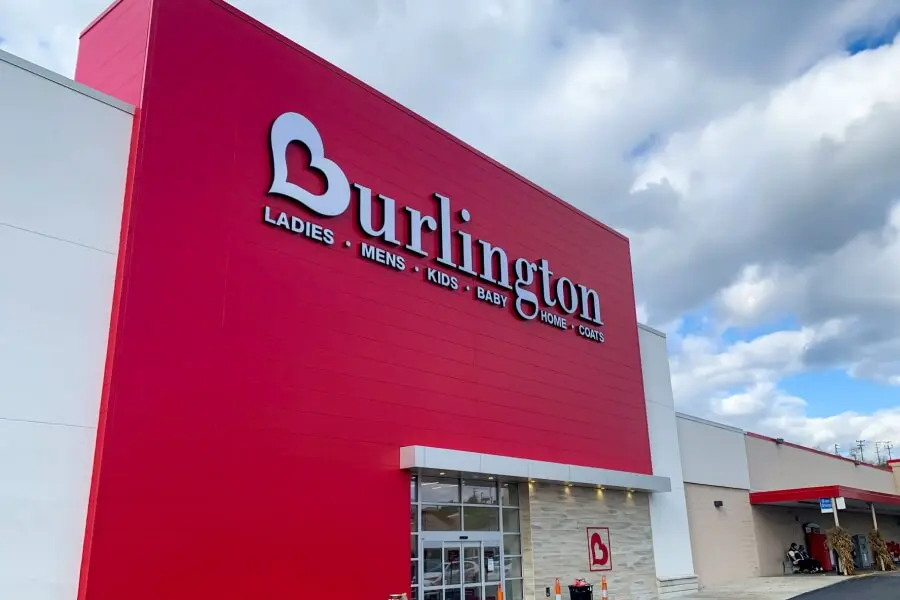
Burlington Stores - Scooping up Bed Bath and Beyond’s Real Estate
Bed Bath & Beyond's closure left a retail gap that off-price Burlington Stores will fill, taking over 44 locations across the country. How have these new Burlington locations performed compared to the foot traffic they received as Bed Bath & Beyond stores?
Caroline Wu
Jan 30, 2025
2 minutes

They say that one man’s trash is another one’s treasure – and for Burlington Stores, opportunity knocked when Bed Bath & Beyond selected Burlington Stores as the successful bidder for many of its leases, with the latter taking over 44 locations for $12 million. Per CNBC, many of these new venues are scattered across the country.

Using Placer data, we are able to compare visitation trends to these locations when they were branded as a Bed Bath & Beyond store versus when the new leases took over.

In Avondale, AZ, the new Burlington store is receiving over twice the traffic (241.8% more visits per square foot) during the holiday shopping season in December 2024 compared to a similar time frame when it was a Bed Bath & Beyond in December 2021.

In comparing shopping center frequented by visitors to the analyzed venue, the profile of the shopper has changed somewhat.  While both sets of shoppers frequented the nearby Gateway Crossings, Westgate Entertainment District, and Arrowhead Towne Center, Burlington shoppers had a penchant for Desert Sky Mall and Tanger Outlets Phoenix, whereas the Bed Bath & Beyond shoppers preferred Palm Valley Pavillions West and Coldwater Plaza.

Whereas the top four segments have remained consistent for both banners, Burlington attracts a higher proportion of Melting Pot Families - over 2x the rate compared to when it was a Bed Bath & Beyond.

In a head to head comparison using comparable months, Burlington attracted over 3x the traffic in its first year of opening, compared to when it was a Bed Bath and Beyond two years prior.

The number of visits across numerous visit durations was considerably higher to Burlington, and the average dwell time increased to 41 minutes compared to 31 minutes when it was a Bed Bath & Beyond.

While this is just one example of a Burlington takeover, it goes to show that while the location may stay the same, the audience it attracts  will vary and this Burlington is off to an excellent start.

Article
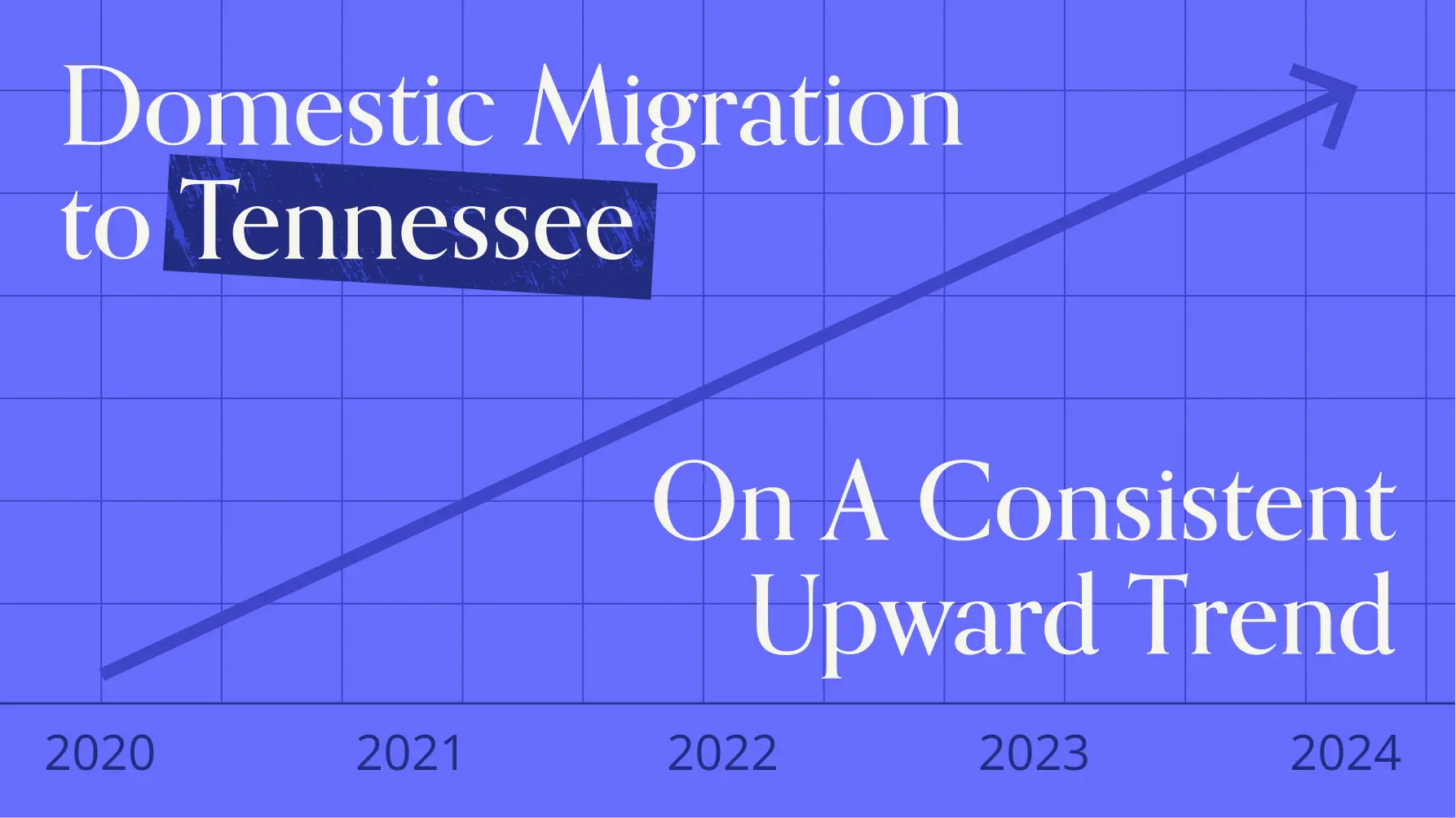
From Nashville to Knoxville: Tennessee’s Migration Growth
In recent years, Tennessee has emerged as a surprising migration hotspot. We took a closer look at the data to gain a more thorough understanding of the shifts taking place in the Volunteer State.
Bracha Arnold
Jan 29, 2025
3 minutes

In recent years, Tennessee has emerged as a surprising migration hotspot. The state, which offers a growing tech scene, business-friendly tax regulations, and a relatively low cost of living is rapidly gaining popularity and attracting inbound migration from across the nation. 

Where are newcomers coming from – and where within Tennessee are they going? Using Placer.ai’s Migration Trends Report, we took a closer look at the migration data to gain a more thorough understanding of the shifts taking place in the Volunteer State.

Tennessee’s Migration Trends

The state of Tennessee has experienced significant positive migration over the past few years. Between July 2020 and July 2024, the cumulative net migrated percent of Tennessee’s population increased steadily, with 2.1% of the state’s July 2024 population having moved there from elsewhere in the country over the previous four years. 

Majority of Newcomers from the East Coast

Diving deeper into Tennessee’s migration patterns reveal that between July 2020 and July 2024, the state had net positive domestic migration from 41 out of 50 states – meaning Tennessee gained more residents from these states than it lost to those states. Illinois and California together accounted for almost 40% of Tennessee’s net positive domestic migration during the period, and the state also drew a large contingent (33.6% of net positive domestic migration) from the East Coast.  

Cities in Tennessee Experiencing Strong Population Growth 

While Memphis, Tennessee’s second-largest city, has made headlines in recent years for its declining population, other metro areas in the state are experiencing strong interest from newcomers. 

Between July 2020 and July 2024, the Nashville CBSA (core-based statistical area) received the largest share of net positive domestic migration, with 24.6% of newcomers to Tennessee settling in the Music City. Nashville has been establishing itself as a tech hub, a factor which may have driven its strong net migration.

Knoxville came in second, welcoming 18.7% of the positive net migration to Tennessee between July 2020 and July 2024. Other CBSAs rounding out the top five were Chattanooga (9.0%  share of positive net migration), Kingsport-Bristol (8.7%), and Johnson City (6.0%).

Age Is More Than a Number

The influx of new residents into Tennessee is not only helping drive the state’s population up – it’s also reshaping its demographic composition. Zooming into the top five CBSAs mentioned above reveals that newcomers generally are coming from CBSAs of origin where the weighted median age is younger than the existing population. 

The only metro area bucking this trend was Clarksville, where incoming residents were slightly older than the youthful median 31 years of its residents, though this may be a reflection of its strong university and military presence. 

The movement of younger people into these up-and-coming CBSAs reflects the opportunities available for people to grow their careers and put down roots in a state that is quickly becoming a hub for growth and opportunity.

The Only 10 I See

Tennessee seems to have reinvented itself as a destination for young people seeking out opportunities for growth. By continuing to foster a business-friendly environment and supporting its diverse communities, the state is well-positioned to thrive. 

Visit Placer.ai to keep up with the latest data-driven migration trends.

Article
McDonald’s & Chipotle: Recapping 2024 Visit Trends
How have McDonald’s and Chipotle, two of the most recognizable names in the quick-service and fast-casual dining scenes, fared over the last year? We take a closer look at each chain’s visit performance, and highlight some bright spots of 2024. 
Bracha Arnold
Jan 28, 2025
3 minutes

How have McDonald’s and Chipotle, two of the most recognizable names in the quick-service and fast-casual dining scenes, fared over the last year? We take a closer look at each chain’s visit performance, and highlight some bright spots of 2024. 

McDonald’s: Visits Vary, Outperform Overall QSR

Visits to McDonald’s were mixed throughout 2024, with most months seeing minor visitation lags relative to 2023. Still, YoY traffic trends outpaced those of the overall QSR segment in all but one month (October 2024), highlighting the chain’s power relative to the rest of the market. 

Specials Drive Visits

Some of the visitation dips at both McDonald's and the overall QSR segment are likely due to inflation impacting prices across the dining industry. And the rise of the budget-conscious consumer has prompted many chains to lean on limited-time offers and special releases to both offer affordable deals and turn a trip to a QSR into a special occasion. McDonald’s capitalized on this trend, driving impressive visit boosts following the June launch of its $5 Meal Deal. However, it was the chain’s special releases that delivered the most significant increases in weekly visits.

The introduction of the Chicken Big Mac on October 10th, 2024 proved to be a major success, driving a 7.2% increase in visits during the week of the launch (October 7th-13th) and an even larger 8.7% increase in the first full week following the release (October 14th-20th). The chain also enjoyed a jump in foot traffic from its limited-edition collector’s meal, launched on August 12th, 2024, further highlighting the effectiveness of these strategic, nostalgia-driven releases.

Chipotle: Wrapping Up Another Impressive Year

Chipotle has been a fast-casual darling for several years now, consistently driving YoY visit growth and expanding into new markets. And 2024 was no exception for the chain, with visits growing in all months analyzed. This included an impressive 21.1% year-over-year increase in April 2024, followed by sustained growth throughout the remainder of the year, culminating in an 8.8% increase in December 2024 compared to 2023. In contrast, the broader fast-casual category saw much more muted visitation patterns. 

Growing Across The Country

Some of Chipotle’s visit growth can be attributed to the aggressive growth strategy the company has undertaken, opening approximately 300 stores in 2024 with plans to add another 300 locations in 2025. A significant part of this expansion strategy focuses on rural and suburban markets in a bid to capture untapped demand beyond traditional urban hubs.

And diving into visits per location reveals that, overall, this strategy is working. All but eight states analyzed showed YoY visit per location growth in 2024 – and five of the top ten states for visits per location growth are among the least densely populated in the country. This suggests that Chipotle's decision to target smaller markets is paying off, enabling the brand to attract new audiences while reinforcing its stronghold in more densely populated areas.

Final Bites

Despite a challenging 2024, McDonald’s and Chipotle are surviving – and even thriving. 

What might lie ahead for the two chains as 2025 gets underway?

Visit Placer.ai for the latest data-driven dining updates.

Article
Analyzing The Container Store's Bankruptcy
What led to The Container Store's recent bankruptcy filing? We dove into the data to find out.
Elizabeth Lafontaine
Jan 27, 2025
2 minutes

The Container Store has been a prime example of a specialty retailer that successfully catered to a highly specific and niche consumer need. The home organization trend gained traction in the early 2000s with the rise of custom closet solutions and continued to grow in popularity through influential figures like Marie Kondo and The Home Edit.

The home furnishings category experienced a surge during the pandemic as consumers focused on improving their living spaces, whether by purchasing new homes or renovating existing ones. However, as discretionary spending habits have normalized and interest rates have risen, consumer spending in this category has declined. 

Additionally, the sector has seen significant consolidation, most notably with the closure of Bed Bath & Beyond, a major player in home furnishings and organization. The remaining retailers in the space now largely fall into two distinct categories: niche specialists and value-driven brands.. 

Those retailers that play in the more niche space – including The Container Store – have had an even more challenging path to meet changing consumer needs. Despite offering a high level of customization and expertise, the chain has struggled against increasing industry-wide promotional activity and waning interest in the home organization category. Additionally, mass merchants and other home retailers have expanded their offerings in this space, providing organization solutions at price points that better align with today’s cost-conscious consumers. 

Placer’s foot traffic estimates indicate a clear rise in competition for The Container Store since 2022, aligning with a broader decline in demand for its category. In 2024, visitors to The Container Store cross-shopped at Target, HomeGoods, IKEA, and World Market at higher rates than in 2022. This growing preference for competitive alternatives – many of which emphasize greater value – has likely contributed to the retailer’s challenges.

Specialty retailers play a crucial role in the industry by offering expert knowledge, superior service, and a wider assortment of products. However, as we move into 2025, the retail landscape must continue evolving to meet shifting consumer expectations, making adaptation essential for specialty retailers.

Article
Chili’s and Texas Roadhouse: Full-Service Success in 2024
Find out how Chili's and Texas Roadhouse performed in 2024 and what the demographic data can reveal about their success.
Ezra Carmel
Jan 24, 2025
3 minutes

In 2024, many inflation-squeezed consumers looked to budget-dining options or simply ate more meals at home. How did full-service chains Chili’s and Texas Roadhouse drive foot traffic in such a challenging macroeconomic environment? We dove into the data to find out. 

Serving Up Value

In 2024, value was a key ingredient in Chili’s and Texas Roadhouses’ recipes for success – although each chain used a different strategy to communicate its affordability to consumers.

Chili’s leaned into budget-friendly meal deals in 2024. The chain’s rebooted 3 For Me value menu drove significant traffic in Q2 2024 (9.7% visit growth YoY), and visits skyrocketed again in the fall, due in part to the viral Fried Mozzarella appetizer, part of a Triple Dipper deal, and the promotional $6 “Witches Brew” margarita – propelling the chain to 23.0% YoY visit growth in Q4 2024.

Texas Roadhouse, on the other hand, doesn’t run promotions – and instead relies on its already strong value perception to drive traffic when budgets are tight. But the chain’s consistent YoY visit growth (7.2% in 2024) was also likely due to its growing real estate footprint: over 30 new locations that are approximately 10% larger than previous builds, allowing for higher guest volumes.

A Demographic Sweet Spot

Chili’s and Texas Roadhouse’s value perception appears to attract many consumers from lower-income households – but the chains drive traffic from diners with slightly more discretionary income as well. 

Diving into the demographic characteristics of visitors revealed that in 2024, Chili’s and Texas Roadhouse received a smaller share of visits from the households earning over $100K/year compared to the nationwide distribution. (Texas Roadhouse served a slightly smaller share of these households, likely due to its smaller market strategy.) At the same time, both chains drove a larger share of traffic from households earning less than $50K/year and between $50K and $100K/year, compared to the nationwide distribution. This suggests that Chili's and Texas Roadhouse visitors are likely seeking value for money, but a significant share have more discretionary income to spend on higher-priced items – like top-shelf margaritas and steaks – than the average U.S. consumer.

As Chili’s and Texas Roadhouse continue investing in innovations and technological solutions to improve efficiency and customer experience, the chains are likely to continue attracting visitors looking to get the most bang for their dining bucks in 2025.

Mapping Visits

Chili’s and Texas Roadhouse may attract visitors from a similar demographic, but analysis of the markets in which the chains drive the most visits reveals several distinct regional preferences among dining consumers nationwide. 

In 2024, Texas Roadhouse received a greater share of visits in a majority of Midwest and Mid-Atlantic CBSAs – consistent with a smaller market strategy – while Chili's drove a greater share of visits in denser markets and a majority of the CBSAs in California, Texas, and Florida.

But despite these regional differences, the chains received a near-even share of visits.  Texas Roadhouse, with 675 U.S. locations, claimed 51.2% of visits to both chains, while Chili’s with over 1200 locations claimed 48.8% of the chains’ combined visits.

Two Chains Charting Their Course

Chili’s and Texas Roadhouse have found success by providing value for money that sets them apart from other full-service chains. Yet, both chains drive an above-average share of high-income traffic, indicating that they are winning with value-conscious consumers with the means to indulge.

For more data-driven dining insights, visit Placer.ai

Article
Dining in University City, Philadelphia: A Collegiate Vibe
We dove into the data to explore collegiate dining habits in the University City, Philadelphia, PA, to see how the campus impacts visitation trends at local convenience stores and restaurants.
Lila Margalit
Jan 23, 2025
3 minutes

College students often have to count their pennies – but they also know how to have a good time and are willing to pony up for things that matter to them. So with spring semester underway, we dove into the data to explore collegiate dining habits in the University City district of Philadelphia, PA – home to the University of Pennsylvania and Drexel University, as well as several smaller schools. How does the campus vibe impact visitation trends at local convenience stores and restaurants? 

We dove into the data to find out. 

Late-Night Hoagie Runs

Wawa – famous for low prices and round-the-clock service – is the perfect place to grab a sandwich to fuel an all-night study session or a cup of coffee on the go. And the University City Wawa at 3724-2744 Spruce Street is a local landmark, serving everyone from students and university employees to other area residents.

Analyzing visitation patterns at the Spruce Street Wawa shows that the store’s visitation patterns mirror the rhythms of campus life – with an uptick in late-night visits and fewer early-morning ones. Between September and December 2024, for example, some 8.7% of visits to the Spruce Street location took place between midnight and 3:00 AM – far exceeding the chainwide average of 3.8%. Meanwhile, visits during the early morning hours (6:00 AM to 9:00 AM) remained subdued – a trend consistent with the typical university lifestyle. And while the average Wawa’s traffic peaked during lunchtime, the Spruce Street location peaked between 3:00 PM and 6:00 PM – prime afternoon snack time. 

Examining the Spruce Street Wawa’s captured market – i.e. the census block groups (CBGs) feeding visits to the store, weighted to reflect the share of visits from each CBG – shows that it is indeed college students driving the location’s late-night activity. Between September and December 2024, 63.3% of the Spruce Street Wawa’s captured market during the 12:00 AM - 3:00 AM daypart was made up of STI:Landscape’s “Collegian” segment – a group encompassing currently-enrolled college students living in dorms or off campus. By 3:00 AM, this share dropped to 12.2%, before bottoming out at 10.1% between 6:00 AM and 9:00 AM – unthinkably early for many undergrads. The share of “Collegians” then began to climb back upwards, reaching just over 50.0% in the evening.

Yogurt on Weekdays, White Dog on Weekends

Of course, Wawa isn’t the only local dining spot to benefit from student patronage. Local favorites – from the full-service White Dog Cafe in University City to the quick-serve Kiwi Yogurt on Chestnut St. – also attract plenty of undergrads.

But while Kiwi Yogurt stands out as a key weekday attraction for busy students, White Dog Cafe is more of a weekend destination. On Mondays through Fridays, the share of “Collegians” in Kiwi Yogurt’s captured market stood at 36.4%, dropping to 22.6% on weekends. Meanwhile, White Dog Cafe experienced an opposite trend, with the share of “Collegians” increasing on weekends (36.7%) and declining during the week (24.5%). 

Looking Ahead

Whether it’s a late-night Wawa hoagie run or a weekend brunch at White Dog Cafe, even skint college students can find room in their budgets for convenient snacks and fun outings with friends – funneling steady foot traffic to local restaurants, cafes, and stores. 

How will student dining trends continue to evolve in 2025?

Follow Placer.ai to find out.

Reports
INSIDER
Retail Giants in 2024: Walmart, Costco, and Target's Competitive Edge
See how retail giants Walmart, Costco, and Target fared in the first half of 2024 – and explore factors contributing to their success.
August 23, 2024
7 minutes

Strategies for Retail Giants

Walmart, Target, and Costco are three of the most popular retailers in the country, drawing millions of shoppers through their doors each day. Each of these retail giants boasts distinct strengths and strategies that cater to their unique customer bases, allowing them to thrive in a highly competitive market. 

This white paper takes a closer look at some of the factors that are helping the three chains flourish. How does Walmart’s positioning as a family-friendly retailer help it drive visits in its more competitive markets? How can Target leverage its reach to drive more loyal visits? And what does the increase in young shoppers frequenting membership warehouse clubs mean for Costco? 

We dove into the location analytics to explore these questions further. 

Year-Over-Year Visit Growth 

Examining monthly visitation patterns for the three retail giants shows Costco’s wholesale club model leading the way with consistent year-over-year (YoY) visit growth – ranging from 6.1% in stormy January 2024 to 13.3% in June. Family favorite Walmart followed closely behind, seeing YoY foot traffic growth during all but two months, when visits briefly trailed slightly behind 2023 levels before rebounding.

Target, meanwhile, had a slower start to the year, with visits trending below 2023 levels for most of January to April. Over this same period (the three months ending May 2024), Target reported a 3.7% decline in YoY comparable sales. But since then, things have begun to turn around for the chain, with YoY visits rising in May (2.5%), June (8.9%), and July (4.7%). This renewed visit growth into the second half of the year bodes well for the superstore – and the ongoing back-to-school season may well push visits up further as the summer winds down. 

For all three chains, Q2 2024’s visit success has likely been bolstered in part by summer deals and intensifying price wars – as the retailers slash prices to woo inflation-weary consumers back to the store.   

Changing Consumer Habits

Over the past few years, consumer behaviors have been changing rapidly in response to shifting economic conditions. This next section explores some of these changes at Walmart, Target, and Costco, to better understand what may be driving these shifts. 

Less Mission-Driven Shopping – Except at Costco

One way that consumers have traditionally responded to inflation and other headwinds has been through the adoption of mission-driven shopping – making fewer, but longer, trips to retailers, so that every visit counts. Superstores and wholesale clubs, which offer one-stop shopping experiences, have long been prime destinations for these extended shopping trips. And even during periods when visits have lagged, these retailers have often benefited from extended dwell times – leading to bigger basket sizes. 

A look at changes in average dwell times at Walmart and Target suggests that as YoY visits have picked up, dwell times have come down – perhaps reflecting a normalization of consumers’ shopping patterns. With inflation stabilizing and gas prices lower than they were in 2022 and 2023, customers may feel less pressure to consolidate shopping trips than they have in recent years. 

In contrast, Costco’s comparatively long dwell times have remained stable over the past several years. The warehouse club’s bulk offerings, plentiful free samples, and inexpensive food court encourage shoppers to spend more time browsing the aisles than they would at other retailers. And even if mission-driven shopping continues to subside, Costco customers will likely keep on making extra-long shopping trips. 

Increased Competition from Dollar Stores

While inflation is cooling faster than expected, prices remain high, and new players are stepping into the retail space occupied by Walmart, Target, and Costco – especially dollar stores. Though higher-income customers increasingly rely on the three retail giants for many of their purchases, customers of more modest means are often drawn to the rock-bottom prices offered at dollar stores. 

And analyzing the cross-shopping patterns of visitors to Walmart, Target, and Costco shows that growing shares of visitors to the three behemoths also visit Dollar Tree on a regular basis. In Q2 2019, the share of visitors to Walmart, Target, and Costco who frequented Dollar Tree at least three times ranged between 9.8% and 13.7%. But by Q2 2024, that share rose to 16.7%-21.6%.  

Dollar Tree is leaning into this increased interest among superstore shoppers. Over the past year, Dollar Tree added some 350 Dollar Tree locations, even as it shuttered nearly 400 Family Dollar stores. And the chain recently acquired the leases of some 170 99 Cents Only Stores – offering Dollar Tree access to a customer base accustomed to buying everything from groceries to household goods. As Dollar Tree continues to grow its footprint and expand its food offerings, the chain will be better positioned than ever to provide a real challenge to Walmart, Target, and Costco.

Still, the three retail giants each have unique offerings that distinguish them from dollar stores. This next section examines what sets Walmart, Target, and Costco apart – and how they can continue to strengthen their competitive edge. 

Inside the Giants’ Playbooks

With competition on the rise, Walmart, Target, and Costco must display agility in navigating an ever-evolving market landscape. This section dives into the data for each chain’s more successful metro areas to see what factors are helping them outperform nationwide averages – and what metrics the retailers can harness to try to replicate these results nationwide. 

Wealthier Visitors Drive Loyalty at Target

Target recently expanded its Target Circle Rewards program, rolling out three new tiers for its 100 million members. And this focus on loyalty has proven successful for the chain. Demographic and visitation data reveal a strong correlation between the median household incomes (HHIs) of Target locations’ captured markets across CBSAs (core-based statistical areas), and their share of loyal visitors in Q2 2024: CBSAs where Target locations’ captured markets had higher median HHIs also tended to draw more repeat monthly visitors.

Target’s captured markets in the Los Angeles-Long Beach-Anaheim, LA CBSA, for example, featured a median HHI of $89.8K in Q2 2024 – and 48.0% of the chain’s LA visitors frequented a Target at least twice a month during the quarter. Target stores in the Chicago-Naperville-Elgin, IL-IN-WI CBSA, where the chain’s captured markets had a median HHI of $88.7K in Q2 2024, also had a loyalty rate of 48.0%. 

Target generally attracts a more affluent audience than Walmart. And even as the superstore slashes prices to attract more price-conscious consumers, the retailer is also taking steps likely to enhance its popularity among higher-income households. In April 2024, Target debuted a paid membership tier within its loyalty program offering perks like same-day delivery for a fee. Maintaining and expanding these premium offerings will be key for Target as it seeks to attract more affluent  customers and replicate its high-performing results in CBSAs nationwide.

Costco’s Younger Audience 

The persistent inflation of the past few years, while challenging for some retailers, has also created new opportunities – particularly for wholesalers. Membership warehouse clubs, including Costco, are gaining popularity among younger shoppers, a cohort often looking for new ways to stretch their more limited budgets. An October 2023 survey revealed that nearly 15% of respondents aged 18 to 24 and 17% of those aged 25 to 30 shop at Costco.

A closer look at some of Costco’s best-performing CBSAs for YoY visit-per-location growth highlights the significance of these younger shoppers: In H1 2024, the company’s YoY visit-per-location growth was strongest in areas with higher-than-average shares of young urban singles.

For example, the San Diego-Chula Vista-Carlsbad, CA CBSA experienced visit-per-location growth of 10.4% YoY in H1 2024, while the nationwide average stood at 7.9%. And the CBSA’s share of Young Urban Singles, defined by the Spatial.ai: PersonaLive dataset as “singles starting their careers in trade and service jobs,” was 12.1%, well above Costco’s nationwide average of 7.3%. 

Walmart’s Family-Friendly Focus

Walmart is a one-stop shop for everything from affordable groceries to clothing to home furnishings, making it especially popular among families. The retailer actively courts this segment with baby offerings designed to meet the needs of both kids and parents, virtual offerings in the metaverse, and collectible toys.

And visitation data reveals a connection between the extent of different Walmart locations’ YoY visit growth and the share of households with children in their captured markets. 

In H1 2024, nationwide visits to Walmart increased by 4.1% YoY, while the share of households with children in the chain’s overall captured market hovered just under the nationwide baseline. But in some CBSAs where Walmart outpaced this nationwide growth, the retail giant also proved especially adept at attracting parental households – outpacing relevant statewide baselines. 

In Boston-Cambridge-Newton, MA, for example, Walmart experienced 5.0% YoY visit growth in H1 2024 – while the share of households with children in the chain’s local captured market stood 7% above the Massachusetts state average. And in Grand Rapids-Kentwood, MI, where Walmart’s share of parental households outpaced the Minnesota state average by an even wider 15% margin, the retailer saw impressive 7.3% YoY visit growth. This pattern repeated itself in other metro areas, suggesting that there may be a correlation between local Walmart locations’ visit growth and their relative ability to draw households with children.

Walmart can continue solidifying its market position by leaning into its family-oriented offerings and expanding its footprint in regions with growing populations of young families.

The Winning Retail Edge 

Walmart, Target, and Costco all experienced YoY visit growth in the final months of H1 2024, with Costco leading the way. And though the three chains still face considerable challenges, each one brings unique strengths to the table. By continuously innovating and responding to changing market conditions, Walmart, Target, and Costco can not only overcome obstacles but also leverage them to reinforce their market positions and drive continued growth.

INSIDER
How Local Events Promote Economic Growth: The Civic Impact of Summer Events
Dive into the data to find out how major summer events – including Lollapalooza in Chicago and Governors Ball in New York – drive community engagement and boost the local economy.
August 22, 2024
5 minutes

Lollapalooza: Energizing Chicago

The first Lollapalooza – a four-day music festival – took place in 1991. Chicago’s Grant Park became the event’s permanent home (at least in the United States) in 2005, drawing thousands of revelers and music fans to the park each year. 

This year, the festival once again demonstrated its powerful impact on the city. On August 1st, 2024, visits to Grant Park surged by 1,313.2% relative to the YTD daily average, as crowds converged on the park to see Chappell Roan’s much-anticipated performance. And during the first three days of the event, the event drew significantly more foot traffic than in 2023 – with visits up 18.9% to 35.9% compared to the first three days of last year’s festival (August 3rd to 5th, 2023).  

Change In Visitor Profile

Lollapalooza led to a dramatic spike in visits to Grant Park – and it also attracted a different type of visitor compared to the rest of the year. 

Analyzing Grant Park’s captured market with Spatial.ai’s PersonaLive dataset reveals that  Lollapalooza attendees are more likely to belong to the “Young Professionals” and “Ultra Wealthy Families” segment groups than the typical Grant Park visitor.

By contrast, the “Near-Urban Diverse Families” segment group, comprising middle-class diverse families living in or near cities, made up only 6.5% of visitors during the festival, compared to 12.0% during the rest of the year.

Additionally, visitors during Lollapalooza came from areas with higher HHIs than both the nationwide baseline of $76.1K and the average for park visitors throughout the year. Understanding the demographic profile of visitors to the park during Lollapalooza can help planners and city officials tailor future events to these segment groups – or look for ways to make the festival accessible to a wider range of music lovers.

Businesses Get Boosts

Lollapalooza’s impact on Chicago extended beyond the boundaries of Grant Park, with nearby hotels seeing remarkable surges in foot traffic. The Congress Plaza Hotel on South Michigan Avenue witnessed a staggering 249.1% rise in visits during the week of July 29, 2024, compared to the YTD visit average. And Travelodge on East Harrison Street saw an impressive 181.8% increase. These spikes reflect the festival’s draw not just for locals but for out-of-town visitors who fill hotels across the city.

The North Michigan Avenue retail corridor also enjoyed a significant increase in foot traffic during the festival, with visits on Thursday, August 1st 56.0% higher than the YTD Thursday visit average. On Friday, August 2nd, visits to the corridor were 55.7% higher than the Friday visit average. These numbers highlight Lollapalooza’s role in driving economic activity across Chicago, as festival-goers venture beyond the park to explore the city’s vibrant retail and hospitality offerings.

Queens Keeps it Cool

City parks often serve as community hubs, and Flushing Meadows Corona Park in Queens, NY, has been a major gathering point for New Yorkers. The park hosted one of New York’s most beloved summer concerts – Governors Ball – which moved from Governors Island to Flushing Meadows in 2023. 

During the festival (June 9th -11th, 2024), musicians like Post Malone and The Killers drew massive crowds to the park, with visits soaring to the highest levels seen all year. On June 9th, the opening day of the festival, foot traffic in the park was up 214.8% compared to the YTD daily average, and at its height, on June 8th, the festival drew 392.7% more visits than the YTD average. 

The park also hosted other big events this summer – a July 21st set by DMC helped boost visits to 185.1% above the YTD average. And the Hong Kong Dragon Boat Festival on August 3rd and 4th led to major visit boosts of 221.4% and 51.6%, respectively. 

These events not only draw large crowds, but also highlight the park’s role as a space where cultural and civic life can find expression, flourish, and contribute to the health of local communities.

The Reach and Resonance of Events

Analyzing changes in Flushing Meadows Corona Park’s trade area size offers insight into how far people are willing to travel for these events. During Governors Ball, for example, the park’s trade area ballooned to 254.5 square miles, showing the festival's wide appeal. On July 20th, by contrast, when the park hosted several local bands and DJs, the trade area was a much more modest 57.0 square miles.

Ready, Set, Summer

Summer events drive community engagement, economic activity, and civic pride. Cities that invest in their parks and event hubs, fostering lively and inclusive spaces, can create lasting value for both residents and visitors, enriching the cultural and social life of urban areas.

For more data-driven civic stories, visit Placer.ai

INSIDER
2024 Hotel Visit Trends
Despite inflation and other headwinds, the hotel industry presents significant growth opportunities across tiers, regions, and audience segments.
August 1, 2024


Hospitality Report Card

The pandemic and economic headwinds that marked the past few years presented the multi-billion dollar hotel industry with significant challenges. But five years later, the industry is rallying – and some hotel segments are showing significant growth.

This white paper delves into location analytics across six major hotel categories – Luxury Hotels, Upper Upscale Hotels, Upscale Hotels, Upper Midscale Hotels, Midscale Hotels, and Economy Hotels – to explore the current state of the American hospitality market. The report examines changes in guest behavior, personas, and characteristics and looks at factors driving current visitation trends. 

An Upper Midscale Sweet Spot

Overall, visits to hotels were 4.3% lower in Q2 2024 than in Q2 2019 (pre-pandemic). But this metric only tells part of the story. A deeper dive into the data shows that each hotel tier has been on a more nuanced recovery trajectory. 

Economy chains – those offering the most basic accommodations at the lowest prices – saw visits down 24.6% in Q2 2024 compared to pre-pandemic – likely due in part to hotel closures that have plagued the tier in recent years. Though these chains were initially less impacted by the pandemic, they were dealt a significant blow by inflation – and have seen visits decline over the past three years. As hotels that cater to the most price-sensitive guests, these chains are particularly vulnerable to rising costs, and the first to suffer when consumer confidence takes a hit.

Luxury Hotels, on the other hand, have seen accelerated visit growth over the past year – and have succeeded in closing their pre-pandemic visit gap. Upscale chains, too, saw Q2 2024 visits on par with Q2 2019 levels. As tiers that serve wealthier guests with more disposable income, Luxury and Upscale Hotels are continuing to thrive in the face of headwinds. 

But it is the Upper Midscale level – a tier that includes brands like Trademark Collection by Wyndham, Fairfield by Marriott, Holiday Inn Express by IHG Hotels & Resorts, and Hampton by Hilton – that has experienced the most robust visit growth compared to pre-pandemic. In Q2 2024, Upper Midscale Hotels drew 3.5% more visits than in Q2 2019. And during last year’s peak season (Q3 2023), Upper Midscale hotels saw the biggest visit boost of any analyzed tier. 

As mid-range hotels that still offer a broad range of amenities, Upper Midscale chains strike a balance between indulgence and affordability. And perhaps unsurprisingly, hotel operators have been investing in this tier: In Q4 2023, Upper Midscale Hotels had the highest project count of any tier in the U.S. hotel construction and renovation pipeline. 

Upper Midscale Hotels Gain Visit Share

The shift in favor of Upper Midscale Hotels and away from Economy chains is also evident when analyzing changes in relative visit share among the six hotel categories. 

Upper Midscale hotels have always been major players: In H1 2019 they drew 28.7% of overall hotel visits – the most of any tier. But by H1 2024, their share of visits increased to 31.2%. Upscale Hotels – the second-largest tier – also saw their visit share increase, from 24.8% to 26.1%. 

Meanwhile, Economy, Midscale, and Upper Upscale Hotels saw drops in visit share – with Economy chains, unsurprisingly, seeing the biggest decline. Luxury Hotels, for their parts, held firmly onto their piece of the pie, drawing 2.8% of visits in H1 2024.

The Guests Driving Upper Midscale Chain Growth

Who are the visitors fueling the Upper Midscale visit revival? This next section explores shifts in visitor demographics to four Upper Midscale chains that are outperforming pre-pandemic visit levels: Trademark Collection by Wyndham, Holiday Inn Express by IHG Hotels & Resorts, Fairfield by Marriott, and Hampton by Hilton

A Variety of (Rising) Income Levels

Analyzing the captured markets* of the four chains with demographics from STI: Popstats (2023) shows variance in the relative affluence of their visitor bases. 

Fairfield by Marriott drew visitors from areas with a median household income (HHI) of $84.0K in H1 2024, well above the nationwide average of $76.1K. Hampton by Hilton and Trademark Collection by Wyndham, for their parts, drew guests from areas with respective HHIs of $79.6K and $78.5K – just above the nationwide average. Meanwhile, Holiday Inn Express by IHG Hotels & Resorts drew visitors from areas below the nationwide average. 

But all four brands saw increases in the median HHIs of their captured markets over the past five years. This provides a further indication that it is wealthier consumers – those who have had to cut back less in the face of inflation – who are driving hotel recovery in 2024.

(*A chain’s captured market is obtained by weighting each Census Block Group (CBG) in its trade area according to the CBG’s share of visits to the chain – and so reflects the population that actually visits the chain in practice.) 

Identifying Regional Growth Opportunities

Much of the Upper Midscale visit growth is being driven by chain expansion. But in some areas of the country, the average number of visits to individual hotel locations is also on the rise – highlighting especially robust growth potential. 

Tourism Booms Bolster Visits Per Location

Analyzing visits to existing Upper Midscale chains in four metropolitan areas with booming tourism industries – Salt Lake City, UT, Palm Bay, FL, San Diego, CA, and Richmond, VA – shows that these markets feature robust untapped demand.

Utah, for example, has emerged as a tourist hotspot in recent years – with millions of visitors flocking each year to local destinations like Salt Lake City to see the sights and take in the great outdoors. And Upper Midscale hotels in the region are reaping the benefits. In H1 2024, the overall number of visits to Upper Midscale chains in Salt Lake City was 69.4% higher than in H1 2019. Though some of this increase can be attributed to local chain expansion, the average number of visits to each individual Upper Midscale location in the area also rose by 12.5% over the same period.  

Palm Bay, FL (the Space Coast) – another tourist favorite – is experiencing a similar trend. Between H1 2019 and H1 2024, overall visits to local Upper Midscale hotel chains grew by 36.4% – while the average number of visits per location increased a substantial 16.9%. Given this strong demand, it may come as no surprise that the area is undergoing a hotel construction boom. Upper Midscale hotels in other areas with flourishing tourism sectors, like San Diego, CA and Richmond, VA, are seeing similar trends, with increases in both overall visits and and in the average number of visits per location. 

Extended Stay: An Economy Bright Spot 

Though Economy chains have underperformed versus other categories in recent years, the tier does feature some bright spots. Some extended-stay brands in the Economy tier – hotels with perks and amenities that cater to the needs of longer-stay travelers – are succeeding despite category headwinds. 

Young Professionals Fuel Extended-Stay Success

Choice Hotels’ portfolio, for example, includes WoodSpring Suites, an Economy chain offering affordable extended-stay accommodations in 35 states. In H1 2024, the chain drew 7.7% more visits than in the first half of 2019 – even as the wider Economy sector continued to languish. InTown Suites, another Economy extended stay chain, saw visits increase by 8.9% over the same period.

And location intelligence shows that the success of these two chains is likely being driven, in part, by their growing appeal to young, well-educated professionals. In H1 2019, households belonging to Spatial.ai: PersonaLive’s “Young Professionals” segment made up 9.6% of WoodSpring Suites’ captured market. But by H1 2024, the share of this group jumped dramatically to 13.3%. At the same time, InTown Suites saw its share of Young Professionals increase from 12.0% to 13.4%.

Whether due to an affinity for prolonged “workcations” (so-called “bleisure” excursions) or an embrace of super-commuting, younger guests have emerged as key drivers of growth for the extended stay segment. And by offering low–cost accommodations that meet the needs of these travelers, Economy chains can continue to grow their share of the pie.

Market Recovery Led by Affordable, Quality Experiences

The hospitality industry recovery continues – led by Upper Midscale Hotels, which offer elevated experiences that don’t break the bank. But today’s market has room for other tiers as well. By keeping abreast of local visitation patterns and changing consumer profiles, hotels across chain scales can personalize the visitor experience and drive customer satisfaction.

Loading results...
We couldn't find anything matching your search.
Browse one of our topic pages to help find what you're looking for.
For more in-depth analyses on a variety of subjects, explore Reports.
The Anchor Logo
INSIDER
Stay Anchored: Subscribe to Insider & Unlock more Foot Traffic Insights
Gain insider insights with our in-depth analytics crafted by industry experts
— giving you the knowledge and edge to stay ahead.
Subscribe