Thank you! Your submission has been received!
Oops! Something went wrong while submitting the form.
0
0
0
0
----------
0
0
Articles
Article
Sinners Fuels Movie Theater Momentum
The release of Sinners kept movie theater visits high following the momentum generated from A Minecraft Movie.
Shira Petrack
Apr 25, 2025
1 minute

Despite its recent release, Sinners has already generated significant buzz with overwhelmingly positive early reviews and a box office performance likely to break records as the best performing R-rated April release ever. The movie has also helped movie theaters maintain their strong momentum created by the success of A Minecraft Movie. 

When Captain America: Brave New World was released on February 14th 2025, the movie drove a 37.0% increase in movie theater visits relative to the YTD (January 6th to April 20th 2025) weekly average. But visits quickly fell following the release week, and movie theater traffic was down 31.1% compared to the YTD average two weeks later. 

Meanwhile, A Minecraft Movie led to a 88.6% spike in visits relative to the YTD average on the week of its release, likely thanks to the significant advertising and promotional activities in anticipation of the opening. But traffic was already beginning to fall when Sinners opened on April 18th – and the supernatural thriller helped slow the visit drop: Visits were 13.1% lower over the week of April 7th – April 13th compared to the week of March 31st to April 6th, but only dropped 7.2% week-over-week during the week of the Sinners release, when movie theater traffic stayed 52.1% above YTD weekly visit levels. 

Article
The Impact of QSR Promotions in Q1 2025
Using the latest location intelligence, we analyzed RBI, Yum! Brands, and other top QSRs, to explore their Q1 2025 performance and several promotions that had a significant foot traffic impact. 
Ezra Carmel
Apr 24, 2025
3 minutes

Quick-Service Restaurant (QSR) brands operate in a fast-paced industry of shifting consumer preferences, and palate-pleasing promotions are one of the ways QSRs drive traffic in the face of evolving demand for value and innovation. Using the latest location intelligence, we analyzed RBI, Yum! Brands, and other top QSRs, to explore their Q1 2025 performance and several promotions that had a significant foot traffic impact. 

Q1 At A Glance

QSRs faced challenges in the early months of 2025, leading to a Q1 YoY foot traffic decline of 1.6% for the category as a whole. Analyzing the companies' domestic portfolios reveals that traffic to Yum! Restaurants increased 2.9% YoY, bolstered by Taco Bell’s strong performance, while RBI’s traffic fell 3.4% YoY. Wingstop experienced the greatest foot traffic growth of the QSRs analyzed (+4.3%) while Wendy’s saw the sharpest traffic declines (-4.6%).

Promotional Lifts In Focus

Zooming in on weekly visits (since March 2025) highlights the foot traffic impact of several QSR promotions – which often cause fanfare during their initial launch.

KFC’s new bucket meal seems to have provided a YoY visit lift for the Yum! chain during the week of March 17th, while visits to Popeyes, an RBI chain, have remained elevated since the week of March 31st, likely due to the launch of the restaurant’s April Fools no-joke pickle menu. But it was Wingstop that stole the visit-spike show with a 22.9% YoY boost during the week of March 24th, 2025 – as eager customers flocked to the chain to redeem T-Mobile’s one-day-only $0.01 chicken tender reward.

Wingstop Traffic Soars

And zooming in on daily visit fluctuations to Wingstop during Q1 2025 shows that the T-Mobile tender deal didn’t provide the only one-day visit boost. On Super Bowl Sunday (February 9th, 2025), Wingstop’s traffic was 56.8% above the daily average for Q1 2025, as wings were once again a party favorite.

Taco Bell’s Box Boost

Taco Bell’s Q1 2025 YoY foot traffic growth stood out among the analyzed QSRs, and diving into visitor frequency data shows that the chain has been attracting an increasing number of repeat visitors.

Between October 2024 and March 2025, the number of frequent visitors to Taco Bell – those who visited at least twice during the month – rose consistently YoY, even as the number of casual visitors decreased or rose only slightly. But in January 2025, Taco Bell saw a significant 11.7% YoY surge in frequent visitors – many of whom may have been attracted to the chain’s revamp of the Luxe Cravings Box to kick off the year.

Deals for a Day, or More

Despite overall challenges in the QSR segment, strategic promotions contributed to significant foot traffic gains for several brands. Wingstop and Taco Bell were two of the biggest visit winners in Q1, highlighting the impact of both one-day deals and extended offers. 

For more data-driven dining insights, visit Placer.ai.

Article
Health-Centric Grocers Lead the Way 
We dive into the visit data for Sprouts Farmers Market and Natural Grocers to see how the two health-centric grocers are performing in Q1 2025.
Bracha Arnold
Apr 23, 2025
3 minutes

Health and wellness remain significant drivers for grocery shoppers, and today we’re looking at two health-centric grocers – Sprouts Farmers Market and Natural Grocers. The two chains, which recently topped the “Best Natural Food Stores” list, are thriving, and both are planning further expansions in 2025. 

We dug into the visit and demographic data to get a sense for how the chains are performing and what might be driving their success. 

Visits Keep Sprouting

Sprouts Farmers Market has been a grocery store to watch in recent years. The Arizona-based chain added some 33 new locations over the past year, leading to a major surge in overall visits to the chain. In Q1 2025, visits to the grocer were 11.9% higher than they were in Q1 2024, with the average number of visits to each Sprouts location also increasing 4.2% YoY. In contrast, visits to the wider grocery space rose just 0.8% YoY. 

Colorado-based Natural Grocers has also been thriving, with Q1 2025 visits up 5.9% YoY. And though Natural Grocers’ expansion has been slower than Sprouts', it too is gradually growing its store count – and its consistent over-performance shows that its offerings are meeting robust demand.

Young Professionals and Affluent Families

Diving into audience segmentation data offers insight into some of the factors contributing to the two chains’ success.

Both Sprouts and Natural Grocers attract relatively affluent visitor bases: In Q1 2025, visitors to Sprouts came from areas with a median household income (HHI) of $96.8K, considerably above the category average of $81.8K. Natural Grocers, meanwhile, drew visitors with a median HHI of $84.0K – lower than that of Sprouts, but still higher than the wider segment. 

And each of the chains drew higher-than-average shares of both young professionals and a variety of affluent family segments – though Sprouts was more popular among wealthy families, while Natural Grocers attracted more upper-middle-class suburban families.  

In a grocery market defined by trading down and intensified competition from low-cost outlets such as dollar stores and superstores, specialty chains like Sprouts and Natural Grocers may benefit from their ability to attract health-focused, higher-income shoppers and busy professionals.

Complementary Success in Different Markets

Beyond demographics, each chain occupies a distinct geographic niche. In Q1 2025, 49.3% of visitors to Sprouts came from the “Suburban Periphery” – defined by the Esri: Tapestry Segmentation dataset as commuter-oriented suburbs with access to major cities and their amenities. Natural Grocers, meanwhile, drew just 39.9% from these areas, just slightly above the sector-wide average. 

Meanwhile, Natural Grocers drew a much larger share of shoppers from “Metro Cities” – defined as smaller metropolitan or satellite city areas – than either Sprouts or the wider grocery space.  

This variance suggests that the two health-centric grocers play complementary roles within the food shopping space, allowing both to maximize relevance among their respective customer bases.

Grocery Growth and Success

Both Sprouts and Natural Grocers are experiencing visit growth and success – in part by catering to busy professionals and different groups of affluent consumers. As the two chains continue to expand, will they be able to sustain their appeal to distinct customer segments?

Visit Placer.ai for the latest data-driven grocery and retail insights. 

Article
Crafting a Goodbye: What Location Analytics Reveals About JOANN’s Departure
Following a second bankruptcy filing, JOANN recently announced a complete shutdown of its fleet. Using location analytics, we uncovered the foot traffic trends behind JOANN’s unraveling and pinpointed retailers that stand to gain from its exit from the arts and crafts space. 
Ezra Carmel
Apr 22, 2025
3 minutes

Following a second bankruptcy filing, JOANN recently announced a complete shutdown of its fleet. Using location analytics, we uncovered the foot traffic trends behind JOANN’s unraveling and pinpointed retailers that stand to gain from its exit from the arts and crafts space. 

The Fabric of Change: Pandemic Peak and Post-Pandemic Decline

JOANN found success during the pandemic, as many consumers stuck at home took on new crafting hobbies. During the second half of 2020, visits to JOANN were consistently above the January 2019 baseline. 

But in recent years, the retailer has struggled to sustain its momentum. Since February 2021, visits have remained below pre-pandemic levels – with even the chain’s annual holiday season visit boosts remaining below those seen in Q4 2019. Overall in 2024, visits to JOANN were down 4.4% compared to 2019.

And since announcing that it would be conducting liquidation sales in late February 2025, visits to JOANN have soared as consumers take advantage of final deals on crafting supplies.

Superstores Find a Seam

Several factors have contributed to JOANN’s decline, including competition from e-commerce and superstores. Analysis of cross-visitation trends for visitors to JOANN reveals that between 2019 and 2024, the share of the retailer’s visitors that also visited Walmart increased from 90.2% to 92.4%, while the share of visitors to Target rose from 80.8% to 83.2%. This indicates that JOANN has faced growing pressure from big-box chains encroaching on JOANN’s market share in the crafting space.

Crafty Competition

The largest players in the arts and crafts space – Hobby Lobby and Michaels – also appear to have grown their market share at the expense of JOANN, and stand to gain even more from the retailer’s departure.

Both Hobby Lobby and Michaels have emerged as increasingly popular destinations for JOANN shoppers over the past several years: In 2024 49.9% of JOANN visitors frequented a Michaels, while 49.1% visited a Hobby Lobby – up from less than 45% for both chains in 2019.

And analysis of the median household incomes (HHIs) of the three specialty retailers’ 2024 captured trade areas reveals that JOANN attracted more affluent visitors than Hobby Lobby but lower-HHI visitors than Michaels. This suggests that in the absence of JOANN, the chain’s wealthier shoppers may gravitate towards Michaels while its lower-income shoppers may more naturally turn to Hobby Lobby.

The Final Stitch in the Story

Location analytics illuminate the challenges JOANN faced in a competitive market. The increasing overlap in visitation with major retailers like Walmart and Target underscores the intense pressure from superstores. Simultaneously, the growing shared customer base with specialty competitors Michaels and Hobby Lobby suggests a migration of JOANN's audiences.

For more insights anchored in location analytics, visit Placer.ai/anchor.

Article
What Visitation Data Reveals About Industrial Manufacturing Demand Ahead of Tariffs
Visitation data at manufacturing facilities can shed light on consumer demand and industrial output trends. We dove into the traffic data at a composite of manufacturing facilities across the United States to find out how the potential tariffs are impacting manufacturing output.
R.J. Hottovy
Apr 22, 2025
4 minutes

Visitation data at manufacturing facilities can shed light on consumer demand and industrial output trends. We dove into the traffic data at a composite of manufacturing facilities across the United States to find out how the potential tariffs are impacting manufacturing output.  

Leveraging Foot Traffic to Analyze Industrial Manufacturing Demand

We recently explored how potential tariffs are shaping consumer behavior and retail visitation trends, but location analytics data also offers valuable insights into industrial manufacturing demand by analyzing employee visitation patterns at production facilities. By tracking foot traffic, analysts can assess workforce activity levels, which often correlate closely with production volumes. For instance, increased visits by employees may signal ramped-up output to meet rising demand, while declining visitation can indicate reduced shifts or slowed operations. This data-driven approach enables businesses and investors to make more informed decisions by monitoring real-time industrial activity and anticipating future demand.

Below, we present visitation data for a composite of manufacturing facilities across more than 80 companies, covering a diverse set of sectors including aerospace and defense, automakers, auto parts, building materials, containers and packaging, machinery, and specialty chemicals. Our dataset includes metrics for both employees (estimated using dwell time) and visitors, who often represent logistics partners delivering raw materials, transporting work-in-progress goods, or picking up finished products. Historically, our composites have shown a strong correlation with U.S. Census Bureau data on new orders for manufactured goods (measured in billions of dollars), with the relationship even stronger when adjusted for calendar shifts and seasonal slowdowns during the November/December holiday period.

Pull Forward of Manufacturing Demand in March 2025

Although the U.S. Census Bureau’s data is not yet out for March 2025, Placer’s aggregated visitation data for manufacturing facilities indicated a pull forward in demand, indicating that companies have accelerated production in anticipation of potential reciprocal tariff implementation. Facing the prospect of rising costs on imported materials and components, many manufacturers ramped up operations to build inventory and secure supply chains ahead of the policy shift. This proactive approach was especially evident in sectors heavily reliant on global sourcing, with visitation data reflecting heightened on-site activity. While this front-loaded demand may offer short-term stability, it also raises concerns about how manufacturers will manage longer-term cost pressures and supply chain challenges if tariffs are enacted.

Year-to-date manufacturing data shows increased activity at facilities in sectors likely to be affected by reciprocal tariffs – such as aerospace and defense, industrial machinery, and packaging and containers – suggesting manufacturers are accelerating production and shipping to get ahead of potential disruptions. Automobile manufacturing, in particular, warrants attention given recent tariff developments. Both Ford and General Motors ramped up production in late March 2025, evidenced by the jumps in visitation to manufacturing facilities in late March and early April. By acting now, these automakers aim to reduce near-term risks while evaluating longer-term adjustments to their sourcing and production strategies. 

Regional Manufacturing Trends 

From a regional perspective, both Idaho and West Virginia saw some of the largest year-over-year increases in manufacturing visitation during March 2025, driven by rising demand in each state’s key industrial sectors. West Virginia experienced heightened activity in the steel sector – including at companies like Nucor – as producers accelerated output and bolstered inventory ahead of potential supply disruptions. Meanwhile, Idaho saw increased visits to basic materials and packaging/container manufacturers, with companies like CRH and Packaging Corporation of America ramping up operations in anticipation of reciprocal tariffs. Idaho also benefited from continued population growth, as noted in our 2024 Migration Trends Whitepaper. Together, these trends highlight how manufacturers in both states are proactively responding to potential pricing volatility and supply chain challenges tied to ongoing trade policy uncertainty.

Strategic Decision-Making Amidst Ongoing Uncertainty 

As tariff-related uncertainty continues to shape business strategies, location analytics offers a powerful lens into how manufacturers are responding in real time. The surge in visitation activity across key sectors and regions in March 2025 underscores a broader trend of companies accelerating production and reinforcing supply chains ahead of potential policy shifts. From automotive to steel and packaging, manufacturers are not only pulling forward demand but also adapting operations to navigate rising input costs and global sourcing challenges. As trade dynamics evolve, continued monitoring of on-site activity through visitation data will be essential for understanding industrial demand, anticipating disruptions, and guiding more strategic decision-making across the supply chain.

Executive Insights
All The Things I Think I Think About Retail Over The Last Quarter
Find out all the thoughts Chris Walton has had about retail throughout Q1 2025. Which brands are thriving, which are poised for a turnaround, and who may be on the decline?
Chris Walton
Apr 21, 2025
13 minutes

When I first started Omni Talk back in 2017, I used to borrow liberally from the great Peter King and his Monday Morning Quarterback Series. In fact, one of the first articles I ever wrote – 10 Things I Think I Think I Love and Don’t Love about Walmart Right Now – was an outright homage to the man. 

The double use of “I Think” is unparalleled. It is pure genius. How the man came up with it, I will never know. It is the perfect mix of WTF and stop you in your tracks syntax because this article looks like it is going to be interesting.

All of which is why I am going back to my roots and imitating “The King” once again for my new column called, All The Things I Think I Think About Retail Over The Last Quarter.  

I am sure Mr. King never envisioned that his wise words about the gridiron every Monday morning would still inspire a now pushing-50 retail pundit to wax poetically about the state of retail but here I am, 8 years later, doing just that. 

So away we go!

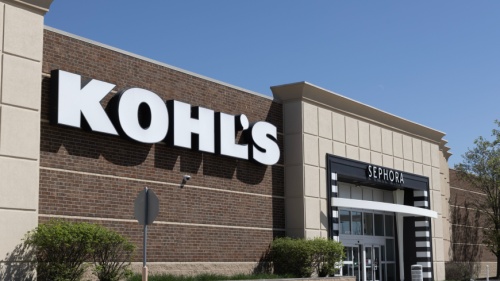
Kohl’s New CEO Ashley Buchanan Has His Work Cut Out For Him

Ashley Buchanan, the former Michaels CEO, is the right man for the job at Kohl’s. Buchanan did a wonderful job instilling an omnichannel foundation at Michaels and has a background rooted in innovation and digital from previous stints at Walmart and Sam’s Club. In fact, I said on a recent podcast that Target would have been wise to look at him to succeed Brian Cornell. 

But I do not envy Buchanan. 

Not. One. Bit.

Turning Kohl’s around is going to be tough. Buchanan inherits 12 consecutive quarters of comparable sales declines, alongside store traffic trends that read like the opening of a John Carpenter movie.

In its most recent quarter, comparable sales at Kohl’s were a negative 6.7%, and Kohl’s also said that it expects 2025 revenue to fall in the range of 5% to 7%. Frightening indeed. Let’s just hope Buchanan doesn’t already feel like Jamie Lee Curtis trapped in a closet trying to fight her way out with coat hangers.

It is no wonder that Buchanan has already instituted page one of every new CEO’s playbook – i.e. laying off 10% of your corporate workforce – because, lord knows, he is going to need the wiggle room (and as many coat hangers as he can get his hands on).

Costco Will Emerge Unscathed From Holding True To Its Pro-DEI Position

Costco shareholders overwhelmingly (approximately 98% of them) voted down a measure in late January that urged Costco to assess the risk associated with its DEI practices. Costco’s leadership came out strongly against the measure, arguing that its “commitment to an enterprise rooted in respect and inclusion is appropriate and necessary."

Or said another way, Costco held to a position that many others, including Walmart, Target, and Tractor Supply Company, have not.

In my retail experience, the general impact of taking a strong position on something like this publicly is felt near the beginning of such an announcement and then the impact gradually settles over time. 

If that were the case, Costco would have felt the impact in February, but Costco’s recently announced results indicate otherwise.

In its most recent quarter, which ended on January 31, 2025, Costco’s U.S. comparable sales increased 8.7% excluding impacts from gas deflation, while in February, its comparable sales held strong at 8.6%, also excluding any impacts from gas.

I’m no mathematician but that is hardly a dip.

Costco is still experiencing year-over-year traffic patterns, particularly into February (more on that later), of which other retailers can only dream; its U.S. membership renewal rate sits right around 93%; and its Kirkland signature brand appears to be a great hedge against inflation in that it, according to Costco CFO Gary Millerchip, “continues to grow at a faster pace than our business as a whole.”

The Costco executive team also did not mention word one of any DEI impact on its financial results within its last earnings call, something of which Costco no doubt would be conscious of given the current legal and political climate.

No, for all intents and purposes, at least initially, Costco appears to be holding strong to its principles and doing just fine.

Sprouts Has Nowhere To Go But Up

Under CEO Jack Sinclair, Sprouts has done a masterful job rightsizing its store prototype, bringing differentiation back to its assortment, and playing on the post-pandemic trend of consumers having a willingness to make that extra trip, as long as it is convenient for them (see below).

Sprouts also has a load of dry powder in its keg. For example, Sprouts still does not have a loyalty program (something it plans to launch in Q3 of this year) and only operates in 24 states. 

Or, put mildly, that right sized prototype that has been doing so well? The one driving an 11.5% comp in Sprouts’ most recent quarter? 

It still has a lot more room to grow.

Macy’s First 50 Strategy May Be “Working” But 50 Is A Long Way From Chain

Macy’s new CEO Tony Spring loves to talk about the results Macy’s is seeing out of its “First 50” locations, i.e. the 50 locations Macy’s has designated to trial new innovations to improve its overall business. Examples of these innovations include things like: enhanced staffing in certain areas of the stores, modernized visual presentations, enhanced merchandising, or aka all the garden variety things anyone who has been around retail longer than three minutes would expect to see within a test of this kind.

In January, Macy’s reported that its First 50 stores delivered a +1.9% sales comp in Q3 2024, outpacing other Macy's stores by 4.1%, and that it planned to expand its First 50 initiative to another 75 stores over the course of 2025. 

All sounds great, right?

Not to me it doesn’t. 

First off, in its most recent quarter (Q4 2024), the spread between the First 50 stores and the rest of the Macy’s chain appears to have slipped. Executives reported a 1.2% comp in the First 50 stores against a 0.9% comp decline in its Macy’s nameplate stores. In isolation, this performance might look good on paper, but looking at it against the trend line, one could argue that the First 50 stores performed relatively worse in Q4 than the rest of the chain. The chain’s performance picked up, while the First 50’s fell off.

Second, and perhaps more importantly, I have been around retail long enough to know that one should take the results of tests like these with a fine grain of salt. Many factors can impact the performance of 50 stores, particularly when a new CEO has just taken the helm. The least of which is that everyone in the entire Macy’s organization knows the importance of these stores and, therefore, is likely extra committed to making sure they succeed. As the focus wears off, tests like these usually revert back to the mean.

And, the mean, which looks somewhere in the range of just shy of a -0.9% (at best) to a -6.0% comp (at worst) across the last two quarters, won’t keep the Macy’s Day parade balloons afloat come Thanksgiving time. 

Bloomie’s Is A Different Story

Fortunately, Bloomingdale’s is not Macy’s and vice versa. I say that because Bloomingdale’s, unlike Macy’s, could be onto something with its small format strategy.

According to Macy’s website, Bloomingdale’s has 33 full-sized U.S. store locations compared to Macy’s 479. 

That is quite the delta.

So much so, that one has to wonder if, similar to Sprouts above, small format Bloomie’s stores throughout the country (of which there are three currently in the U.S.) could become a significant growth vehicle for Bloomingdale’s.

I am on record as saying that when there are already 479 larger-sized Macy’s stores, the last thing anyone needs is a smaller Macy’s. That same logic, however, cannot be applied to Bloomingdale’s because only 33 Bloomingdale’s stores actually exist. The majority of the country has no idea what a Bloomingdale’s experience is like, let alone how to compare shopping at a bigger one versus a smaller one. Consumers generally prefer shopping at a store with a greater selection unless, of course, their next best option is no selection at all.

The data from the three smaller format Bloomie’s stores appears to prove this logic out (see below):

Year-over-year visit growth to Boomie’s stores across six of the last nine quarters has outpaced the general department store industry by a wide margin.

Granted, it is still only three stores, but the logic of the strategy is sound, provided Macy’s can operate these smaller Bloomie’s stores profitably (which is still a big unknown – and an issue that also plays into the Macy’s First 50 stores outlined above).

Target Will Get Worse Before It Gets Better

Target, my alma mater, so to speak, has been stuck in neutral since even before the pandemic began. 

I don’t know when or why it happened but, at some point, Target became myopic in its strategy, failing to look beyond its vaunted “owned brands” for growth. While others, like Walmart, were evolving with the times, Target stood flat footed and failed to adapt its Expect More, Pay Less brand promise to the needs of its 21st century, digital-first consumer.

Make no mistake: Target’s former beachheads are now all under siege. 

Its higher income demographic shoppers are moving to Walmart because of Walmart’s much stronger competitive positioning of Walmart+; fast fashion players like Shein and Temu are stealing share in apparel; the club channel is more formidable than ever; and Wayfair (more on that in a minute) is now the go-to online source for home furnishings. Taken together, it all means less trips into a Target store over the long-term.

A lot less trips.

But that is just the digital impact. Merchandising execution and in-stocks continue to plague the retailer as well, with many people both in and outside of the organization asking if it isn’t time for Target to return to office, similar to Walmart, Amazon and many others before them.

Something is causing the temperature of Target’s porridge to feel just not quite right (see traffic patterns below). Could it be that the goldilocks shine of CEO Brian Cornell’s strategy to wait by the wayside as other retailers started going out of business is starting to wear off? 

Cornell, himself, in Target’s most recent earnings call, lauded the $30 billion of additional revenue Target has gained since 2019, but how much of that was pure inflation and inertia given the bankruptcies of Toys R Us, Bed Bath & Beyond, Party City, and many, many more? 

A new alarming feature is what appears to be a precipitous decline in February, corroborated by what Target CFO Brian Lee called “soft” topline performance for the month in the aforementioned earnings call. 

Target did not mention its recent DEI rollback as a possible rationale for its slow February, citing instead things like “extreme cold” and “flood and fires,” but the prospect of a 40-day boycott in response to the rollback sure as heck won’t make things any easier.

Target has its work cut out for it, to say the least. Its new $15 billion growth plan is potentially a step in the right direction. However, I worry that, when one looks under the covers of that plan, all he or she will find is the same owned brand gobbledygook that Target has espoused ever since Cornell took over.

And that owned brand well, in relation to the competitive issues outlined above, is done and dried up.

Wayfair May Be Investing In Stores At Exactly The Right Time

Wayfair announced in January 2025 that it was planning to exit Germany. According to Retail Dive, Wayfair said that it “plans to reinvest cost savings from backing out of Germany into expanding its physical retail footprint.”

After many (what some might call, or at least I would) failed attempts at smaller physical store concepts, Wayfair opened a 150,000 square foot mega store just outside of Chicago. From the looks of the data below, this larger store concept, one of which I have also been a big fan of for sometime now, appears to be showing encouraging signs.

Moreover, the home furnishings industry also appears to be on a bit of a rebound. Traffic to home furnishings players appears to be picking up (see below) and Home Depot just posted its first positive comp quarter after eight consecutive quarterly declines. 

Wayfair’s CEO Niraj Shah is as shrewd as they come, and he may just be betting on stores right as a big tailwind is ready to hit his back. 

Is it a coincidence then that Wayfair just announced the launch of its second large format store in Atlanta?

I think I think not.

Starbucks May Already Be Righting The Ship

New CEO Brian Niccol took the helm in September of last year and wasted no time in establishing his priorities. Put simply, Niccol wanted to reignite the “third place” atmosphere of Starbucks and ensure that all in-store customers get served their orders in under four minutes or less. 

Early results look promising.

While Starbucks’ same-store sales did decline by 4% during the last quarter, this figure still beat Wall Street estimates, which, according to CNBC, had predicted a 5.5% drop. 

Traffic data also supports Niccol’s moves (see below).

Lord knows, it’s early here, too, and the February traffic decline is definitely something to watch. But, given that Niccol has only been in his role since September, these results at least have the aroma of an early turnaround. 

Unless of course, you are a regular Frappaccino drinker – because then you are probably pissed.

Sam’s Club Is The Retailer More People Should Be Talking About

For the past six years, Sam’s Club has sat atop my list as the most innovative retailer in America not named Amazon. It is an award well-deserved for a number of reasons. 

First, Sam’s Club has been on a winning streak. In its most recent quarter, Sam’s Club delivered a 6.8% sales comp, excluding fuel.

Second, Sam’s Club has seen explosive growth in digital both online and in-store. E-commerce sales were up over 24% in the last quarter, and the use of its scan and go shopping app hit an all-time high during the same period. This last statistic might not sound like much, but the Sam’s Club executives I have interviewed on multiple occasions have all told me that 1 in 3 shoppers regularly use their scan and go app. 

1 in 3! 

I am going to go out on a limb here but my guess is that Costco’s mobile app usage is nowhere near that high, particularly in-store.

Third, Sam’s Club is also winning with young people. Sam's Club has reported record highs in membership numbers and renewal rates, with particularly strong growth among Gen Z (63% over two years) and millennials (14% over two years).

The combination of a digital-first shopping experience and a growing percentage of younger people shopping in its stores means that Sam’s Club is positioned to create the most one-to-one personalized shopping experience out there. 

Retail media anyone?

I say that in jest but the profit-enhancing effects of retail media are real (see Walmart), and Sam’s Club has created a visual menu board to serve up advertisements to one-third of its shoppers right as they are standing at the shelf. Can Costco or anyone else for that matter do that?

Not nearly to the same degree.

Concluding Thoughts

There you have it. All the things I think I think about retail over the last quarter, and in no particular order of importance. 

So, I ask you in closing – what do you think of what I think?

Reports
INSIDER
How Local Events Promote Economic Growth: The Civic Impact of Summer Events
Dive into the data to find out how major summer events – including Lollapalooza in Chicago and Governors Ball in New York – drive community engagement and boost the local economy.
August 22, 2024
5 minutes

Lollapalooza: Energizing Chicago

The first Lollapalooza – a four-day music festival – took place in 1991. Chicago’s Grant Park became the event’s permanent home (at least in the United States) in 2005, drawing thousands of revelers and music fans to the park each year. 

This year, the festival once again demonstrated its powerful impact on the city. On August 1st, 2024, visits to Grant Park surged by 1,313.2% relative to the YTD daily average, as crowds converged on the park to see Chappell Roan’s much-anticipated performance. And during the first three days of the event, the event drew significantly more foot traffic than in 2023 – with visits up 18.9% to 35.9% compared to the first three days of last year’s festival (August 3rd to 5th, 2023).  

Change In Visitor Profile

Lollapalooza led to a dramatic spike in visits to Grant Park – and it also attracted a different type of visitor compared to the rest of the year. 

Analyzing Grant Park’s captured market with Spatial.ai’s PersonaLive dataset reveals that  Lollapalooza attendees are more likely to belong to the “Young Professionals” and “Ultra Wealthy Families” segment groups than the typical Grant Park visitor.

By contrast, the “Near-Urban Diverse Families” segment group, comprising middle-class diverse families living in or near cities, made up only 6.5% of visitors during the festival, compared to 12.0% during the rest of the year.

Additionally, visitors during Lollapalooza came from areas with higher HHIs than both the nationwide baseline of $76.1K and the average for park visitors throughout the year. Understanding the demographic profile of visitors to the park during Lollapalooza can help planners and city officials tailor future events to these segment groups – or look for ways to make the festival accessible to a wider range of music lovers.

Businesses Get Boosts

Lollapalooza’s impact on Chicago extended beyond the boundaries of Grant Park, with nearby hotels seeing remarkable surges in foot traffic. The Congress Plaza Hotel on South Michigan Avenue witnessed a staggering 249.1% rise in visits during the week of July 29, 2024, compared to the YTD visit average. And Travelodge on East Harrison Street saw an impressive 181.8% increase. These spikes reflect the festival’s draw not just for locals but for out-of-town visitors who fill hotels across the city.

The North Michigan Avenue retail corridor also enjoyed a significant increase in foot traffic during the festival, with visits on Thursday, August 1st 56.0% higher than the YTD Thursday visit average. On Friday, August 2nd, visits to the corridor were 55.7% higher than the Friday visit average. These numbers highlight Lollapalooza’s role in driving economic activity across Chicago, as festival-goers venture beyond the park to explore the city’s vibrant retail and hospitality offerings.

Queens Keeps it Cool

City parks often serve as community hubs, and Flushing Meadows Corona Park in Queens, NY, has been a major gathering point for New Yorkers. The park hosted one of New York’s most beloved summer concerts – Governors Ball – which moved from Governors Island to Flushing Meadows in 2023. 

During the festival (June 9th -11th, 2024), musicians like Post Malone and The Killers drew massive crowds to the park, with visits soaring to the highest levels seen all year. On June 9th, the opening day of the festival, foot traffic in the park was up 214.8% compared to the YTD daily average, and at its height, on June 8th, the festival drew 392.7% more visits than the YTD average. 

The park also hosted other big events this summer – a July 21st set by DMC helped boost visits to 185.1% above the YTD average. And the Hong Kong Dragon Boat Festival on August 3rd and 4th led to major visit boosts of 221.4% and 51.6%, respectively. 

These events not only draw large crowds, but also highlight the park’s role as a space where cultural and civic life can find expression, flourish, and contribute to the health of local communities.

The Reach and Resonance of Events

Analyzing changes in Flushing Meadows Corona Park’s trade area size offers insight into how far people are willing to travel for these events. During Governors Ball, for example, the park’s trade area ballooned to 254.5 square miles, showing the festival's wide appeal. On July 20th, by contrast, when the park hosted several local bands and DJs, the trade area was a much more modest 57.0 square miles.

Ready, Set, Summer

Summer events drive community engagement, economic activity, and civic pride. Cities that invest in their parks and event hubs, fostering lively and inclusive spaces, can create lasting value for both residents and visitors, enriching the cultural and social life of urban areas.

For more data-driven civic stories, visit Placer.ai

INSIDER
2024 Hotel Visit Trends
Despite inflation and other headwinds, the hotel industry presents significant growth opportunities across tiers, regions, and audience segments.
August 1, 2024


Hospitality Report Card

The pandemic and economic headwinds that marked the past few years presented the multi-billion dollar hotel industry with significant challenges. But five years later, the industry is rallying – and some hotel segments are showing significant growth.

This white paper delves into location analytics across six major hotel categories – Luxury Hotels, Upper Upscale Hotels, Upscale Hotels, Upper Midscale Hotels, Midscale Hotels, and Economy Hotels – to explore the current state of the American hospitality market. The report examines changes in guest behavior, personas, and characteristics and looks at factors driving current visitation trends. 

An Upper Midscale Sweet Spot

Overall, visits to hotels were 4.3% lower in Q2 2024 than in Q2 2019 (pre-pandemic). But this metric only tells part of the story. A deeper dive into the data shows that each hotel tier has been on a more nuanced recovery trajectory. 

Economy chains – those offering the most basic accommodations at the lowest prices – saw visits down 24.6% in Q2 2024 compared to pre-pandemic – likely due in part to hotel closures that have plagued the tier in recent years. Though these chains were initially less impacted by the pandemic, they were dealt a significant blow by inflation – and have seen visits decline over the past three years. As hotels that cater to the most price-sensitive guests, these chains are particularly vulnerable to rising costs, and the first to suffer when consumer confidence takes a hit.

Luxury Hotels, on the other hand, have seen accelerated visit growth over the past year – and have succeeded in closing their pre-pandemic visit gap. Upscale chains, too, saw Q2 2024 visits on par with Q2 2019 levels. As tiers that serve wealthier guests with more disposable income, Luxury and Upscale Hotels are continuing to thrive in the face of headwinds. 

But it is the Upper Midscale level – a tier that includes brands like Trademark Collection by Wyndham, Fairfield by Marriott, Holiday Inn Express by IHG Hotels & Resorts, and Hampton by Hilton – that has experienced the most robust visit growth compared to pre-pandemic. In Q2 2024, Upper Midscale Hotels drew 3.5% more visits than in Q2 2019. And during last year’s peak season (Q3 2023), Upper Midscale hotels saw the biggest visit boost of any analyzed tier. 

As mid-range hotels that still offer a broad range of amenities, Upper Midscale chains strike a balance between indulgence and affordability. And perhaps unsurprisingly, hotel operators have been investing in this tier: In Q4 2023, Upper Midscale Hotels had the highest project count of any tier in the U.S. hotel construction and renovation pipeline. 

Upper Midscale Hotels Gain Visit Share

The shift in favor of Upper Midscale Hotels and away from Economy chains is also evident when analyzing changes in relative visit share among the six hotel categories. 

Upper Midscale hotels have always been major players: In H1 2019 they drew 28.7% of overall hotel visits – the most of any tier. But by H1 2024, their share of visits increased to 31.2%. Upscale Hotels – the second-largest tier – also saw their visit share increase, from 24.8% to 26.1%. 

Meanwhile, Economy, Midscale, and Upper Upscale Hotels saw drops in visit share – with Economy chains, unsurprisingly, seeing the biggest decline. Luxury Hotels, for their parts, held firmly onto their piece of the pie, drawing 2.8% of visits in H1 2024.

The Guests Driving Upper Midscale Chain Growth

Who are the visitors fueling the Upper Midscale visit revival? This next section explores shifts in visitor demographics to four Upper Midscale chains that are outperforming pre-pandemic visit levels: Trademark Collection by Wyndham, Holiday Inn Express by IHG Hotels & Resorts, Fairfield by Marriott, and Hampton by Hilton

A Variety of (Rising) Income Levels

Analyzing the captured markets* of the four chains with demographics from STI: Popstats (2023) shows variance in the relative affluence of their visitor bases. 

Fairfield by Marriott drew visitors from areas with a median household income (HHI) of $84.0K in H1 2024, well above the nationwide average of $76.1K. Hampton by Hilton and Trademark Collection by Wyndham, for their parts, drew guests from areas with respective HHIs of $79.6K and $78.5K – just above the nationwide average. Meanwhile, Holiday Inn Express by IHG Hotels & Resorts drew visitors from areas below the nationwide average. 

But all four brands saw increases in the median HHIs of their captured markets over the past five years. This provides a further indication that it is wealthier consumers – those who have had to cut back less in the face of inflation – who are driving hotel recovery in 2024.

(*A chain’s captured market is obtained by weighting each Census Block Group (CBG) in its trade area according to the CBG’s share of visits to the chain – and so reflects the population that actually visits the chain in practice.) 

Identifying Regional Growth Opportunities

Much of the Upper Midscale visit growth is being driven by chain expansion. But in some areas of the country, the average number of visits to individual hotel locations is also on the rise – highlighting especially robust growth potential. 

Tourism Booms Bolster Visits Per Location

Analyzing visits to existing Upper Midscale chains in four metropolitan areas with booming tourism industries – Salt Lake City, UT, Palm Bay, FL, San Diego, CA, and Richmond, VA – shows that these markets feature robust untapped demand.

Utah, for example, has emerged as a tourist hotspot in recent years – with millions of visitors flocking each year to local destinations like Salt Lake City to see the sights and take in the great outdoors. And Upper Midscale hotels in the region are reaping the benefits. In H1 2024, the overall number of visits to Upper Midscale chains in Salt Lake City was 69.4% higher than in H1 2019. Though some of this increase can be attributed to local chain expansion, the average number of visits to each individual Upper Midscale location in the area also rose by 12.5% over the same period.  

Palm Bay, FL (the Space Coast) – another tourist favorite – is experiencing a similar trend. Between H1 2019 and H1 2024, overall visits to local Upper Midscale hotel chains grew by 36.4% – while the average number of visits per location increased a substantial 16.9%. Given this strong demand, it may come as no surprise that the area is undergoing a hotel construction boom. Upper Midscale hotels in other areas with flourishing tourism sectors, like San Diego, CA and Richmond, VA, are seeing similar trends, with increases in both overall visits and and in the average number of visits per location. 

Extended Stay: An Economy Bright Spot 

Though Economy chains have underperformed versus other categories in recent years, the tier does feature some bright spots. Some extended-stay brands in the Economy tier – hotels with perks and amenities that cater to the needs of longer-stay travelers – are succeeding despite category headwinds. 

Young Professionals Fuel Extended-Stay Success

Choice Hotels’ portfolio, for example, includes WoodSpring Suites, an Economy chain offering affordable extended-stay accommodations in 35 states. In H1 2024, the chain drew 7.7% more visits than in the first half of 2019 – even as the wider Economy sector continued to languish. InTown Suites, another Economy extended stay chain, saw visits increase by 8.9% over the same period.

And location intelligence shows that the success of these two chains is likely being driven, in part, by their growing appeal to young, well-educated professionals. In H1 2019, households belonging to Spatial.ai: PersonaLive’s “Young Professionals” segment made up 9.6% of WoodSpring Suites’ captured market. But by H1 2024, the share of this group jumped dramatically to 13.3%. At the same time, InTown Suites saw its share of Young Professionals increase from 12.0% to 13.4%.

Whether due to an affinity for prolonged “workcations” (so-called “bleisure” excursions) or an embrace of super-commuting, younger guests have emerged as key drivers of growth for the extended stay segment. And by offering low–cost accommodations that meet the needs of these travelers, Economy chains can continue to grow their share of the pie.

Market Recovery Led by Affordable, Quality Experiences

The hospitality industry recovery continues – led by Upper Midscale Hotels, which offer elevated experiences that don’t break the bank. But today’s market has room for other tiers as well. By keeping abreast of local visitation patterns and changing consumer profiles, hotels across chain scales can personalize the visitor experience and drive customer satisfaction.

INSIDER
Domestic Tourism Trends in NYC and LA
Dive into the data to explore evolving domestic tourism trends in New York City and Los Angeles – two of the nation's prime travel destinations.
July 25, 2024
6 minutes

Shifting Tourism Patterns  

The past few years have provided the tourism sector with a multitude of headwinds, from pandemic-induced lockdowns to persistent inflation and a rise in extreme weather events. But despite these challenges, people are more excited than ever to travel – more than half of respondents to a recent survey are planning on increasing their travel budgets in the coming months.

And while revenge travel to overseas destinations is still very much alive and well, the often high costs associated with traveling abroad are shaping the way people choose to travel. Domestic travel and tourism are seeing significant growth as more affordable alternatives.

This white paper takes a closer look at two of the most popular domestic tourism destinations in the country – New York City and Los Angeles. Over the past year, both cities have continued to be leading tourism hotspots, offering a wealth of attractions for visitors. What does tourism to these two cities look like in 2024, and what has changed since before the pandemic? How have inflation and rising airfare prices affected the demographics and psychographics of visitors to these major hubs?

Major Metropolitan Magnets For Domestic Tourism

Analyzing the distribution of domestic tourists across CBSAs nationwide from May 2023 to April 2024 reveals New York and Los Angeles to be two of the nation’s most popular destinations. (Tourists include overnight visitors staying in a given CBSA for up to 31 days). 

The New York-Newark-Jersey City, NY-NJ-PA metro area drew the largest share of domestic tourists of any CBSA during the analyzed period (2.7%), followed closely by the Los Angeles-Long Beach-Anaheim, CA CBSA (2.5%). Other domestic tourism hotspots included Orlando-Kissimmee-Sanford, FL (tied for second place with 2.5% of visitors), Dallas-Fort Worth-Arlington, TX (1.9%), Las Vegas-Henderson-Paradise, NV (1.8%), Miami-Fort Lauderdale-Pompano Beach, FL (1.8%), and Chicago-Naperville, Elgin, IL-IN-WI (1.6%). 

New York City - An East Coast Destination 

The Big Apple. The City That Never Sleeps. Empire City. Whatever it’s called, New York City remains one of the most well-known tourist destinations in the world. And for many Americans, New York is the perfect place for an extended weekend getaway – or for a multi-day excursion to see the sights. 

Flocking to the Big Apple From Nearby Metro Areas

But where do these NYC-bound vacationers come from? Diving into the data on the origin of visitors making medium-length trips to New York City (three to seven nights) reveals that increasingly, these domestic tourists are coming from nearby metro areas. 

Between 2018-2019 and 2023-2024, for example, the number of tourists visiting New York City from the Philadelphia metro area increased by 19.2%. 

The number of tourists coming from the Boston and Washington, D.C metro areas, and from the New York CBSA itself (New York-Newark-Jersey City, NY-NJ-PA) also increased over the same period. 

Meanwhile, further-away CBSAs like San Francisco-Oakland-Berkeley, CA, Atlanta-Sandy Springs-Alpharetta, GA, and Miami-Fort Lauderdale-Pompano Beach, FL fed fewer tourists to NYC in 2023-2024 than they did pre-pandemic. It seems that residents of these more distant metro areas are opting for vacation destinations closer to home to avoid the high costs of air travel.

Younger Travelers Visit NYC

Diving even deeper into the characteristics of visitors taking medium-length trips to New York City reveals another demographic shift: Tourists staying between three and seven nights in the Big Apple are skewing younger.

Between 2018-2019 and 2023-2024, the share of visitors to New York City from areas with median ages under 30 grew from 2.1% to 4.5%. Meanwhile, the share of visitors from areas with median ages between 31 and 40 increased from 34.3% to 37.7%.

The impact of this trend is already being felt in the Big Apple, with The Broadway League reporting that the average age of audiences to its shows during the 2022- 2023 season was the youngest it had been in 20 seasons.

New York City Attractions Draw Younger Visitors

The shift towards younger tourists can also be seen when examining the psychographic makeup of visitors to popular attractions in New York City. Analyzing the captured markets of major NYC landmarks with data from Spatial.ai’s PersonaLive dataset reveals an increase in households belonging to the “Educated Urbanites” segment between 2018-2019 and 2023-2024. 

These well-educated, young singles are increasingly visiting iconic NYC venues such as the Whitney Museum of American Art, The Metropolitan Museum of Art, The American Museum of Natural History, and the Statue of Liberty. This shift highlights the growing popularity of these attractions among young, educated singles, reflecting a broader trend of increased domestic tourism among this demographic.

New York City’s tourism sector is adapting to meet the changing needs of travelers, fueled increasingly by younger visitors who may be unable to take a costly international vacation. How have travel patterns to Los Angeles changed in response to increasing travel costs? 

Los Angeles -  A West Coast Favorite

Tourism to Los Angeles Fed By Households of Modest Means

While New York City is the East Coast’s tourism hotspot, Los Angeles takes center stage on the West Coast. And as overseas travel has become increasingly out of reach for Americans with less discretionary income,  the share of domestic tourists originating from areas with lower HHIs has risen. 

Before the pandemic, 57.6% of visitors to LA came from affluent areas with median household incomes (HHIs) of over $90K/year. But by 2023-2024, this share decreased to 50.7%. Over the same period, the share of visitors from areas with median HHIs between $41K and $60K increased from 9.7% to 12.5%, while the share of visitors from areas with HHIs between $61K and $90K rose from 32.1% to 35.8%.

Higher Shares of Middle-Income Families Visit Los Angeles

Diving into the psychographic makeup of visitors to popular Los Angeles attractions – Universal Studios Hollywood, Disneyland California, the Santa Monica Pier, and Griffith Observatory – also reflects the above-mentioned shift in HHI. The captured markets of these attractions had higher shares of middle-income households belonging to the “Family Union” psychographic segment in 2023-2024 than in 2018-2019. 

Experian: Mosaic defines this segment as “middle income, middle-aged families living in homes supported by solid blue-collar occupations.” Pre-pandemic, 16.0% of visitors to Universal Studios Hollywood came from trade areas with high shares of “Family Union” households. This number jumped to 18.8% over the past year. A similar trend occurred at Disneyland, Santa Monica Pier, and Griffith Observatory.

Californians Love Los Angeles 

And like in New York City, growing numbers of visitors to Los Angeles appear to be coming from nearby areas. Between 2018-2019 and 2023-2024, the share of in-state visitors to major Los Angeles attractions increased substantially – as people likely sought to cut costs by keeping things local. 

Pre-pandemic, for example, 68.9% of visitors to Universal Studios Hollywood came from within California –  a share that increased to 72.0% over the past year. Similarly, 59.7% of Griffith Observatory visitors in 2018-2019  came from within the state – and by 2023-2024, that number grew to 64.7%.

Final Tourist Destination

Even when times are tight, people love to travel – and New York and Los Angeles are two of their favorite destinations. With prices for airfare, hotels, and dining out increasing across the board, younger and more price-conscious households are adapting, choosing to visit nearby cities and enjoy attractions closer to home. And as the tourism industry continues its recovery, understanding emerging visitation trends can help stakeholders meet travelers where they are.

Loading results...
We couldn't find anything matching your search.
Browse one of our topic pages to help find what you're looking for.
For more in-depth analyses on a variety of subjects, explore Reports.
The Anchor Logo
INSIDER
Stay Anchored: Subscribe to Insider & Unlock more Foot Traffic Insights
Gain insider insights with our in-depth analytics crafted by industry experts
— giving you the knowledge and edge to stay ahead.
Subscribe