Skip to Main Content
Thank you! Your submission has been received!
Oops! Something went wrong while submitting the form.
0
0
0
0
----------
0
0
Articles
Article
Who Visits CVS and Walgreens?
CVS and Walgreens are the two leading brick-and-mortar pharmacy chains in the country. And though the two chains may appear similar, the location analytics reveals that each brand serves a slightly different audience. We take a closer look, here.
Shira Petrack
Jan 25, 2024
3 minutes

CVS and Walgreens are the two leading brick-and-mortar pharmacy chains, controlling together over 40% of the U.S. prescription drug market. And although the companies have been rightsizing their physical footprint over the past couple of years, CVS and Walgreens together still operate over 18,000 locations throughout the country. 

And while the two chains may sometimes appear interchangeable, diving into the demographic differences between CVS and Walgreens’ trade areas indicates that each brand serves a slightly different audience. 

Differences in Visitor Income 

A chain’s potential market looks at the Census Block Groups – CBGs – where visitors to a chain come from, weighted according to the population of each CBG. And since both CVS and Walgreens operate in all 50 states and often have locations in the same town or city, the makeup of the two chains’ potential market trade area is remarkably similar – indicating that both chains have the potential to reach the same types of households. 

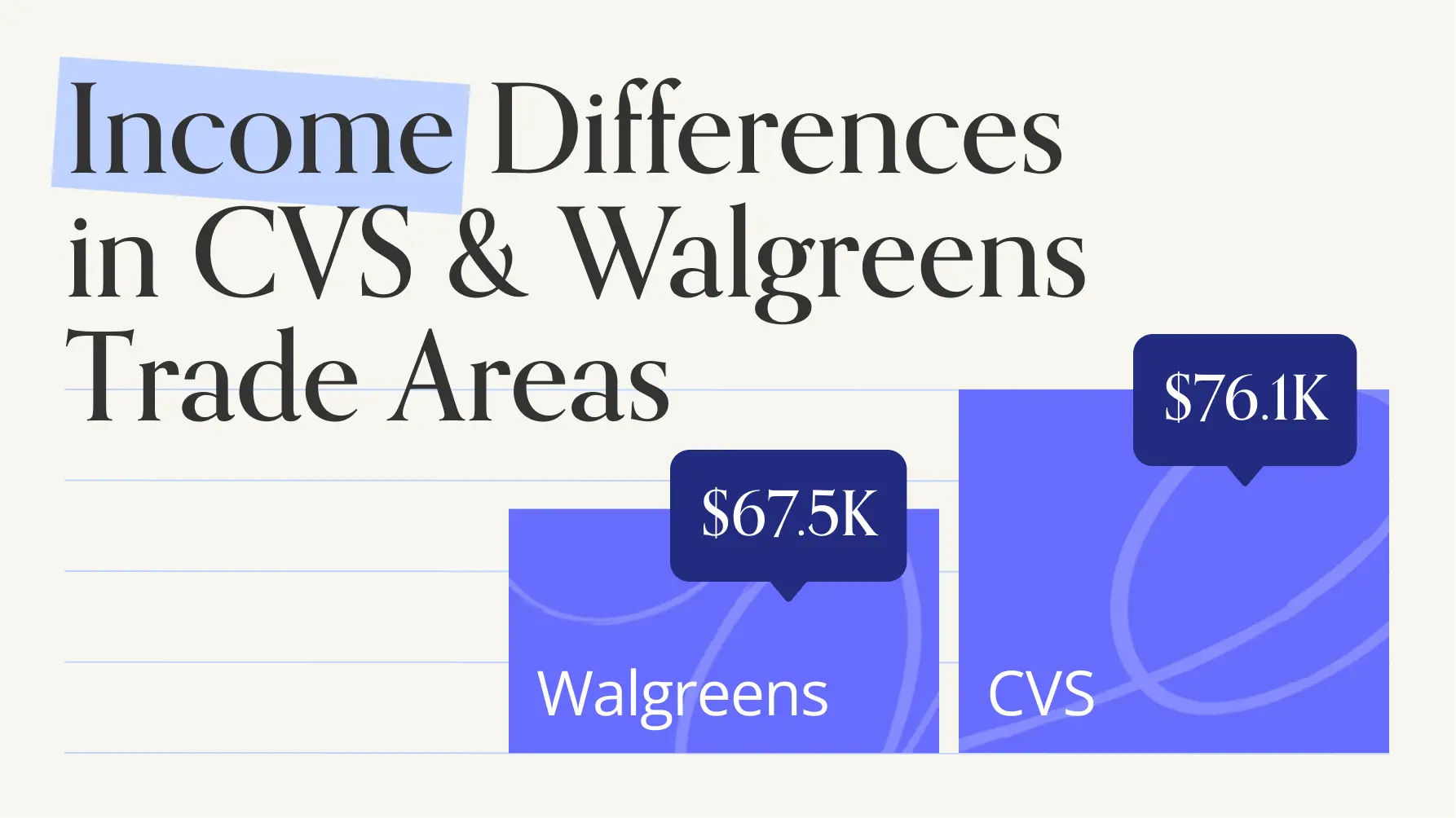
But diving into the captured market (the trade area of each chain weighted according to the actual number of visits from each CBG) reveals a major difference in trade area median household income (HHI). Although both chains have the potential to attract visitors with a median HHI of around $70.0K, visitors to CVS come from CBGs with a median HHI of $76K – meaning that visitors to CVS tend to come from the more affluent neighborhoods within CVS’s potential trade area. Walgreens visitors, on the other hand, come from CBGs with a median HHI of $67.5K, which is lower than the median HHI in the brand’s potential market, and indicates that Walgreens visitors tend to come from the less affluent neighborhood within the company’s trade area.  

Bar graphs: CVS visitors tend to come form higher-income areas than Walgreens visitors. based on STI: Popstats 2022 dataset and placer.ai captured and potential trade areas

CVS Attracts Larger Households, While Walgreens Serves More Singles 

The two pharmacy leaders also seem to attract different shares of singles and families, although the differences are not as pronounced as the differences in median HHI. 

CVS and Walgreens have equal shares of one-person & non-family households in their trade areas, but the share of this segment in Walgreens’ captured market is slightly larger than in CVS’ captured market. Still, for both brands, one-person and non-family households are slightly underrepresented in the captured market relative to the potential market, indicating that singles across the board are perhaps slightly less likely to visit brick-and-mortar pharmacy chains. 

On the other hand, both CVS and Walgreens had more families (households with four or more children) in their captured market than in their potential market – although the share of this segment in CVS’ captured market was slightly higher than in Walgreens’.


bar graphs: CVS Attracts Larger Households, While Walgreens Serves More Singles, based on STI: PopStats 2022 dataset and placer.ai cap ured and potential trade areas

CVS Appeals to Families

CVS’ relative popularity with family segments also comes through when looking at the psychographic makeup of its trade area. When compared to Walgreens, CVS’s captured market included larger shares of three out of four family-oriented segments analyzed by the Spatial.ai: PersonaLive dataset – Ultra Wealthy Families, Wealthy Suburban Families, and Near-Urban Diverse Families. Walgreens’ captured market did include larger shares of Upper Suburban Diverse Families, but the difference was minimal – 9.8% for Walgreens compared to 9.5% for CVS. 

bar graphs: CVS' trade area includes more family psychographic segments. based on Spatial.ai: PersonaLive dataset combined with placer.ai captured trade area data

Differences and Overlaps between CVS and Walgreens Visitors  

CVS and Walgreens carry a very similar product selection, and the two chains’ nearly identical potential trade area makeup indicates that both brands’ locations have the potential to reach the same types of customers. But diving into CVS and Walgreens’ captured market reveals some differences between the two chains’ audiences – CVS tends to attract more affluent visitors, while Walgreens seems slightly more popular among singles. 

For more data-driven retail insights, visit placer.ai/blog

Article
Fashionably Frugal: Apparel in 2023
The fashion industry faced plenty of headwinds in 2023 - but discount and thrift apparel chains are thriving. We take a closer look at location intelligence to understand how the demographic profiles of visitors to apparel chains of all kinds have shifted in recent years.
Lila Margalit
Jan 24, 2024

From high prices to changing workplace attire (yes, soft pants are most definitely still a thing) – the fashion industry faced plenty of headwinds in 2023. But some segments, like off-price and thrift stores, reaped the benefits of trading down by consumers. And the category as a whole enjoyed a robust holiday season, helping to drive record holiday sales. 

So with 2024 getting underway, we dove into the data to explore the evolving relationship between three major segments that comprise the fashion industry: non-off-price apparel chains, off-price retailers (such as T.J. Maxx, Marshalls, Ross Dress for Less, and Burlington), and thrift shops.* Which segment drew the most foot traffic in 2023? And how have the demographic profiles of visitors to the three sub-categories shifted in recent years?  

*Analysis includes major thrift shop chains, including Goodwill, the Salvation Army, Buffalo Exchange, Plato’s Closet, and others.

Off-Price and Thrift Stores Gain Market Share

Last year saw an acceleration of the redistribution of foot traffic between non-off-price apparel retailers, off-price apparel chains, and thrift shops – a trend which began even before COVID. Back in 2017, non-off-price apparel stores accounted for just over 50% of visits to these three segments – but in the years since, the sub-category’s visit share dwindled to 38.9%. Over the same period, off–price-apparel chains grew their visit share by 8.1 percentage points, from 39.3% to 47.4%, and the share of visits to thrift shops increased by 3.2%.

Stacked Bar Graph: Off-Price apparel retailers and thrift stores have been gaining visit share since 2017

Apparel Affluence Gap Persists

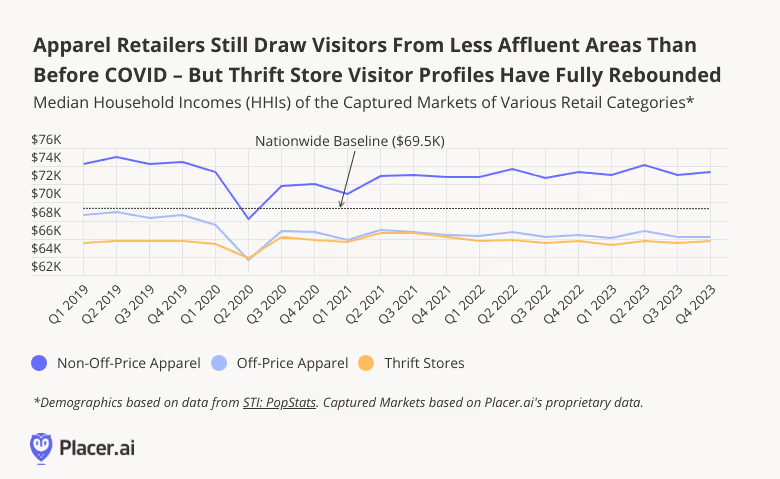
Unsurprisingly, non-off-price apparel chains have traditionally attracted more affluent consumers than either off-price retailers or thrift stores. And throughout the analyzed period, the captured market of non-off-price apparel retailers continued to feature a median household income (HHI) that was significantly higher than the nationwide baseline, while the captured markets of off-price chains and thrift stores featured median HHIs below the nationwide median. 

But the three segments were impacted differently by shifts in consumer behavior in the wake of the pandemic. In early 2020, all three sub-categories experienced significant dips in the affluence of their captured markets. But while thrift shops saw an immediate HHI rebound, non-off-price apparel chains – and even more so off-price retailers – have yet to see the affluence of their visitor bases return to 2019 levels. 

Line graph: apparel retailers draw visitors from less affluent areas than before COVID, but thrift store visitor profiles have fully rebounded. Demographics based in STI: PopStats dataset and Placer.ai captured trade area data

Thrifting is (Disproportionately) for Singles

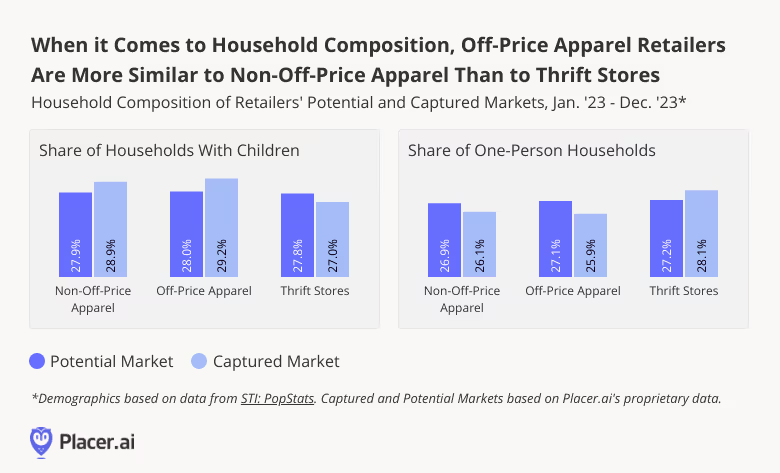
Foot traffic data also reveals an interesting divide in the household composition of visitors to the three segments: While the income profiles of off-price apparel shoppers are more akin to those of thrifters, their household composition is closer to that of visitors to non-off-price apparel stores. 

The potential markets of all three categories, for example, featured similar shares of one-person households in 2023. But their captured markets were quite different – with singles over-represented for thrift stores, and under-represented for off-price and non-off-price apparel stores. This indicates that thrifters hail disproportionately from Census Block Groups (CBGs) that feature higher-than-average shares of one-person households. And visitors to off-price and non-off-price retailers come from the CBGs within the trade areas of these chains that feature smaller-than-expected concentrations of one-person households. Given the special appeal thrift shops carry for demographics like college students, it may come as no surprise that singles are among their best customers. 

For families with children, on the other hand, more traditional apparel retailers hold sway: Visitors to off-price and non-off-price apparel stores were more likely to come from areas with higher concentrations of families with children in 2023, while thrifters were more likely to come from areas with smaller ones. 

Bar graphs: households that visit off-price retailers are more similar to those that visit non-off price than to thrift stores, based on STI: PopStats dataset and placer.ai captured and potential trade area data

Key Takeaways

Economic headwinds and evolving consumer preferences have left their mark on the shifting  relationship between different sub-categories within the fashion industry. But what does 2024 have in store for the sector? Will cooling inflation and rebounding consumer confidence lead to an increase in visit share for non-off-price favorites? And will more parental households make the pivot to thrift stores? 

Follow Placer.ai’s data-driven retail analyses to find out.

Article
Catching Up With Fast Food
2023 was a challenging year for many restaurant operators as persistent inflation caused many would-be diners to rethink a meal out. Today, we take a closer look at three fast-food and fast-casual dining chains – McDonald’s, Chipotle, and Panda Express – to see what is driving visits.
Bracha Arnold
Jan 23, 2024
3 minutes

2023 was a challenging year for many restaurant operators as persistent inflation caused many would-be diners to rethink going out for a bite to eat. Today, we take a closer look at three fast-food and fast-casual dining chains – McDonald’s, Chipotle, and Panda Express – to see what – and who – is driving visits to these restaurants. 

Biting Into Demographics

McDonald’s, Chipotle, and Panda Express each boast thousands of locations across the country. And a closer look at the three chains’ trade areas, analyzed using the STI: Popstats dataset, reveals differences in visitors across each dining chain. The median household income (HHI) of the three chains’ trade areas differed both on a nationwide average basis and when diving into individual states.

Chipotle consistently drew in visitors coming from higher-income trade areas – its nationwide median HHI stood at $75.9K/year. In contrast, Panda Express’ trade area had nationwide median HHIs of $68.2K/year, and McDonald’s, known for its affordability, had a trade area median $61.2K/year, respectively. And these trends persisted across all analyzed states, including New York, Texas, Arizona, North Carolina, and Florida, with Chipotle drawing visitors from the highest-income areas, followed by Panda Express and then McDonald’s.

Bar Graphs: Chipotle Trade Areas Tend to have highest income and lowest shares of households with children compared to Panda Express and McDonald's

Breakfast, Lunch, Or Dinner?

The past few years have seen consumers shifting their dining patterns as the pandemic with its more flexible schedules and drop in office attendance led many to adjust when, and where, they went out to eat. And though some pre-COVID habits have now returned, other consumer behaviors have proved to be stickier.  

For example, McDonald’s saw a significant drop in its share of early morning and lunch visits between 2019 and 2021, likely a result of fewer workers heading into the office and grabbing a coffee or Big Mac for a pick-me-up. But 2023 saw breakfast visits ticking back up, growing from 15.9% to 16.7% YoY, perhaps driven by a gradual return to in-person work.

Meanwhile, Panda Express, which also saw lunchtime visits drop in 2021 – but visits between 11:00 AM and 2:00 PM have steadily increased since and almost reached pre-pandemic levels in 2023. Midday visits also increased while dinnertime (7 PM to 10 PM) visits decreased slightly – perhaps thanks to the chain’s recent focus on building out its to-go options, which allows customers to pick up dinner on their way home instead of heading out to dine on-premises.

Like the other two chains, Chipotle also experienced a decline in lunchtime visits in 2021 – but unlike Panda Express, the lunchtime rush at Chipotle has yet to return in full force, with the share of visits between 11 AM and 2 PM just 36.2% in 2023 compared to 40.0% in 2019. At the same time, mid-afternoon (3 PM to 6 PM) visits picked up, which may be due to the chain’s relatively high prices compared to the other two chains leading some consumers to stick with lower-cost afternoon snacks instead of full meals. And evening visits have also increased since COVID, perhaps driven by the wider QSR trend towards more late-night visits and by some consumers choosing to visit Chipotle for their main meal of the day instead of splurging on an on-the-go lunch. 

Bar Graphs: Share of hourly visits for McDonald's, Panda Express, and Chipotle, 2019, 2021, 2022, and 2023

Final Plates

McDonald’s, Chipotle, and Panda Express have managed to find their own niche within the crowded and competitive world of quick-service and fast-casual dining. Will their success continue into 2024? 

Visit placer.ai/blog to find out.

Article
The Grocery Sector in 2023: An End-of-Year Recap
Which grocery brands were most popular in 2023? Did large chains dominate the scene, or did smaller regional or local banners also take market share? We look at the foot traffic to discover the broader trends that shaped brick-and-mortar grocery shopping last year.
Lila Margalit
Jan 22, 2024
3 minutes

For grocery stores, last year held plenty of challenges – from high food-at-home prices to increased competition from non-traditional grocery players like dollar stores and superstores. But 2023 also offered the segment plenty of opportunities. Discount chains made a strong showing – and customers spent more time browsing grocery aisles, loading up on essentials and making every trip to the store count.

But which grocery brands were most popular in 2023? Did large national chains dominate the scene, or did regional and local banners also have a role to play? And what can foot traffic analytics tell us about some of the broader trends that shaped brick-and-mortar grocery shopping last year?

We dove into the data to find out. 

And the Winner is… Kroger!

The nation’s most-visited grocery banner in 2023 was Kroger, which captured almost 19% of annual foot traffic to the nation’s ten most-frequented grocery chains. Safeway, owned by Albertsons, also made the top ten list. 

But significantly, several regional chains also garnered significant nationwide visit share – including Texas cult-favorite H-E-B, midwestern Meijer, and East Coast Food Lion and ShopRite. Aldi, the no-frills budget chain that keeps prices low by offering a limited inventory of mainly private-label products, emerged as the fourth most-visited grocery store in the country. And fan-favorite Trader Joe’s, also known for its high-quality own-label merchandise, drew 6.5% of visits to the top ten brands.

Pie Chart: Kroger's Kroger Banner Leads Nationwide Relative Share of Grocery Visits. Ten most-visited chains comprise 42.6% of total grocery visit share for 2023.

Plenty of Room for Regional and Local Players

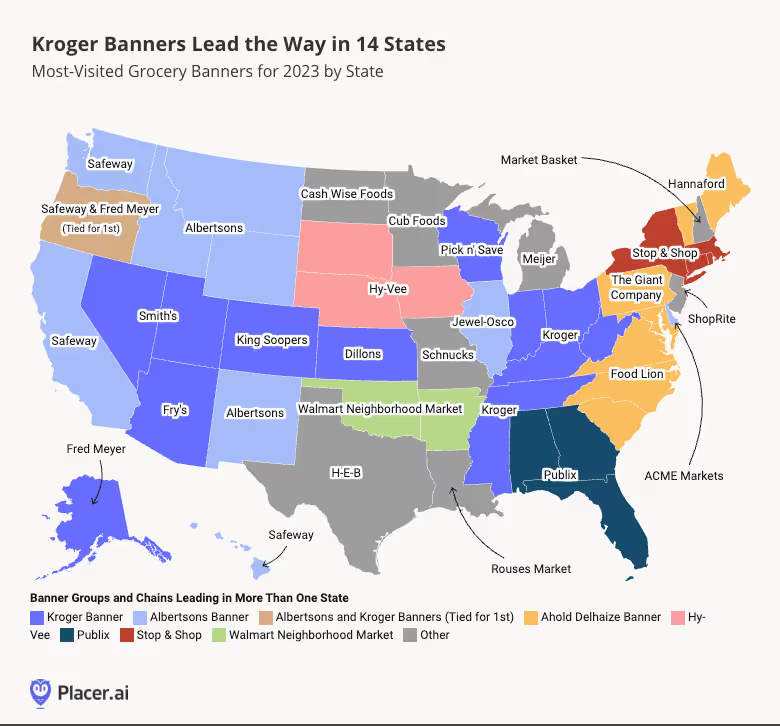
And drilling down deeper into the data for each of the fifty states shows that each region of the country had its own local favorite. Kroger banners – including Kroger, Smith’s, King Soopers, Dillons, Fry’s Food Stores, Fred Meyer, and Pick n’ Save – topped the charts in 14 states. In one of these (Oregon), Kroger’s Fred Meyer was tied for first place with Safeway, an Albertsons banner. In addition to Oregon, Albertsons banners took the lead in nine more states, mainly in the Western region of the U.S., while Ahold Delhaize banners ranked first in seven Northeast and South Atlantic states. And a variety of more local chains held sway throughout much of the Midwest and parts of the South.

Map: Kroger Banners Are the Most-Visited Grocer in 14 States

A Changing Customer Profile

Who were the shoppers driving visits to brick-and-mortar grocery stores in 2023? Location intelligence shows that overall, visitors to grocery chains last year tended to come from areas with slightly higher median household incomes (HHIs) than the nationwide average. Less affluent consumers, perhaps, were more likely to seek out lower-cost grocery alternatives like dollar stores. At the same time, there remained significant HHI gaps between chains, likely reflective in part of regional differences.

Bar Graph: Visitors to Grocery Stores tend to come from more affluent areas but there is variance among chains.


And comparing the overall median HHI of grocery chains’ captured markets to that of previous years reveals a small but distinct decline in the relative affluence of likely grocery visitors, from $76.2K in 2019 to $73.8K in 2023. Over the same period, the share of “Flourishing Families” in the chains’ captured markets (A psychographic segment encompassing affluent middle-aged families and couples) decreased slightly, while the share of “Singles and Starters” increased. 

These shifts may be partially due to the more widespread adoption of online grocery shopping among certain audience segments in the wake of COVID. While ecommerce only accounted for an estimated 7.2% of grocery spending as of May 2023 – with high delivery fees continuing to deter many Americans from going the online route – higher-HHI consumers may be particularly willing to prioritize convenience over price. 

Graphs: The demographic and psychographic Profiles of In-Store Grocery Shoppers Have Shifted Over the Past Four years. Based on STI: PopStats and Experian: Mosaic datasets and Placer.ai captured trade area data

Key Takeaways

For grocery stores, 2023 was all about value – with many customers flocking to discount chains and going out of their way to maximize savings. Still, traditional mainstays like Kroger and Albertsons continued to capture the biggest pieces of the grocery pie. 

What does 2024 have in store for the grocery space? Will shoppers place less emphasis on savings as inflation continues to ease? And which chains will emerge as nationwide and regional winners?

Follow Placer.ai’s data-driven retail analyses to find out.

Article
The Lure of Waikiki and Beyond: The Feel of Fifth Avenue on Oahu?
Caroline Wu
Jan 20, 2024

While brutally cold weather blasts much of the continental U.S. this week--including the Midwest, Deep South, and Montana--one might just dream about moving to the balmy shores of Hawaii, where temperatures have been hovering in the high 70s of late. Besides being home to the Ala Moana Center, the most-visited open-air shopping center in the US over the holidays, there is also constant redevelopment and improvement occurring on the island of Oahu.

For instance, the International Market Place on Kalakaua Ave, once known for decades as a touristy collection of kiosks, has upped its game and now boasts a Tesla showroom and a Balenciaga store at its entrance. Were it not for the commanding Banyan Tree that has been preserved, one would hardly recognize this iteration of the shopping venue compared to 10 years ago. Since it re-opened in early 2017, traffic has steadily been climbing. Hawaii tourism was hit hard by COVID in Spring 2020, but by July 2021 we begin to see a marked increase, to be repeated and exceeded in subsequent Julys as well. The summer of 2023 boasts a record in traffic originating from domestic visitors for the International Market Place.  

Just down the street is the Royal Hawaiian Center, which encompasses three separate buildings that are connected by skywalks. Since its opening in 1980, it too has seen numerous changes, though its commitment to sharing the spirit of Aloha remains the same.  The food options are extensive and come from all corners of the globe, such as Wolfgang’s Steakhouse, Tsurutontan Udon Noodle, Tim Ho Wan dim sum, and Wicked Maine Lobster. There was a massive spike in visitation in July 2021, which has since decreased a bit, but is still above pre-COVID levels.

There are definitely some unique, only-in-Hawaii treats, such as the shaka waffle ice cream cone at Kokoro Cafe at the Royal Hawaiian Center.

Shake cone image 1.17.24

The other notable shift at the Royal Hawaiian Center is the bountiful array of luxury shopping available.  From Hermes to Fendi, Harry Winston to Tiffany, designer showcases beckon from the street as well as from the interior corridors.

Article
Home Furnishing: 2024 Outlook for Housewares, Mattress, and Furniture Retail
R.J. Hottovy
Jan 20, 2024

When we last checked in on the home furnishing retail category, we noted that we had started to see a divergence among several of the various subcategories, with houseware retailers seeing great visits year-over-year relative to furniture retailers. At the time, we hypothesized that housewares were outperforming because of several reasons, including (1) consumers’ willingness to spend around holiday periods last year due to post-pandemic home entertaining trends; (2) the departure of Bed Bath & Beyond and other retailer from the market driving visits to other housewares retailers; and (3) urban residential migration trends among younger families increasing demand for houseware trends. The divergence in visitation trends continued through the back half of 2023, with housewares continuing to outperform through December.

One of the home furnishing subcategories that flew under the radar in 2023 is mattresses. As shown above, this retail category didn’t quite keep pace with houseware retail visit trends, but outperformed value and full-priced furniture. What’s behind this outperformance? For starters, our data indicates that migration trends may play a role. We reviewed visitation trends for pure-play mattress retailers across the top 25 CBSAs in the U.S. (ranked by population) during the Black Friday promotional period (early November 2023 to early December 2023) and found that several of the top performing markets–New York, San Francisco, Minneapolis, Chicago, Detroit–had seen total population declines since the pandemic (according to Placer's Migration Trends Report) but also experienced a rebound in population growth this past summer, creating increased demand for mattresses. However, population trends continued on a downward trajectory in the second half of 2023 in a number of these markets, indicating this demand may not be sustainable.

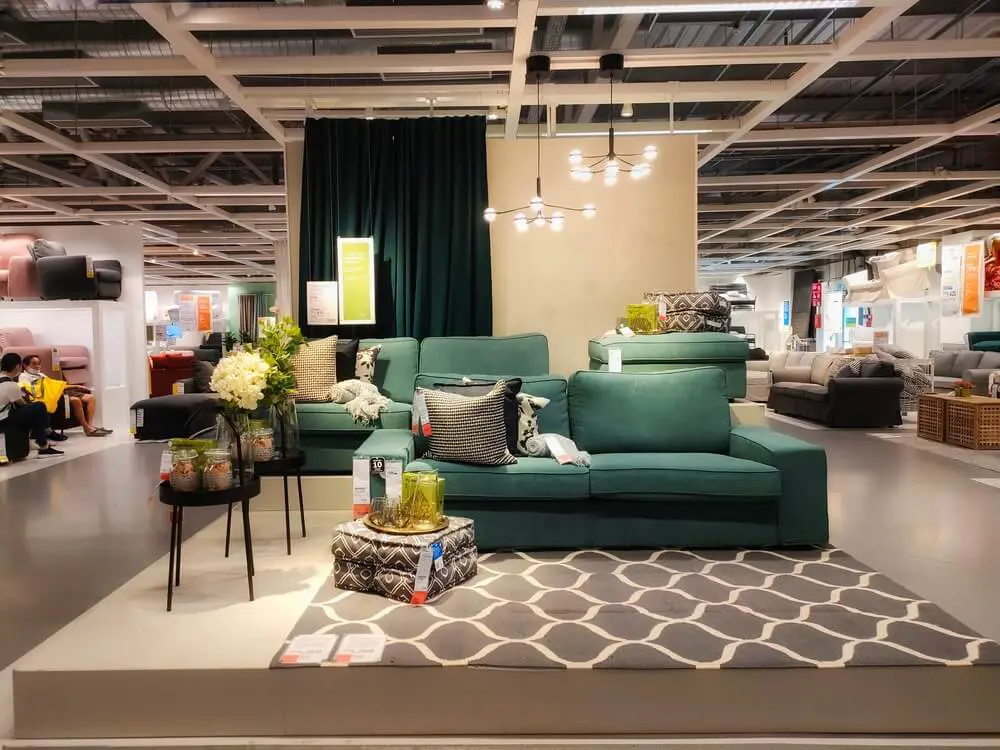
What should home furnishing retailers expect in 2024? From a year-over-year visitation standpoint, we expect the subcategories to remain roughly the same in terms of rankings through the first half of the year, with housewares continuing to lead, followed by mattresses, value furniture, and then full-priced furniture. Continued migration trends across the U.S.--especially smaller markets–should continue to stimulate demand for housewares and mattresses (although Temu and other online retailers will also compete for houseware spending in the year ahead). Migration trends should also create demand for value furniture retailers, as should new smaller-format and smaller-market store openings from IKEA and others. Full-priced furniture will continue to face headwinds in the form of elevated mortgage rates (compared to last year), sluggish new housing development trends, and stagnant housing turnover, suggesting that visitation trends could be challenged for much of 2024 (despite facing easier comparisons).

Reports
INSIDER
Report
How Malls Can Win in 2026
Dive into the latest traffic data to see how indoor malls, open-air centers, and outlets are performing this year – and the factors shaping success across formats.
Placer Research
April 2, 2026

Strategic Insights From the Report: 

1. Mall traffic is proving resilient across formats.

Indoor malls and open-air centers have posted consistent YoY visit growth, outlet declines have been modest, and early 2026 data shows renewed momentum across all three formats.

2. Performance is increasingly defined by the convenience–experience divide.

Growth in short visits and extended stays – alongside declines in mid-length trips – shows that consumers are gravitating toward trips with a clear purpose, favoring either efficiency or immersion.

3. Indoor malls are strengthening their role as experiential “third places.”

Rising dwell times and strong engagement from younger, contemporary households position indoor malls as leading destinations for longer, experience-driven trips. 

4. Open-air centers are winning the weekly routine.

A higher share of short, weekday visits – along with strong appeal among affluent families – underscores their role as convenient, essential retail hubs.

5. Outlet malls are at a crossroads.

As off-price and online alternatives erode their treasure-hunt advantage and long-distance visitation softens, outlets face a strategic choice between deepening local relevance and reinvesting in destination appeal.

6. Strategic clarity will determine the winners.

The malls that thrive will be those that intentionally optimize for convenience, experience, or a disciplined integration of both.

Here to Stay

Despite economic headwinds, intensifying e-commerce competition, and fragile consumer confidence, shopping centers continue to defy the “dead mall” narrative – reinventing themselves and, in many cases, thriving.

What can location analytics tell us about the state of the mall in 2026? Which trends and audiences are driving their performance – and how can operators and retailers best capitalize on the opportunities within the category?

Traffic Resilience

Over the past two years, both indoor malls and open-air shopping centers have posted consistent year-over-year (YoY) traffic growth. And while outlet malls experienced slight declines, the pullback was modest – signaling a period of stability rather than erosion.

Early 2026 data also points to continued momentum, with all three mall formats recording mid-single-digit YoY traffic gains in the first two months of the year. Although it’s still early days – and YoY comparisons in 2026 were boosted by an additional Saturday – the positive start suggests that the industry is entering the year on a solid footing.

The Convenience / Experience Divide

With e-commerce always within reach, hybrid work anchoring more consumers at home, and ongoing economic uncertainty influencing spending decisions, trips to physical stores are becoming more intentional. Shopping center visit data reflects this shift as well, with growth in both quick convenience visits and extended experiential outings – alongside a decline in mid-length trips.

In 2025, quick trips (under 30 minutes) increased across all formats, underscoring malls’ growing role as convenient, high-utility destinations for picking up an online order, grabbing a quick bite, or making a targeted purchase. At the same time, extended visits of more than 75 minutes increased at indoor malls and open-air centers, reflecting sustained appetite for immersive, experiential outings.

Meanwhile, mid-length visits (between 30 and 75 minutes) lagged across formats – falling indoor malls and outlet malls and remaining flat at open-air centers – suggesting shoppers are losing patience with undifferentiated trips that lack a clear purpose. 

Still, although short visits increased year over year across all mall types, and long visits increased for both indoor malls and open-air centers, the distribution of dwell time varies by format. Short visits make up a larger share of traffic at open-air shopping centers, for example, while longer visits account for a greater share at indoor malls. This divergence underscores the need for format-specific strategies, with operators clearly defining the core shoppers and missions they are best suited to serve and aligning tenant mix, amenities, and marketing accordingly. 

Indoor Malls Lean Into the Hangout Economy

Indoor malls, for instance, have increasingly positioned themselves as experiential hubs – particularly for younger consumers. Recent survey data shows that 57% of shoppers aged 18 to 34 report visiting a mall frequently or often, and they are more likely than older cohorts to arrive without a specific purchase in mind.

Foot traffic patterns reinforce this experiential appeal. In 2025, 37.6% of indoor mall visits lasted more than 75 minutes, compared to 33.4% for open-air centers and 34.6% for outlets. Indoor malls also captured the largest share of visits from the young-skewing “contemporary households” segment – singles, non-family households, and young couples without children – indicating strong resonance with younger audiences.

Indoor Mall Dwell Times on the Rise

As indoor malls expand their experiential offerings, visit durations are rising even further – even as they hold steady or even slightly decline at other formats. For operators, this shift highlights a significant opportunity for indoor malls to deepen their role as climate-controlled third places. And for brands, it means high-impact access to Gen Z consumers in discovery mode – top-of-funnel engagement that is increasingly difficult and expensive to replicate through digital channels alone.  

Open-Air Centers Anchor the Weekly Routine

If indoor malls excel at capturing extended, social visits, open-air centers are finding success through convenience. In 2025, open-air centers had the highest shares of both weekday visits (64.0%) and short, sub-30 minutes (36.8%) among the three formats. Grocery anchors, superstores, and essential-service tenants like gyms – more common at open-air centers than at other formats – help drive steady, non-discretionary traffic.

Demographically, open-air centers drew the highest share of affluent families, a key demographic for daily errands. This alignment with higher-income households, combined with weekday consistency, positions open-air centers as reliable errand hubs embedded in community life.

Outlet Malls at a Crossroads

Outlet malls, for their part, have historically differentiated themselves by offering something shoppers couldn’t find elsewhere: an experiential treasure hunt featuring brand-name merchandise at compelling prices. But the decline in long visits shown above suggests that this positioning may be coming under pressure – likely from the rise of off-price and discount chains as well as other low-cost, convenient treasure-hunt alternatives like thrift stores. When shoppers can score attractive deals online or browse for bargains at a nearby T.J. Maxx or Ollie’s Bargain Outlet, the incentive to dedicate time and travel to an outlet trip may no longer feel as compelling – especially for outlet malls’ core audience, which includes meaningful contingents of middle and lower-income consumers with families.

Going the Distance?

And data points to a subtle but steady erosion in the share of visitors willing to go the extra mile to visit outlet malls. Since 2023, the share of outlet visits from consumers traveling more than 30 miles has slipped from 33.1% to 31.8%, even as long-distance visits to other mall formats have remained relatively stable. This softening of destination demand may be contributing to outlets’ recent traffic lags.

Still, despite these lags in foot traffic, major outlet companies continue to see YoY increases in same-center tenant sales per square foot. The format’s strong visit start to 2026 also suggests that outlets still have significant draw – and that with the right strategy, they could reinvigorate their traffic trends.

One option is for outlet malls to lean further into their immediate trade areas: Nearly 20% of visits to outlets already originate within five miles – a share that edged up from 19.4% in 2023 to 19.9% in 2025. These closer shoppers may be largely responsible for the segment’s rise in short visits, pointing to an opportunity to further augment BOPIS offerings and select essential-use tenants. 

Another option is to strengthen outlets’ destination appeal with distinctive retail, dining, and experiential offerings that resonate with value-oriented, larger-household shoppers. But whether they focus on convenience or on justifying the journey – or attempt to balance both – success will depend on identifying who their shoppers are and which missions they are best positioned to own. 

Strategic Clarity for the Win

As in other areas of retail, shopping center success increasingly depends on strategic clarity. The malls that thrive will be those that clearly define their role in their customers’ lives and execute against it with intention – whether by decisively optimizing for efficiency, fully investing in experience, or thoughtfully integrating both.

INSIDER
Report
2026 CRE Outlook
Read the report to find out which markets are gaining ground in office recovery, where retail traffic is strongest, and how population shifts are reshaping demand.
March 19, 2026

Commercial real estate in 2026 is characterized by differentiated performance across markets and asset types. Office recovery trajectories vary meaningfully by metro, retail performance reflects format-specific resilience, and domestic migration patterns continue to influence long-term demand fundamentals.


Return to Office Patterns 

Many higher-income metros continue to trail 2019 benchmarks but drive the strongest Year-over-year gains, signaling a potential inflection in office utilization trends.

Miami Continued Leading RTO in 2025; San Francisco Led the Year-over-Year Office Recovery

Major Insights:

• Sunbelt markets along with New York, NY are closest to pre-pandemic office visit levels, while many coastal gateway and tech-heavy markets trail 2019 benchmarks. 

• Many of the metros still furthest below pre-pandemic levels are now posting the strongest year-over-year gains.

Key Takeaways for CRE Professionals: 

• Leasing velocity may accelerate in coastal markets – particularly in high-quality assets – even if full recovery remains distant. The expansion of AI-driven firms and innovation-focused employers could support incremental demand in these ecosystems, reinforcing a bifurcation between top-tier buildings and the broader office inventory.

Median Household Income in Market Correlates With Office Recovery

Major Insights:

• Higher-income metros such as San Francisco show deeper structural gaps vs 2019, perhaps due to their higher concentration of hybrid-eligible workers – yet those same metros are driving the strongest YoY recovery in 2025.

• Accelerating growth in 2025 suggests that shifting employer policies, workplace enhancements, or broader labor dynamics may be beginning to drive increased in-office activity.

Key Takeaway for CRE Professionals: 

• Office performance in higher-income markets will increasingly depend on workplace quality and policy alignment. Assets that support premium amenities, modern design, and tenants implementing clear in-office expectations are likely to influence sustained office visits and leasing velocity in these metros.


Shopping Center Patterns

Retail traffic is broadly improving across states, though performance varies by region and format.

Shopping Center Visits Increased in 2025

Major Insights:

• Retail traffic growth is broad-based, with the majority of states showing year-over-year gains in shopping center traffic in 2025.

• Still, even as many states are posting gains, pockets of softer performance remain – specifically in parts of the Southeast and Midwest. 

Key Takeaway for CRE Professionals: 

• Broad-based traffic gains indicate consumer demand is more durable than anticipated. In growth states, operators can shift from defensive stabilization to capturing upside – pushing rents, upgrading tenant quality, and accelerating leasing while momentum holds. In softer markets, the focus should remain on protecting traffic through strong anchors and necessity-driven tenancy.

Convenience-Based Performance Pulling Ahead

Major Insights: 

• Convenience-oriented formats are leading traffic growth, with strip/convenience centers materially outperforming all other shopping center types, and neighborhood and community centers also posting gains. This reinforces the strength of proximity-driven, daily-needs retail.

• Destination retail formats, including regional malls and factory outlets, continue to lag, while super-regional malls were essentially flat. Larger-format, discretionary-driven centers are not capturing the same momentum as convenience-based formats.

Key Takeaway for CRE Professionals: 

• The data suggests that consumer behavior continues to favor convenience, frequency, and necessity over destination-based shopping. Operators should lean into service-oriented and daily-needs tenancy in strip and neighborhood formats, while mall operators may need to further reposition assets toward experiential, mixed-use, or non-retail uses to stabilize traffic. 


Migration Patterns 

Domestic migration continues to reshape state-level demand, with gains clustering in select growth corridors.

Northern Planes, Southeast Lead State-Level Migration Growth

Major Insights: 

• Domestic migration drove population gains in parts of the Southeast and Northern Plains, while several Western and Northeastern states show flat or negative migration.

• Some previously strong in-migration states in the South and West, including Texas and Utah, are showing softer movement, while other established migration leaders such as Florida and the Carolinas continue to attract net inbound residents.

Key Takeaway for CRE Professionals: 

• Migration flows are shifting relative to prior years. Operators should temper growth assumptions in states where inflows are slowing and prioritize markets where inbound demand remains strong.

Florida Metros Magnet For Domestic Migration

Major Insights: 

• Florida dominates metro-level migration growth, with eight of the top ten U.S. metros for net domestic migration are in Florida.

• The markets with the strongest domestic migration-driven population gains are not major gateway cities but smaller, often retirement- or lifestyle-oriented metros, suggesting that migration-driven demand is increasingly flowing to secondary markets.

Key Takeaway for CRE Professionals: 

• CRE operators should prioritize expansion, leasing, and site selection in high-growth secondary metros where population inflows can directly translate into retail spending, housing absorption, and service demand.

INSIDER
Report
5 Grocery Growth Drivers in 2026
How Expanded Supply, Trip Frequency, and Shopping Missions Are Reshaping Food Retail and Creating Multiple Paths to Growth
February 19, 2026

Key Takeaways

1. Expanded grocery supply is increasing overall category engagement. New locations and deeper food assortments across formats are bringing shoppers into the category more often, rather than fragmenting demand.

2. Grocery visit growth is being driven by low- and middle-income households. Elevated food costs are leading to more frequent, budget-conscious trips, reinforcing grocery’s role as a non-discretionary category.

3. Short, frequent trips are a major driver of brick-and-mortar traffic growth. Fill-in shopping, deal-seeking, and omnichannel behaviors are pushing visit frequency higher, even as trip duration declines.

4. Scale is accelerating consolidation among large grocery chains. Larger retailers are using their size to invest in value, assortment, private label, and execution, allowing them to capture longer and more engaged shopping trips.

5. Both large and small grocers have viable paths to growth. Large chains are winning by competing for the full grocery list, while smaller banners can grow by specializing, owning specific missions, or offering compelling value that earns them a place in shoppers’ routines.

What is Driving Grocery Growth in 2026?

While much of the retail conversation going into 2026 focused on discretionary spending pressure, digital substitution, and higher-income consumers as the primary drivers of growth, grocery foot traffic tells a different story.

More Trips, More Formats, and a Shift Toward Mission-Driven Shopping

Rather than being diluted by new formats or eroded by e-commerce, brick-and-mortar grocery engagement is expanding. Visits are rising even as grocery supply spreads across wholesale clubs, discount and dollar stores, and mass merchants. At the same time, growth is being powered not by affluent trade areas, but by low- and middle-income households navigating higher food costs through more frequent, targeted trips. Shoppers are showing up more often and increasingly splitting their trips across retailers based on value, availability, and mission – pushing grocers to compete for portions of the grocery list instead of the full weekly basket. 

Scale Captures Demand – But Fragmented Trips Leave Room to Grow

The data also suggests that the largest grocery chains are capturing a disproportionate share of rising grocery demand – but the multi-trip nature of grocery shopping in 2026 means that smaller banners can still drive traffic growth. By strengthening their value proposition, specializing in specific products, or owning specific shopping missions, these smaller chains can complement, rather than compete with, larger one-stop destinations.

The Core Drivers of Grocery Growth in 2026

Ultimately, AI-based location analytics point to a clear set of grocery growth drivers in 2026: expanded supply that increases overall engagement, more frequent and mission-driven trips, and continued traffic concentration among large chains alongside new opportunities for smaller banners.

1. Expanded Grocery Supply Is Fueling Growth While Traditional Grocery Stores Hold Their Lead 

Expanded Grocery Access Is Increasing Overall Category Engagement

One driver of grocery growth in recent years is simply the expansion of grocery supply across multiple retail formats. Wholesale clubs are constantly opening new locations and discount and dollar stores are investing more heavily in their food selection, giving consumers a wider choice of where to shop for groceries. And rather than fragmenting demand, this broader availability appears to have increased overall grocery engagement – benefiting both dedicated grocery stores and grocery-adjacent channels.

Traditional Grocery Stores Maintain a Stable Share of Visits Despite Growing Competition

Grocery stores continue to capture nearly half of all visits across grocery stores, wholesale clubs, discount and dollar stores, and mass merchants. That share has remained remarkably stable thanks to consistent year-over-year traffic growth – so even as grocery supply increases across categories, dedicated grocery stores remain the primary destination for food shopping.

Mass Merchants Face Share Pressure as One-Stop Competition Expands

Meanwhile, mass merchants have seen a decline in relative visit share as expanding grocery assortments at discount and dollar stores and the growing store fleets of wholesale clubs give consumers more alternatives for one-stop shopping. 

2. Low and Medium-Income Households Driving Larger Visit Gains 

Grocery Growth Is Shifting Toward Lower- and Middle-Income Trade Areas

While much of the broader retail conversation heading into 2026 centers on higher-income consumers carrying growth, the trend looks different in the grocery space. Recent visit trends show that grocery growth has increasingly shifted toward lower- and middle-income trade areas, underscoring the distinct dynamics of non-discretionary retail. 

Higher Food Costs Likely Driving More Frequent, Budget-Conscious Trips

For lower- and middle-income shoppers, elevated food costs appear to be translating into more frequent grocery trips as consumers manage budgets through smaller baskets, deal-seeking, and shopping across retailers. In contrast, higher-income households – often cited as a key growth engine for discretionary retail – are contributing less to grocery visit growth, likely reflecting more stable shopping patterns or a greater ability to consolidate trips or shift spend online.

Necessity-Driven Shopping Is Powering Grocery Visit Growth

This means that, in 2026, grocery growth is not being propped up by high-income consumers. Instead, it is being fueled by necessity-driven shopping behavior in lower- and middle-income communities – reinforcing grocery’s role as an essential category and suggesting that similar dynamics may be at play across other non-discretionary retail segments.

3. Rise in Short Grocery Trips Driving Offline Grocery Gains

More Frequent, Shorter Grocery Trips

Another factor driving grocery growth is the rise in short grocery visits in recent years. Between 2022 and 2025, the biggest year-over-year visit gains in the grocery space went to visits under 30 minutes, with sub-15 minute visits seeing particularly big boosts. As of 2025, visits under 15 minutes made up over 40% of grocery visits nationwide – up from 37.9% of visits in 2022. 

Omnichannel Grocery Shopping Fueling Short Trips to Physical Stores 

This shift toward shorter visits – especially those under 15 minutes – is driven in part by the continued expansion of omnichannel grocery shopping, as many consumers complete larger stock-up orders online and rely on in-store trips for order collection or quick, fill-in needs. At the same time, the rise in short visits paired with consistent YoY growth in grocery traffic points to additional, behavior-driven forces at play – consumers' growing willingness to shop around at different grocery stores in search of the best deal or just-right product. 

Grocery Shoppers Are Splitting Trips Across Multiple Retailers

Value-conscious shoppers – particularly consumers from low- and middle-income households, which have driven much of recent grocery growth – seem to be increasingly shopping across multiple retailers to secure the best prices. This behavior often involves making targeted trips to different stores in search of the strongest deals, a pattern that is contributing to the rise in shorter, more frequent grocery visits. At the same time, other grocery shoppers are making quick trips to pick up a single ingredient or specialty item – perhaps reflecting the increasingly sophisticated home cooks and social media-driven ingredient crazes. In both these cases, speed is secondary to getting the best value or the right product.

Different Trip Types, One Outcome: Continued Store Traffic Growth

So while some shorter visits reflect a growing emphasis on efficiency – as shoppers use in-store trips to complement primarily online grocery shopping – others appear driven by a preference for value or product selection over speed. Despite their differences, all of these behaviors have one thing in common – they're all contributing to continued growth in brick-and-mortar grocery visits. Grocers who invest in providing efficient in-store experiences are particularly well-positioned to benefit from these trends. 

4. Consolidation as a Growth Driver 

Large Chains Continue to Pull Ahead in Visit Share

As early as 2022, the top 15 most-visited grocery chains already accounted for roughly half of all grocery visits nationwide. And by outpacing the industry average in terms of visit growth, these chains have continued to capture a growing share of grocery foot traffic.

Scale Enables Broader Assortment, Stronger Value, and Better Execution

This widening gap suggests that scale is increasingly enabling grocers to reinvest in the factors that attract and retain shoppers. Larger chains are better positioned to invest in broader and more differentiated product selection, stronger private-label programs that deliver quality at accessible price points, competitive pricing, and operational excellence across stores and omnichannel touchpoints. These capabilities allow top chains to serve a wide range of shopping missions – from quick, convenience-driven trips to more intentional visits in search of the right product or ingredient.

Consolidation at the top of the grocery category is reinforcing a virtuous cycle: scale enables better value, selection, and experience, which in turn draws more shoppers into stores and supports continued grocery traffic growth.

5. Competition for "Share of List" Growing Grocery Visit Pie 

Both Long and Short Trips Are Driving Grocery Traffic Growth

In 2025, the top 15 most-visited grocery chains accounted for a disproportionate share of visits lasting 15 minutes or more, while smaller grocers captured a larger share of the shortest trips. As shown above, larger grocery chains, which tend to attract longer visits, grew faster than the industry overall – but short visits, which skew more heavily toward smaller chains, accounted for a greater share of total traffic growth. Together, these patterns show that both long, destination trips and short, targeted visits are driving grocery traffic growth and creating viable paths forward for retailers of all sizes.

Large and Small Chains Win by Competing for Different Shopping Missions

Larger chains are more likely to serve as destinations for fuller shopping missions, competing for the entire grocery list – or a significant share of it. But smaller banners can grow too by competing for more short visits. By specializing in a specific product category, owning a clearly defined shopping mission, or delivering a compelling value proposition, smaller grocers can earn a place in shoppers’ routines and become a deliberate stop within a broader grocery journey. 

What These Trends Mean for Grocery Growth in 2026

As grocery moves deeper into 2026, growth is being driven by the cumulative effect of how consumers are navigating food shopping today. Expanded supply has increased overall engagement, higher food costs are driving more frequent and targeted trips, and shoppers are increasingly willing to split their grocery list across retailers based on value, availability, and mission.

Looking ahead, this suggests that grocery growth will remain resilient, but unevenly distributed. Retailers that clearly understand which trips they are best positioned to win – and invest accordingly – will be best placed to capture that growth. Large chains are likely to continue benefiting from scale, consolidation, and their ability to serve full shopping missions, while smaller banners can grow by earning a defined role within shoppers’ broader grocery journeys. In 2026, success in grocery will be less about winning every trip and more about consistently winning the right ones.

Loading results...
We couldn't find anything matching your search.
Browse one of our topic pages to help find what you're looking for.
For more in-depth analyses on a variety of subjects, explore Reports.
The Anchor Logo
INSIDER
Stay Anchored: Subscribe to Insider & Unlock more Foot Traffic Insights
Gain insider insights with our in-depth analytics crafted by industry experts
— giving you the knowledge and edge to stay ahead.
Subscribe