


.svg)






The same macroeconomic forces pressuring other retail sectors are fueling demand for auto parts: With the U.S. light vehicle fleet now averaging 12.8 years – up from 11.6 in 2019 – and many households delaying new car purchases, aftermarket maintenance has become more essential than ever. And while discretionary upgrades may be postponed, core failure and replacement parts continue to see robust demand. Though tariff-related uncertainty continues to loom, leading retailers report they have managed the impact effectively so far.
Against this backdrop, we dove into the data to check in with AutoZone, O’Reilly Auto Parts, and Advance Auto Parts. How did they fare in Q2 2025? And what awaits them the rest of the year?
AutoZone Grows Visits Without Cannibalization
AutoZone, the sector's largest chain, continues to expand while growing its customer base. Over the past six years, AutoZone has steadily increased its store count, leaning into growing demand without diluting location-level traffic. Year over year (YoY) too, the chain saw significant visit growth between March and May 2025 – and while June showed some softening, July and August visits remained essentially flat versus 2024, demonstrating stability during the chain’s busy summer maintenance season.
This robust foot traffic performance aligns with the company's recent financials. In its last reporting period (ending May 10, 2025), AutoZone posted a solid 5.0% year-over-year increase in U.S. comparable sales. Commercial performance was especially strong – Do-It-For-Me (DIFM) sales jumped 10.7%, while DIY sales grew 3.0% YoY. And management emphasized that tariff-related impacts have been minimal so far.
O'Reilly's Strong Same-Store Visit Growth
O'Reilly Auto Parts is also executing on an impressive expansion strategy. In Q2 2025, overall visits to O’Reilly climbed 4.6% YoY, with same store visits up 3.0%. Compared to 2019, both total and per-location foot traffic has steadily increased, demonstrating the company’s success in combining aggressive growth with operational efficiency.
And in its last reporting quarter, the company posted a 4.1% increase in comparable store sales, with robust performance across both DIY and professional channels. Total sales revenue reached a record $4.53 billion – a 6.0% increase versus last year. The company also noted a modest pricing lift tied to tariffs but emphasized that overall demand trends remain strong.
Advance Auto Parts Narrows Visit Gap
Advance Auto Parts, for its part, is restructuring to compete more effectively. During the quarter ending July 12th, 2025, net sales fell 7.7% year-over-year, partly due to planned store closures. Still, signs of stabilization are emerging: Comparable-store sales edged up 0.1%, indicating that core demand remains healthy.
And recent foot traffic provides further evidence that the company’s rightsizing strategy is beginning to bear fruit. Same-store traffic declines were narrower than the chain’s overall visit gap – just -1.5% YoY in July and -2.4% in August – suggesting that consolidation is helping shore up performance at remaining locations. At the same time, Advance is modernizing its supply chain to accelerate deliveries and strengthen its DIFM offerings – which, as with its peers, serves as a critical growth anchor for the chain. While it remains to be seen if these moves will drive sustained recovery amid shifting tariff pressures, Advance has restored profitability while implementing its strategic turnaround.
DIFM Ahead?
The auto parts sector remains robust, driven by an aging vehicle fleet and delayed new car purchases. And though tariff uncertainty remains, AutoZone, O’Reilly, and Advance are thus far navigating the new cost environment without major disruption. As 2025 unfolds, the second half of the year will show whether higher new-car prices push more consumers into aftermarket maintenance – and how customers, particularly in the DIY segment, respond if retailers need to pass through additional price increases.
For the most up-to-date retail visit data, check out Placer.ai's free tools.
Placer.ai leverages a panel of tens of millions of devices and utilizes machine learning to make estimations for visits to locations across the US. The data is trusted by thousands of industry leaders who leverage Placer.ai for insights into foot traffic, demographic breakdowns, retail sale predictions, migration trends, site selection, and more
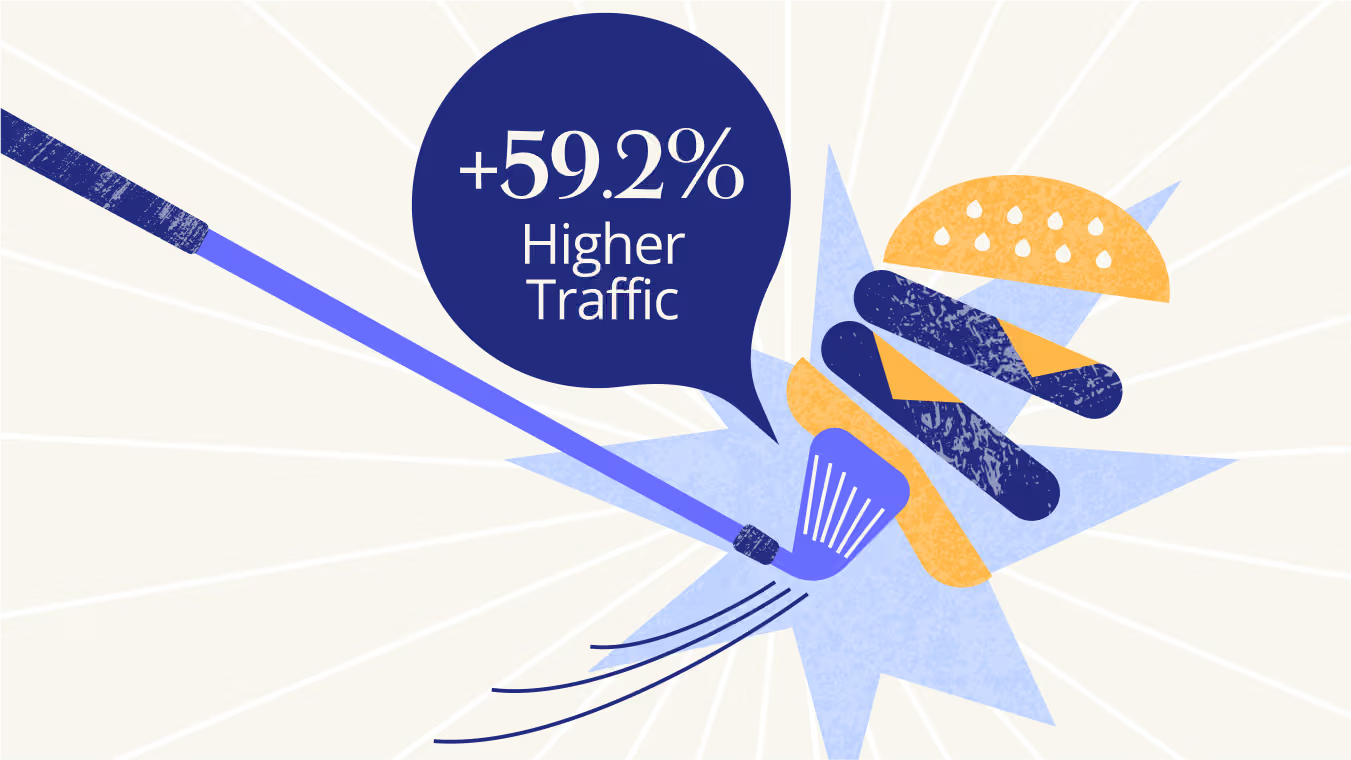
After a period of robust growth following COVID, the eatertainment sector has slowed. Rising prices and economic uncertainty have led many consumers to tighten their budgets, cutting back on discretionary activities. But Q2 2025 data points to an emerging trend that could reshape the industry's trajectory: unlimited-play subscription models that drive repeat visits to major chains.
Different Post-COVID Paths
Eatertainment’s leading brands have followed very different trajectories since 2019. Topgolf and Dave & Buster’s expanded significantly after COVID, driving overall visits above 2019 levels and outperforming the broader full-service restaurant (FSR) segment. By Q2 2025, Topgolf’s systemwide foot traffic was up 59.2% compared to the same period in 2019, while Dave & Buster’s overall visits rose 7.1%. However, both chains began to slow at the unit level in 2022 as inflation weighed on household budgets.
Chuck E. Cheese, meanwhile, shuttered dozens of locations after its 2020 bankruptcy. But in mid-2024, the brand’s systemwide and per-location visits began rebounding significantly, surpassing even the broader FSR segment by Q1 2025.
Chuck E. Cheese’s Fun Pass Comeback
Chuck E. Cheese’s resurgence can be traced to a revamped Summer Fun Pass program launched in the summer of 2024. By offering unlimited play, the company drove a dramatic increase in repeat visits – and the model proved so successful that the company extended it year-round, fueling sustained visit growth that continued into 2025.
Between March and May 2025, per-location visits to Chuck E. Cheese surged 17.6% to 23.0% year over year (YoY), before stabilizing in June and July as the chain began lapping its extraordinary 2024 performance. Importantly, this plateau doesn’t indicate decline – instead, it highlights Chuck E. Cheese’s ability to maintain traffic levels that seemed unimaginable just two years ago.
Chuck E. Cheese’s loyalty surge also shows no signs of abating. In June 2024 12.0% of visitors came in at least twice during the month – up from 7.2% to 8.0% the previous summer. And although repeat visitation dipped somewhat when school resumed in the fall, it remained elevated YoY and rebounded again this summer.
Topgolf: Signs of a Turnaround
Topgolf has long relied on expansion to drive growth. But even as overall foot traffic has continued surging past pre-COVID benchmarks, visits per location began declining in 2022.
Recent data, however, suggests this dynamic is shifting. Since May, the chain has posted high single-digit per-location YoY growth – a clear indicator of unit-level recovery. And though same-venue sales still fell 6.0% last quarter, the company raised its guidance, signaling an improved outlook.
Here too, loyalty metrics point to the central role of Topgolf’s revived Summer Fun Pass in reigniting traffic by offering value-conscious consumers more affordable access to its premium experience. Though the gains are smaller than those seen by Chuck E. Cheese’s, they still mark a meaningful step in Topgolf’s recovery.
Dave & Buster’s: A Solid Foundation
Dave & Buster’s flagship chain continues to lag peers on YoY visitation, with Q2 2025 traffic below 2024 levels. Still, visit data for May to July 2025 points to an improving trend, aligning with the company’s recent report of better comp sales in June.
Once again, progress appears tied to a new subscription model – Dave & Buster’s first-ever Summer Season Pass. Priced similarly to last year’s new Winter Pass, but timed to coincide with school and college vacations, the summer program significantly boosted repeat visits and strengthened customer engagement. And although per-location traffic at Dave & Buster’s remains a challenge, the brand’s growing loyalty base and expanding footprint give it a foundation for steady, sustainable growth.
Subscriptions, Subscriptions, Subscriptions!
Much like gym memberships, affordable flat fees for gameplay at eatertainment venues allow budget-conscious consumers to stretch their dollars by visiting more often. And these subscription-based models appear to be resonating with consumers in 2025.
But the model comes with its own challenges. For Chuck E. Cheese, Topgolf, and Dave & Buster’s, the key test will be turning higher visitation into greater spend. Converting traffic gains into food, beverage, and event revenue – without eroding margins – will ultimately determine whether subscription-driven loyalty can deliver sustainable long-term growth.
For more data-driven consumer insights, visit placer.ai/anchor.

Secondhand shopping has emerged as a major storyline this season amid potential tariff-driven apparel price hikes – but foot traffic data shows that thrifting's move into the mainstream has been years in the making. We dove into the data to assess the state of the thrift store segment in 2025 and explore what’s driving its continued momentum.
Thrift Stores Give Apparel a Dressing Down
Thrift store foot traffic has been on an impressive upward trajectory since COVID. In Q2 2025, visits were up 39.5% compared to Q2 2019 – far exceeding the 9.5% growth seen across the broader clothing industry.
This visit growth advantage reflects a mix of factors, including heightened economic pressures and sustainability concerns. In addition, while much apparel shopping has shifted online – and digital resale platforms like ThredUp are gaining traction – thrifting remains inherently experiential and in-person.
Thrifting’s unique seasonality also highlights its important role in the consumer shopping cycle. As the chart below illustrates, conventional apparel peaks during the holiday shopping season (Q4) while thrift stores hit their stride in summer (Q3) – likely buoyed by warm-weather wardrobe refreshes and back-to-school shopping.
More Stores, More Visits Per Store
A closer look at year-over-year (YoY) trends show industry-wide thrift store visit increases outpacing per-location gains, suggesting that the segment’s growth is partly driven by store openings. Yet established locations are thriving too, with average visits per location continuing to rise even against last year’s strong benchmarks.
This dual pattern – new stores bringing in additional shoppers while established locations continue to grow – shows that thrifting’s momentum reflects true market expansion rather than merely a redistribution of demand.
Thrifting Goes Mainstream
Demographic data also points to thrifting’s ongoing move into the mainstream. The median household income of areas feeding visits to thrift stores has risen steadily since 2019, signaling a significant broadening of these stores' customer base beyond their traditional lower-income demographic.
Geographically, thrift shopping has also expanded beyond its urban roots. The share of visits from rural, semi-rural, and suburban communities has climbed consistently over the past six years, making secondhand shopping a fixture of consumer culture across regions and income levels.
The Future is Secondhand
With potential tariffs threatening to raise the cost of imported clothing, continued economic pressures, and rising demand for sustainable alternatives, thrift stores appear poised to thrive well into the future. Will secondhand visits climb to new highs this summer?
Follow Placer.ai/anchor to find out.

In June and July 2025, visits to Placer’s Industrial Manufacturing Composite Index grew 3.0% and 2.3% year over year (YoY), respectively, as supply chains raced against the clock to build inventory in advance of the new tariffs set to come into effect on August 7th. But as the deadline approached, YoY visits to these sites by employees and logistics partners began to decline, dropping to 4.2% YoY during the week of August 11th, 2025.
The timing of this decline, occurring just days after tariff implementation, points to manufacturers potentially working through stockpiled inventory and reassessing supply chain strategies under the new cost structure. While it's still early to determine whether this represents a temporary recalibration or the beginning of a more sustained slowdown, the data suggests that the manufacturing sector is entering a period of adjustment as businesses adapt to the new tariff environment.
Real Signs of Progress
Gap Inc. is showing real signs of progress in its turnaround efforts. Since CEO Richard Dickson took the helm in August 2023, the company has been working to revitalize its portfolio of brands – and the latest foot traffic data confirms that strategy is beginning to deliver results.
In Q2 2025, visits to the company’s four banners—Old Navy, Gap, Athleta, and Banana Republic—rose 3.6% year over year (YoY), outperforming the broader apparel category (excluding department stores and off-price retailers), which saw traffic decline 2.2%.
Focusing on the company’s two largest and strongest performers, Old Navy led with a 4.8% increase in overall foot traffic and a 4.5% gain in same-store visits. The namesake Gap brand also posted growth despite a smaller U.S. store base. Notably, overall visits to Gap slightly outpaced same-store sales, signaling that store closures are effectively removing underperformers, while new locations are resonating with shoppers.
Springtime Surge
Turning to monthly foot traffic trends, both Old Navy and Gap posted significant year-over-year visit gains in April and May 2025 before seeing visitation taper in June and July.
The two chains’ springtime surge may be partially attributed to tariff pull-forward. Following the announcement of new tariffs in early April, many consumers appear to have accelerated purchases to avoid anticipated price increases. This pull-forward effect likely shifted demand into April and May, inflating growth in the short term but contributing to softer traffic in June and July. Memorial Day sales and campaigns like the company’s “Feels Like Gap” campaign may have also resonated with consumers.
Winning Back the Core Consumer
Another encouraging sign for the company lies in the shifting income profiles of visitors to its flagship brands.
As illustrated in the chart, the median household incomes (HHIs) of both Gap and Old Navy’s captured markets rose in 2022 and 2023. Inflation and higher prices likely pushed lower-income consumers to trade down to alternatives, leaving Gap and Old Navy with relatively more affluent shoppers.
But since 2023 (for Gap) and 2024 (for Old Navy), HHIs in the chains’ trade areas have begun to decline slightly – suggesting the return of middle-income households. This subtle but meaningful shift indicates that revitalization efforts are reconnecting with the company’s historical core audience – middle-income shoppers who value style at an attainable price point.
Looking Ahead
Gap Inc.’s Q2 2025 performance provides encouraging evidence that its turnaround strategy is taking hold. Yet the company remains at a delicate juncture. Athleta and Banana Republic continue to lag behind their sister brands, and tariffs represent a significant headwind that could weigh on profitability.
Still, there is reason for optimism. If Gap Inc. can maintain its renewed connection with middle-income shoppers, refine its store strategy, and adapt effectively to the shifting tariff landscape, the momentum seen this quarter could help advance a sustained recovery.
Visit Placer.ai/anchor for the latest data-driven retail insights.

Visit Stabilization
After steep mid-single-digit year-over-year declines in late 2024, Best Buy's (BBY) store traffic is beginning to stabilize. The retailer saw same-store visits fall just 1.5% year-over-year (YoY) in Q1 2025, with the decline narrowing further to 1.2% in Q2. Even more encouraging, several months since January have posted flat-to-positive foot traffic growth – a promising trend as Best Buy approaches the all-important holiday season, where it traditionally excels.
In-Store Pickup Fuels Short Visit Gains
Best Buy’s recent traffic improvement likely stems from continued strength in its computing, mobile phone, and tablet offerings – segments with natural upgrade and replacement cycles that many consumers view as essentials. At the same time, foot traffic data indicates that the company’s online channel – which posted a 2.1% increase in U.S. digital sales last quarter – is helping drive quick in-store visits as customers take advantage of fast BOPIS (buy online, pick up in store) options.
As illustrated in the graph below, short-duration visits (under 10 minutes) have consistently outperformed longer ones in 2025, underscoring the role of in-store pickup. In January, short visits jumped 5.3% YoY, likely boosted by Best Buy’s first-ever January Member Deals Days promotion. And in June, short visits increased 4.6% YoY, coinciding with the highly anticipated Nintendo Switch 2 launch, which featured special midnight store openings for eager customers.
Holiday Season Ahead
While Best Buy trimmed its full-year outlook last quarter and has yet to see a true rebound in store traffic, the narrowing visit gap signals rising consumer engagement. With strengthened omnichannel execution and traffic tailwinds from product launches – as well as the a third-party marketplace set to launch next week – Best Buy may be poised to deliver a strong holiday season ahead.
To see up-to-date retail traffic trends, try Placer.ai's free tools.

