.png)
.png)

.png)
.png)

Shake Shack and Wingstop, two major names in the fast-casual and quick-service restaurant category, have had a standout year. Both chains enjoyed impressive visits while executing wide-ranging expansion strategies.
We dive into the location analytics for both brands to recap 2024’s success.
Shake Shack and Wingstop performed extremely well in 2024, with visits up 21.7% and 23.0%, respectively, compared to 2023 – thanks in large part to aggressive fleet expansions. Both chains enjoyed their strongest year-over-year (YoY) visit growth in the first half of the year, with H1 2024 visits to Shake Shack up 26.0% and to Wingstop up 28.7% compared to the same period in 2023. And while growth slowed down slightly towards the end of 2024, the two brands still ended the year with 16.8% (Shake Shack) and 11.6% (Wingstop) Q4 YoY visit growth – quite an impressive metric, especially given the wider dining headwinds.
Shake Shack and Wingstop are both in the midst of aggressive fleet expansions: Shake Shack opened 42 new locations and plans to triple that number in the coming years, while Wingstop added at least 138 new locations and also plans on adding hundreds of new stores in the coming years. Both companies have made suburban expansion a central focus of their growth strategies, and psychographic shifts in their captured markets over the past five years suggest this approach is working. Analyzing the chains’ visitor bases using the Esri: Tapestry dataset combined with Placer.ai captured market data reveals that Shake Shack increased the share of “Suburban Periphery” visitors in its trade area from 43.8% in 2019 to 45.4% in 2024. The share of the “Suburban Periphery” segment in Wingstop’s trade area rose from 23.8% to 24.9% during the same period. Wingstop also saw a decline in its share of “Urban Periphery” visitors while the share of the “Principal Urban Center” segment in both chains’ trade areas decreased during the analyzed period – further indicating growth in suburban markets.As more people migrate to the suburbs, offering convenient dining options outside of city centers is likely to remain a winning strategy for both chains.
While expansions helped drive the overall visit numbers up, the two chains also received several traffic spikes throughout the year driven by limited time offers (LTOs) and special menu launches. This strategy has recently proven successful for a number of QSR and fast-casual chains – Wendy’s, for example, finished 2024 with a 2.8% YoY increase in Q4 visits (0.7% YoY increase for 2024 as a whole) thanks in large part to its Krabby Patty Kollab LTO. Shake Shack received the most significant visit increase relative to its 2024 weekly visit average during its holiday special which included offers of free burgers every day from mid-December through Christmas Eve. Diners eagerly responded to the promotion, with weekly visits surging by 24.4% during the week of December 16th, 2024 relative to 2024’s weekly average. Similarly, Wingstop’s National Wing Day promo led to a 17.2% visit increase over the week of July 30th. Other promotional activities also influenced visits at these dining chains. For example, Shake Shack’s summer barbecue menu, which included a unique perk – a limited offer of “stain insurance” for customers who got excess BBQ sauce on their clothes – drove visits 13.8% higher than the weekly visit average. Similarly, Wingstop’s Summer of Flavor bundle drove visits to the chain during the week of July 22nd, 2024 by 6.6% relative to the 2024 weekly visit average. These promotions highlight the importance of creating buzz and offering exclusive deals to attract both new and returning customers.
Both Shake Shack and Wingstop enjoyed impressive visits in 2024 while expanding their fleets – but can the two chains continue this success into 2025? Visit Placer.ai/blog to keep up with the latest data-driven dining insights.

In December 2024, Saks Fifth Avenue finalized its acquisition of Neiman Marcus – forming a new parent company Saks Global. We dove into the foot traffic patterns and audience segmentation for the two department stores in order to better understand Saks Global’s positioning following the deal.
Nordstrom, Bloomingdale’s, Saks Fifth Avenue, and Neiman Marcus are four of the leading players in the luxury department store space. Analysis of the retailers’ relative visits share in 2024 reveals that Nordstrom claims the lion's share of combined visits between the four department stores (68.4% in 2024), distantly followed by Bloomingdale’s (14.9%). On their own, Saks (7.3%) and Neiman (9.5%) drive the smallest shares of visits, but together, the two department stores account for a greater share of visits than Bloomingdale’s, making Saks Global the second largest luxury department store player by share of visits.
In addition to a larger share of visits, by acquiring Neiman Marcus, Saks appears to gain an audience with a greater affinity for “accessible luxury”. Although a sizeable share of Saks’ visitors also visited a Nordstrom store (40.4%), an even larger share (just over half, or 50.1%) of Neiman’s visitors also visited the accessible luxury department stores. Some have posited that Saks Fifth Avenue could be positioned as an “accessible luxury brand”. However, the data suggests that Neiman may be better suited to compete for visits from “accessible luxury” shoppers.
Diving deeper into the retailers’ quarterly visit patterns further highlights how Saks stands to gain through its acquisition of Neiman. Of the four luxury department stores analyzed, Saks Fifth Avenue received the smallest share of its visits in Q4, while Neiman received the largest share of its visits over the holiday shopping season. So by acquiring Neiman, Saks Global benefits from a greater share of visits during a critical retail moment.
Along with visit share gains and a larger holiday boost, the acquisition of Neiman Marcus gives Saks Global access to a more affluent audience than Saks Fifth Avenue’s. Analysis of Saks Fifth Avenue and Neiman Marcus’s trade areas combined with STI:PopStats data reveals that both retailers drive traffic from households with above-average incomes – but Neiman’s audience seems to be slightly more affluent: In Q4 2024, the median household income (HHI) of Neiman’s captured market was $112.8K/year, approximately $10K/year higher than Saks Fifth Avenue’s ($102.9K/year). A more affluent audience may better position Saks Global in the exclusive luxury space, particularly as it launches Authentic Luxury Group – a platform that aims to accelerate the growth of upscale brands like Barneys New York.
Further analysis of segmentation data reveals that Neiman Marcus also brings a more family-oriented audience to the Saks ecosystem. In Q4 2024, 26.2% of households in Neiman Marcus’ captured market were households with children – relatively near the 27.0% nationwide benchmark. Meanwhile, only 23.7% of households in Saks Fifth Avenue’s captured market were households with children. This suggests that the acquisition of Neiman allows Saks Global to drive more traffic from family-oriented households previously underserved by the Saks Fifth Avenue banner. Several Saks and Neiman locations are in close proximity to each other, so it’s conceivable that Saks Global will consolidate its real estate footprint in the future. If so, understanding audience segmentation could help the new parent company decide which retailer best serves the local market.
Saks Fifth Avenue’s acquisition of Neiman Marcus strengthens Saks Global’s position in luxury retail, boosting its visits share and access to a more affluent, family-oriented audience.How will the merger impact the luxury department store space moving forward? Visit Placer.ai to find out.

2024 represented a year of transformation in U.S. luxury retail. After years of evading the impact of inflation and changing consumer behavior, ultra luxury brands and retailers began experiencing some of the challenges plaguing the wider retail space over this past year. Consumers of all income groups pulled back on spending and shifted focus towards value, which is inherently at odds with the luxury retail experience. Despite the aspirational nature of social media, many consumers who had been testing the waters of the luxury market can’t sustain their demand. There’s also been a rebound of the “accessible” luxury market, with brands like Coach and other smaller chains capturing the attention of the consumer.
How did 2024 end in terms of luxury retail visitation? Generally, visitation to luxury retail brands was down throughout the year, with visits for 2024 as a whole down 4% year-over-year. This is in stark contrast to the growth in visits we observed in 2022 and 2023, a clear signal that there’s been a shift in consumer demand for luxury brands here in the U.S. The elasticity of luxury visits waned in 2024, which could be attributed to a few factors; changes in demand for specific brands this past year or lower general demand for the categories.
The most interesting shift this past year was in the segmentation of visitors to luxury retailers. Using PersonaLive visitor segments, we observed changes in the types of demographic consumer segments visiting luxury brands. The percentage of visits by Ultra Wealthy Families increased over the past three years, with the cohort making up 20% of luxury retailers’ captured market in 2024, the largest of any visitor segment.
At the same time, we noted decreases in the share of Near-Urban Diverse Families, Young Urban Singles, and City Hopefuls in luxury retailers’ trade areas. These groups fall more into the aspirational customer segment for luxury brands, meaning that they might not be frequent shoppers or may have saved up for a large purchase. Luxury retailers now have to rely more on their traditional consumer base and have narrowed their pool of potential visitors.
Beyond the retailers themselves, luxury shopping centers also saw visitation decelerate in 2024. Looking at three key luxury centers, Americana Manhasset in Manhasset, NY, Bal Harbour Shops in Miami, and Highland Park Village in Dallas, each center slowed down compared to prior years. These shopping centers house ultra luxury brands, such as Hermes, Dior, and Chanel, as well as new luxury entrants like LoveShackFancy and beauty chain Bluemercury as well as upscale dining options; despite this strong mix of tenants, it’s clear that changing consumer behavior has impacted these centers, even those that still saw growth early in the year.
There weren’t any observable changes in visitor behavior in terms of how long visitors stayed or what day of the week they visited. All three luxury shopping centers rely heavily on weekend visitors, and as consumers pull back on the frequency of discretionary purchases, there might be less incentive to visit overall. More than 50% of Americana Manhasset and Highland Park Village’s trade area is made up of Ultra Wealthy Families, and that high concentration that once benefited luxury retailers may now present hurdles in sustaining traffic growth.
Luxury brands, despite the changing tides, are the true retail trend setters, and have the ability to pivot as needed to meet changing consumer demands. In 2024, we saw the triumphant rise of brands such as Miu Miu, Louis Vuitton and Hermes as consumers concentrated their purchases around the hottest labels. The luxury market faces more uncertainty in 2025 as the consumer fluctuates to adapt to changes across the U.S. and the need to provide a high touch experience and inherent value is critical to garner the attention of shoppers.

RBI and Yum! Brands own and operate some of the country’s most beloved and well-known dining chains. We took a look at the visit data for 2024 to see how the two companies fared in a period of economic headwinds and uncertainty.
Restaurant Brands International (RBI) and Yum! Brands are leaders in the fast food and fast casual dining segment. Each company operates four restaurants with major footprints across the country – RBI owns Tim Hortons, Burger King, Firehouse Subs, and Popeyes, and Yum! manages Pizza Hut, Taco Bell, KFC, and The Habit Burger Grill.
Yum! Brands enjoyed visit and visits per location growth in all but one quarter, capping off Q4 2024 with an 0.8% increase in visits and a 1.6% increase in visits per location on a YoY basis. RBI’s visits and visits per location, meanwhile, hovered at or just below 2023’s levels in all but one quarter of the year, highlighting the challenges facing the dining segment in 2024.
Of the four RBI brands, Popeyes enjoyed the strongest visitation patterns throughout 2024.The chain has been a standout for the past few years – likely owing to its popular chicken sandwiches – and Popeyes performed well in 2024 as well, with YoY visit growth during most quarters.
Following Popeyes in visit growth was Tim Hortons – Canada’s leading coffee chain – which saw positive momentum in the first half of 2024, though visits dipped in the latter half of the year. And though Burger King’s visits were sluggish, the chain has been focusing on optimizing its store fleets with strong results.
While overall visits across RBI’s brands were slightly below 2023 levels, their ability to remain close to last year’s numbers – and even achieve growth in some quarters – signals resilience.
Yum! Brands delivered a strong performance in 2024, buoyed by Pizza Hut and Taco Bell’s consistent growth. Taco Bell in particular stood out, driving foot traffic through promotions like its highly popular Taco Tuesday special. The chain experienced quarterly YoY visit growth throughout the year, culminating in a 2.1% increase in Q4 2024 relative to 2023.
Pizza Hut also experienced impressive visitation growth in 2024, especially in Q2. In contrast, KFC faced challenges with declining visits, while The Habit Burger Grill’s traffic remained steady, closely tracking 2023 levels.
RBI and Yum! Brands experienced ups and downs throughout 2024, with some of their chains thriving while others showed modest visit declines.
With the new year well underway, how might RBI and Yum! work to drive increased visits to their restaurants?
Visit Placer.ai for the latest data-driven dining updates.

They say that one man’s trash is another one’s treasure – and for Burlington Stores, opportunity knocked when Bed Bath & Beyond selected Burlington Stores as the successful bidder for many of its leases, with the latter taking over 44 locations for $12 million. Per CNBC, many of these new venues are scattered across the country.
Using Placer data, we are able to compare visitation trends to these locations when they were branded as a Bed Bath & Beyond store versus when the new leases took over.
In Avondale, AZ, the new Burlington store is receiving over twice the traffic (241.8% more visits per square foot) during the holiday shopping season in December 2024 compared to a similar time frame when it was a Bed Bath & Beyond in December 2021.
In comparing shopping center frequented by visitors to the analyzed venue, the profile of the shopper has changed somewhat. While both sets of shoppers frequented the nearby Gateway Crossings, Westgate Entertainment District, and Arrowhead Towne Center, Burlington shoppers had a penchant for Desert Sky Mall and Tanger Outlets Phoenix, whereas the Bed Bath & Beyond shoppers preferred Palm Valley Pavillions West and Coldwater Plaza.
Whereas the top four segments have remained consistent for both banners, Burlington attracts a higher proportion of Melting Pot Families - over 2x the rate compared to when it was a Bed Bath & Beyond.
In a head to head comparison using comparable months, Burlington attracted over 3x the traffic in its first year of opening, compared to when it was a Bed Bath and Beyond two years prior.
The number of visits across numerous visit durations was considerably higher to Burlington, and the average dwell time increased to 41 minutes compared to 31 minutes when it was a Bed Bath & Beyond.
While this is just one example of a Burlington takeover, it goes to show that while the location may stay the same, the audience it attracts will vary and this Burlington is off to an excellent start.

In recent years, Tennessee has emerged as a surprising migration hotspot. The state, which offers a growing tech scene, business-friendly tax regulations, and a relatively low cost of living is rapidly gaining popularity and attracting inbound migration from across the nation.
Where are newcomers coming from – and where within Tennessee are they going? Using Placer.ai’s Migration Trends Report, we took a closer look at the migration data to gain a more thorough understanding of the shifts taking place in the Volunteer State.
The state of Tennessee has experienced significant positive migration over the past few years. Between July 2020 and July 2024, the cumulative net migrated percent of Tennessee’s population increased steadily, with 2.1% of the state’s July 2024 population having moved there from elsewhere in the country over the previous four years.
Diving deeper into Tennessee’s migration patterns reveal that between July 2020 and July 2024, the state had net positive domestic migration from 41 out of 50 states – meaning Tennessee gained more residents from these states than it lost to those states. Illinois and California together accounted for almost 40% of Tennessee’s net positive domestic migration during the period, and the state also drew a large contingent (33.6% of net positive domestic migration) from the East Coast.
While Memphis, Tennessee’s second-largest city, has made headlines in recent years for its declining population, other metro areas in the state are experiencing strong interest from newcomers.
Between July 2020 and July 2024, the Nashville CBSA (core-based statistical area) received the largest share of net positive domestic migration, with 24.6% of newcomers to Tennessee settling in the Music City. Nashville has been establishing itself as a tech hub, a factor which may have driven its strong net migration.
Knoxville came in second, welcoming 18.7% of the positive net migration to Tennessee between July 2020 and July 2024. Other CBSAs rounding out the top five were Chattanooga (9.0% share of positive net migration), Kingsport-Bristol (8.7%), and Johnson City (6.0%).
The influx of new residents into Tennessee is not only helping drive the state’s population up – it’s also reshaping its demographic composition. Zooming into the top five CBSAs mentioned above reveals that newcomers generally are coming from CBSAs of origin where the weighted median age is younger than the existing population.
The only metro area bucking this trend was Clarksville, where incoming residents were slightly older than the youthful median 31 years of its residents, though this may be a reflection of its strong university and military presence.
The movement of younger people into these up-and-coming CBSAs reflects the opportunities available for people to grow their careers and put down roots in a state that is quickly becoming a hub for growth and opportunity.
Tennessee seems to have reinvented itself as a destination for young people seeking out opportunities for growth. By continuing to foster a business-friendly environment and supporting its diverse communities, the state is well-positioned to thrive.
Visit Placer.ai to keep up with the latest data-driven migration trends.

The full-service dining segment has experienced its fair share of challenges over the past few years, with pandemic-era closures, rising food and labor costs, and cutbacks in discretionary spending contributing to visit lags. In 2024, visits were down 0.2% year over year (YoY) and remained 8.4% below 2019 levels – a reflection of the significant number of venues that permanently closed over COVID and a testament to the industry's ongoing struggle to regain its pre-pandemic footing.
Yet, even in a difficult environment, some full-service restaurant (FSR) chains are thriving. These brands aren’t waiting for the industry to rebound – they're becoming trendsetters in their own right, proving that stand-out strategy is everything in a challenging market.
This white paper explores brands that are harnessing three key differentiators – fixed-price value offerings, elevated social experiences, and a laser focus on product – to drive full-service dining success in 2025.
One of the most defining trends over the past few years has been the unrelenting march of price increases. And as consumers continue to seek out ways to save, some chains are staying ahead of the pack with fixed-price value offerings that help diners squeeze out the very best bang for their buck.
Golden Corral, the all-you-can-eat buffet chain that lets kids under three eat for free, is one FSR that is benefiting from consumers’ current value orientation. Despite closing several locations in 2024, overall visits to the chain still tracked closely with 2023 levels, declining by just 0.5% – while the average number visits to each Golden Corral restaurant grew 3.8% YoY.
Golden Corral’s value proposition is resonating strongly with budget-conscious Americans eager to enjoy a wide variety of comfort foods at an affordable price. The chain’s visitors tend to come from trade areas with lower median household incomes (HHIs) than traditional full-service restaurant (FSR) diners. And these patrons are willing to travel to enjoy the chain’s value buffet offerings, many of which are situated in rural areas and may require a longer drive. In 2024, 25.2% of Golden Corral’s diners came from over 30 miles away – compared to just 19.2% for the wider FSR segment.
Golden Corral’s continued flourishing proves that in an era of rising costs, diners are willing to go the extra mile (literally) for a restaurant that delivers both quality and affordability.
Children’s party space and eatertainment destination Chuck E. Cheese has had a transformative few years. Following the retirement of its iconic animatronic band, the chain shifted its focus to a new membership model, announcing a revamped Summer of Fun pass in May 2024 – including unlimited visits over a two-month period, steep discounts on food, and up to 250 games per day. The pass proved incredibly popular, with YoY visits surging by 15.6% in May 2024, when the offer launched – a sharp turnaround from the YoY visit declines of the previous months. Recognizing the strong demand, Chuck E. Cheese extended the program year-round – and the strategy has paid off as YoY visits remained positive through the end of 2024.
A closer look at the data suggests that parents are making full use of their unlimited passes: The share of weekday visits was higher in H2 2024 than in H2 2023, likely due to families using their passes for weekday entertainment rather than reserving visits for weekends and special occasions.
At the same time, the share of repeat visitors – those frequenting the chain at least twice a month – also grew. Although these repeat visitors may not purchase additional gameplay beyond the flat fee, their more frequent on-site presence likely translates into increased sales of pizza and other menu items.
While value has been a major motivator for restaurant-goers in recent years, low prices aren’t the only drivers of FSR success. Brands offering unique experiences aimed at maximizing social interaction are also seeing outsized gains.
Though many of these more innovative venues tend to be on the more expensive side, they draw enthusiastic crowds willing to pony up for concepts that combine good food with fun social occasions. And some of the more successful ones bolster perceived value through offerings like fixed-price menus or club memberships.
Korean cuisine has been on the rise in recent years, with restaurants like Bonchon Chicken and GEN Korean BBQ House making significant waves in the dining space. Another chain drawing attention is KPOT Korean BBQ and Hot Pot, which began modestly in 2018 and has since expanded to over 150 locations nationwide.
Diners at KPOT can customize their meals by selecting from a variety of proteins, broths, sauces, and side dishes, known as banchan, while barbecuing or cooking in a hotpot at their table and sipping on the drinks from the menu’s extensive selection. And though pricier than Golden Corral, KPOT also offers an all-you-can-eat experience that lets customers squeeze the most value out of their indulgence.
Location intelligence shows that KPOT’s experiential dining model is resonating with customers: Since Q4 2019, the average number of visits to each KPOT location has risen steadily – even as the chain has grown its footprint – while the average dwell time has also increased. Indeed, rather than a quick dining stop, KPOT has become a destination for guests to linger, enjoying both food and drinks – and an interactive and social experience.
By positioning themselves as gathering places for fine wine aficionados, wine-club-focused concepts such as Postino WineCafe and Cooper’s Hawk Winery are also benefiting from today’s consumers’ emphasis on social experiences. The two upscale dining destinations offer club memberships that combine periodic wine releases with a variety of perks.
And the data suggests that the model is strongly resonating with diners. Both Postino and Cooper’s Hawk have grown their footprints over the past year, driving substantial YoY chain-wide visit increases while average visits per location grew as well – showing that the expansions and experiential offerings are meeting robust demand.
And analyzing the two chains’ captured markets shows that the wine club model enjoys broad appeal across a variety of audience segments.
Unsurprisingly, both wine clubs’ visitor bases include higher-than-average shares of affluent consumers with money to spend, including Experian: Mosaic’s “Power Elite”, “Booming with Confidence”, and “Flourishing Families” segments (the nation’s wealthiest families, as well as affluent suburban and middle-aged households). But the two chains also attract younger, more budget-conscious consumers – Postino, which has many downtown locations, is popular among “Singles and Starters”, while Cooper’s Hawk is popular among “Promising Families” - i.e. young couples with children.
The success of the two brands across various segments underscores the impact of a distinctive experience – especially when paired with a loyalty-boosting membership – in attracting today’s consumers.
Value offerings and unique experiences have the power to drive restaurant visits – but ultimately, a good meal in an inviting atmosphere is a draw in and of itself, as is shown by the success of First Watch and Firebirds Wood Fired Grill.
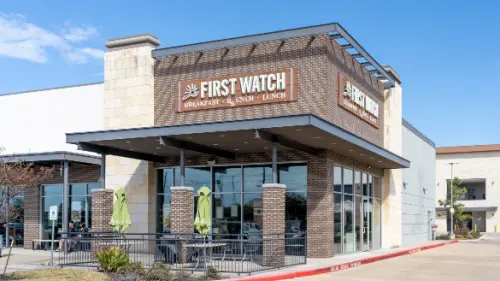
Breakfast-only restaurant First Watch excels at ambiance and menu innovation, changing up its offerings five times a year and striving to maintain a neighborhood feel at each of its locations.
First Watch has made a point of leaning into its strengths, eschewing discounts in favor of a consistently elevated dining experience and doubling down its strongest day part (weekend brunch), rather than trying to artificially drive up interest at other times.
And the strategy appears to be working: In 2024, visits to First Watch increased 6.6% YoY – with Saturdays and Sundays between 11:00 A.M. and 1:00 P.M. remaining its busiest dayparts by far. Visitors to First Watch also tend to linger over their meals more than at other breakfast chains – in 2024, the restaurant experienced an average dwell time of 54.9 minutes, significantly longer than the 48.7-minute average at other breakfast-focused restaurants.
By focusing on what matters most to its diners – innovative and exciting food and a welcoming atmosphere that allows patrons to enjoy their meals at a leisurely pace – First Watch is continuing to flourish.
Another chain that is growing its footprint and its audience on the strength of a menu and ambiance-focused approach is Firebirds Wood Fired Grill. The chain, known for its “polished casual” vibe and bold, unique flavors, added several new restaurants last year, leading to a 6.5% increase in overall visits. Over the same period, the average number of visits to each Firebirds location held steady – showing that the new restaurants aren’t cannibalizing existing business.
The chain’s success may rest, in part, on its locating its venues in areas rife with enthusiastic foodies. Data from Spatial.ai’s FollowGraph shows that in 2024, Firebird’s trade areas had significantly higher shares of “BBQ Lovers”, “Gourmet Burger Lovers,” and “Foodies” than the nationwide average. This suggests that Firebirds is attracting diners who prioritize the experience of eating – key for a chain that prides itself on putting good food first. The chain is also known for its welcoming decor and design – another aspect that may lead to its strong visit success.
Necessity often serves as the mother of invention, and challenging economic periods continue to spark new trends and innovations in the dining scene. From a heightened focus on value – drawing families and lower-HHI consumers willing to travel for a good deal – to the growing appeal of social dining and the timeless draw of good food – new trends are emerging to meet changing consumer expectations.

Stadiums and arenas – and the communities they call home – have a stake in cultivating engaged team fanbases eager to participate in live events. And venues and teams can employ a variety of strategies to strengthen their connection with fans and draw crowds to the stands.
In this report, we leverage location analytics and audience segmentation to uncover some of the ways that sports franchises and venues are driving engagement – attracting visitors from farther away and appealing to fans more likely to splurge on stadium fare. How does the signing of a star athlete impact arena visitor profiles? What happens to stadium visitation trends when a team’s performance improves dramatically? And how can teams and venues tailor their offerings to more effectively cater to visitor preferences?
We dove into the data to find out.
In sports, the signing of a star athlete can have a ripple effect across the organization, hometown, and league. In addition to driving up overall attendance at games, star power can impact everything from visit frequency to audience profile – and the buying power of stadium attendees.
Lionel Messi’s move to Inter Miami CF after decades of European play brought a foot traffic boost to Chase Stadium (formerly DRV PNK Stadium). But it also shifted the demographics of stadium visitors and increased the distance they traveled to attend a game.
At Inter Miami’s 2022 and 2023 home openers without Messi (he joined the team mid-season in 2023), only 6.4% and 5.3% of visitors to Chase Stadium came from over 250 miles away. But for the 2024 home opener with Messi on the squad, 31.3% of stadium visitors traveled more than 250 miles to attend.
The demographics of visitors at the home opener also changed with Messi on the team. Trade area data combined with the Spatial.ai: PersonaLive dataset reveals that the 2024 home opener received a smaller share of households in the “Near-Urban Diverse Families” (11.2%) and “Young Urban Singles” (7.2%) segments than the two previous years. Meanwhile, shares of “Sunset Boomers” (13.0%) and “Ultra Wealthy Families” (20.1%) increased, indicating that Messi brought an older and more affluent demographic of visitors to the stadium compared to previous years. Messi’s arrival has generated increased revenue for Inter Miami CF, Major League Soccer, and Apple TV+, which has exclusive streaming rights for MLS games. And an influx of affluent out-of-town visitors also has the potential to drive positive outcomes for tourism and employment in the Miami area.
Caitlin Clark’s WNBA debut was another star-powered game changer – this time for women’s basketball. After dazzling the sports world during her college basketball career, Caitlin Clark was drafted first overall to the Indiana Fever before the 2024 WNBA season. The superstar’s arrival has had a staggering economic impact on the city of Indianapolis and the Fever franchise, highlighting the benefit of a top athlete within the local community. However, Clark’s stardom also had a far-reaching impact on the league as a whole, adding tremendous value to the WNBA. Trade area analysis reveals that several WNBA arenas saw an uptick in visitor affluence when hosting the Fever with Clark in the lineup – likely driven in part by the elevated ticket prices associated with her appearances.
When the Minnesota Lynx hosted the Fever on July 14th, 2024, for example, the median HHI of Target Center’s captured market shot up to just over $93K/year, well above the median HHIs for the games immediately before and after that event. (A venue’s captured market refers to the census block groups (CBGs) from which it draws its visitors, weighted to reflect the share of visits from each one – and thus reflects the profile of the venue’s visitor base.) Similarly, the Fever’s away game against the Connecticut Sun on May 14th, 2024 at Mohegan Sun Arena drove a higher audience median HHI ($103.6K/year) than either of the Sun’s next two home games.
Having a superstar on the roster can drive positive outcomes locally and league-wide – but overall team success is the ultimate goal for any franchise. So it may come as no surprise that stadiums and arenas can drive engagement when their home teams perform well on the field or court. And teams that reverse their fortunes often spark even greater excitement, boosting visitor loyalty, visit duration, and other key metrics.
The Baltimore Orioles had one of the worst records in baseball just a few years ago. But since 2022, the team has flipped the script – stringing together winning seasons and postseason berths. And location intelligence shows that as the team finds success, fans are becoming more engaged with their hometown stadium.
During the 2019 regular season, one of the worst for the club in recent history, stadium attendance suffered, with only 8.3% of visitors to Oriole Park at Camden Yards visiting the stadium at least three times. But during the 2024 regular season, Oriole Park’s share of repeat visitors (those who visited at least three times) was almost double 2019 levels (16.3%) – consistent with a sharp increase in sales of multi-game ticket packages.
In addition to attending games more often, visitors to Oriole Park also appear to be spending more time at the ballpark. During the 2019 regular season, visitors spent an average of 150 minutes at the stadium, but in 2024, the average time at the park increased to 178 minutes – potentially boosting ancillary spending and in-stadium advertising exposure. The increased dwell time of visitors is particularly noteworthy when considering that MLB’s rule changes have significantly shortened average game time.
The more engaged fandom engendered by team success not only impacts stadium visitor behavior, but also has the potential to drive revenue. The Orioles added 20 new corporate sponsors before the 2024 season, likely due to the attention garnered by the well-performing club.
The NFL’s Detroit Lions provide another example of team success that has driven visitor engagement. As the franchise has improved its record in recent years, the trade area size of its stadium – Ford Field – has also increased, indicating elevated attendance from fans living further away.
The Lions finished the regular season with losing records from 2019 to 2021, but finished over .500 in 2022 (9-8), 2023 (12-5), and 2024 (15-2). And with the team’s increasing wins each consecutive season, the size of its stadium's trade area has also increased steadily – reaching 81.3% above 2019 levels in 2024.
This underscores just how much team success matters to fans, who may be more inclined to travel longer distances if they believe their team is likely to win. Ultimately, broader fan engagement across a wider trade area also increases a team’s growth potential beyond in-stadium attendance – driving merchandise sales, increasing viewership, and benefitting both the team and the league as a whole.
While stadium attendance and visitor behavior is often correlated to the performance of the sports teams that play in the arena, sporting venues can also drive fan engagement in ways that aren’t solely tied to team success or big-name athletes. By adapting their concessions and venue operations to visitor preferences, stadiums and arenas can better serve their audiences and strengthen their community presence.
Consumers have been feeling the pinch of rising food costs for quite some time, but at least one NBA team has responded to make concessions at the game more affordable for fans. In December 2024, the Phoenix Suns announced a $2 value menu for all home games at Footprint Center – delivering steep discounts on hot dogs, water, soda, and snacks.
Location analytics suggest that since the value menu launch, more fans who would have otherwise waited until after leaving the venue to grab a bite are now enjoying food and drinks inside the arena. Analysis of five Suns home games just before the value menu launch – between November 26th and December 15th, 2024 – reveals that between 7.0% and 9.3% of stadium visitors visited a dining establishment after leaving the arena. But following the value menu launch before the December 19th, 2024 home game, post-game dining decreased to under 6.0% through the end of the year.
Suns owner Mat Ishbia’s announcement of the new menu called out the need for affordable food options for families at Suns games. As the season progresses, the new menu may drive a larger share of family households to Suns games, which could provide opportunities for advertisers and other stadium partners.
Consumers in Washington – and especially Seattle – are known for their affinity for plant-based diets and environmentally-friendly lifestyles. And that goes for local football fans as well: Audience segmentation provided by the AGS: Behavior & Attitudes dataset combined with trade area data reveals that during September to December 2024, households within Lumen Field’s potential visitor base were 36% more likely to be “Environmentally Conscious Buyers” and “Environmental Contributors” and 39% more likely to be “Vegans” compared to the nationwide average. By contrast, across all NFL stadiums, potential visiting households were 2%, 1%, and 3% less likely, respectively, to belong to these segments.
And Lumen Field has been actively catering to these consumer preferences. The stadium, which has been experimenting with plant-based culinary options for quite some time, was recently recognized as one of the most vegan-friendly stadiums in the NFL. And in December 2024, Lumen became the second stadium in the league to achieve TRUE precertification for its efforts to become a zero-waste venue.
By remaining aligned with its visitor base – including both football fans and people that visit the stadium for other events – Lumen Field encourages visitors to feel at home at their local stadium. And fans may be more connected to their team knowing the club shares their values and respects their lifestyle.
Stadiums and arenas can leverage a variety of strategies to engage visitors in attendance as well as wider audiences. Signing a star athlete, putting together a winning club, or adapting to local preferences are just some of the ways that sports franchises and athletic venues can find success.

Starbucks. Amazon. Barclays. AT&T. UPS. These are just some of the major corporations that have made waves in recent months with return-to-office (RTO) mandates requiring employees to show up in person more often – some of them five days a week.
But how are crackdowns like these taking shape on the ground? Is the office recovery still underway, or has it run its course? And how are evolving in-office work patterns impacting commuting hubs and dining trends? This white paper dives into the data to assess the state of office recovery in 2024 – and to explore what lies ahead for the sector in 2025.
In 2024, office foot traffic continued its slow upward climb, with visits to the Placer.ai Office Index down just 34.3% compared to 2019. (In other words, visits to the Placer.ai Office Index were 65.7% of their pre-COVID levels). And zooming in on year-over-year (YoY) trends reveals that office visits grew by 10.0% in 2024 compared to 2023 – showing that employee (and manager) pushback notwithstanding, the RTO is still very much taking place.
Indeed, diving into quarterly office visit fluctuations since Q4 2019 shows that office visits have been on a slow, steady upward trajectory since Q2 2020, following – at least since 2022 – a fairly consistent seasonal pattern. In Q1, Q2, and Q3 of each year, office visit levels increased steadily before dipping in holiday-heavy Q4 – only to recover to an even higher start-of-year baseline in the following Q1.
Between Q1 and Q3 2022, for example, the post pandemic office visit gap (compared to a Q4 2019 baseline) narrowed from 63.1% to 47.5%. It then widened temporarily in Q4 before reaching a new low – 41.4% – in Q1 2023. The same pattern repeated itself in both 2023 and 2024. So even though Q4 2024 saw a predictable visit decline, the first quarter of Q1 2025 may well set a new RTO record – especially given the slew of strict RTO mandates set to take effect in Q1 at companies like AT&T and Amazon.
Despite the ongoing recovery, the TGIF work week – which sees remote-capable employees concentrating office visits midweek and working remotely on Fridays – remains more firmly entrenched than ever.
In 2024, just 12.3% of office visits took place on Fridays – less than in 2022 (13.3%) and on par with 2023 (12.4%). Though Fridays were always popular vacation days – after all, why not take a long weekend if you can – this shift represents a significant departure from the pre-COVID norm, which saw Fridays accounting for 17.3% of weekday office visits.
Unsurprisingly, Tuesdays and Wednesdays remained the busiest in-office days of the week, followed by Thursdays. And Mondays saw a slight resurgence in visit share – up to 17.9% from 16.9% in 2023 – suggesting that as the RTO progresses, Manic Mondays are once again on the agenda.
Indeed, a closer look at year-over-five-year (Yo5Y) visit trends throughout the work week shows that on Tuesdays and Wednesdays, 2024 office foot traffic was down just 24.3% and 26.9%, respectively, compared to 2019 levels. The Thursday visit gap registered at 30.3%, while the Monday gap came in at 40.5%.
But on Fridays, offices were less than half as busy as they were in 2019 – with foot traffic down a substantial 53.2% compared to 2019.
Before COVID, long commutes on crowded subways, trains, and buses were a mainstay of the nine-to-five grind. But the rise of remote and hybrid work put a dent in rush hour traffic – leading to a substantial slowdown in the utilization of public transportation. As the office recovery continues to pick up steam, examining foot traffic patterns at major ground transportation commuting hubs, such as Penn Station in New York or Union Station in Washington, D.C., offers additional insight into the state of RTO.
Rush hour, for one thing – especially in the mornings – isn’t quite what it used to be. In 2024, overall visits to ground transportation hubs were down 25.0% compared to 2019. But during morning rush hour – weekdays between 6:00 AM and 9:00 AM – visits were down between 44.6% and 53.0%, with Fridays (53.0%) and Mondays (49.7%) seeing the steepest drops. Even as people return to the office, it seems, many may be coming in later – leaning into their biological clocks and getting more sleep. And with today’s office-goers less likely to be suburban commuters than in the past (see below), hubs like Penn Station aren’t as bustling first thing in the morning as they were pre-pandemic.
Evening rush hour, meanwhile, has been quicker to bounce back, with 2024 visit gaps ranging from 36.4% on Fridays to 30.0% on Tuesdays and Wednesdays. Office-goers likely form a smaller part of the late afternoon and evening rush hour crowd, which may include more travelers heading to a variety of places. And commuters going to work later in the day – including “coffee badgers” – may still be apt to head home between four and seven.
The drop in early-morning public transportation traffic may also be due to a shift in the geographical distribution of would-be commuters. Data from Placer.ai’s RTO dashboard shows that visits originating from areas closer to office locations have recovered faster than visits from farther away – indicating that people living closer to work are more likely to be back at their desks.
And analyzing the captured markets of major ground transportation hubs shows that the share of households from “Principal Urban Centers” (the most densely populated neighborhoods of the largest cities) rose substantially over the past five years. At the same time, the share of households from the “Suburban Periphery” dropped from 39.1% in 2019 to 32.7% in 2024. (A location’s captured market refers to the census block groups (CBGs) from which it draws its visitors, weighted to reflect the share of visits from each one – and thus reflects the profile of the location’s visitor base.)
This shift in the profile of public transportation consumers may explain the relatively slow recovery of morning transportation visits: City dwellers , who seem to be coming into the office more frequently than suburbanites, may not need to get as early a start to make it in on time.
While the RTO debate is often framed around employer and worker interests, what happens in the office doesn’t stay in the office. Office attendance levels leave their mark on everything from local real estate markets to nationwide relocation patterns. And industries from apparel to dining have undergone significant shifts in the face of evolving work routines.
Within the dining space, for example, fast-casual chains have always been workplace favorites. Offering quick, healthy, and inexpensive lunch options, these restaurants appeal to busy office workers seeking to fuel up during a long day at their desks.
Traditionally, the category has drawn a significant share of its traffic from workplaces. And after dropping during COVID, the share of visits to leading fast-casual brands coming from workplaces is once again on the rise.
In 2019, for example, 17.3% of visits to Chipotle came directly from workplaces, a share that fell to just 11.6% in 2022. But each year since, the share has increased – reaching 16.0% in 2024. Similar patterns have emerged at other segment leaders, including Jersey Mike’s Subs, Panda Express, and Five Guys. So as people increasingly go back to the office, they are also returning to their favorite lunch spots.
For many Americans, coffee is an integral part of the working day. So it may come as no surprise that shifting work routines are also reflected in visit patterns at leading coffee chains.
In 2019, 27.5% of visits to Dunkin’ and 20.1% of visits to Starbucks were immediately followed by a workplace visit, as many employees grabbed a cup of Joe on the way to work or popped out of the office for a midday coffee break. In the wake of COVID, this share dropped for both coffee leaders. But since 2022, it has been steadily rebounding – another sign of how the RTO is shaping consumer behavior beyond the office.
Five years after the pandemic upended work routines and supercharged the soft pants revolution, the office recovery story is still being written. Workplace attendance is still on the rise, and restaurants and coffee chains are in the process of reclaiming their roles as office mainstays. Still, office visit data and foot traffic patterns at commuting hubs show that the TGIF work week is holding firm – and that people aren’t coming in as early or from as far away as they used to. As new office mandates take effect in 2025, the office recovery and its ripple effects will remain a story to watch.