Thank you! Your submission has been received!
Oops! Something went wrong while submitting the form.
0
0
0
0
----------
0
0
Articles
Executive Insights
Back to the Future of Retail: Why Technology Is Bringing Us Full Circle
Technology is taking retail full circle, reviving old models like the milkman and general store. Dive into the data to see how innovations in retail apply new tools to old habits, bringing the industry back to basics with authenticity and a hyper-local focus.
Hue Chen
Nov 17, 2025
5 Minutes

The Return of the Milkman 

If you grew up in the 1980s or 1990s, the idea of a milkman was more folklore than lived experience. You saw it in cartoons or black-and-white sitcoms – a man in uniform carrying glass bottles to a doorstep. It felt like a relic of a bygone era. Surely it would never return.

Fast forward to today, and not only is milk back on the doorstep, but so is everything else in your refrigerator. Technology has made it seamless to order groceries, household essentials, and even ready-to-cook meals, delivered daily with a few taps on your phone. The milkman is back – he just drives an Instacart-branded Prius or an Amazon Fresh van.

This isn’t nostalgia. It’s a cycle. Technology often appears to propel us forward, but in reality, it bends us back to practices we once thought obsolete. The form changes, but the function remains strikingly familiar.

Take grocery delivery. In the 1950s, home delivery was a necessity – fewer households had multiple cars, and local dairies were tightly woven into community life. Today, we have more cars than ever, but also less time. Digital platforms fill that gap, mirroring the personal convenience of the past while scaling it through logistics and data.

The Supermarket as a General Store

Another example comes from the general store. In the 1820s, shopping meant telling an attendant what you wanted, who then gathered items from the back. It wasn’t until the early 1900s that “self-service” emerged, with baskets, aisles, and eventually barcodes.

We now find ourselves swinging back with Buy Online, Pick Up In-Store (BOPIS) and curbside services that mimic that early model: Customers order in advance, then pick up a neatly packed bag from the counter. The shopper no longer roams aisles – the retailer does it for them.

And this is borne out by data: Placer.ai data on Target, Walmart, and Kroger shows spikes in short-duration visits – customers spending less than 10 minutes inside. That is the digital general store in action: efficient, pre-bundled, and familiar in its service, though powered by algorithms instead of store clerks.

Urban Planning, Autonomous Vehicles, and Retail

Urban planning, too, is entering a similar loop. America’s postwar suburbs were built for cars – seas of parking lots, wide arterials, and drive-through convenience. Yet when you walk in the old towns of Europe – San Sebastián, Florence, Prague – the scale is human, not automotive. Streets are narrow, plazas are alive, and walkability is the default.

Autonomous vehicles may bend us back toward that human-centric design. If fewer people need to own cars, or if vehicles can drop off passengers and then disappear into shared fleets, parking loses its primacy. The city grid can prioritize people again.

For retail, this shift is profound. Shopping centers that once maximized asphalt for parking may repurpose land for dining, green space, or entertainment. Placer.ai’s visitation metrics already show the power of “experience-first” environments: centers with strong dining and social elements draw visitors who stay longer and come more often.

A One-Room Schoolhouse, At Scale

Education is another domain where technology is looping us back. A century ago, one-room schoolhouses educated children ages 6 to 16 under a single teacher, with individualized pacing as much as possible. Then industrialized schooling standardized the process – grade levels, subject blocks, and centralized curricula.

Artificial Intelligence could return us to the one-room model, but at scale. A teacher might become less of a “lecturer” and more of a coach in learning. AI tutors can adapt to each child’s needs, while the teacher provides human guidance, empathy, and context. It’s both cutting-edge and old-fashioned: personal learning, locally grounded, supported by technology rather than limited by it.

Global Commerce and Authenticity

Perhaps the most intriguing cycle will be around authenticity. Global commerce has delivered incredible convenience, but also a flattening of experience. Walk down a high street in London, São Paulo, or Bangkok, and you’ll find the same Starbucks, H&M, and McDonald’s.

Even shops that feel “local” often sell merchandise sourced from the same global factories. Authenticity has become scarce – and scarcity, as any economist will tell you, creates value.

Placer.ai’s data often highlights how unique, local experiences can outperform national chains. Look at the night markets in Asia, where a single fried chicken vendor with a 50-year tradition can attract lines that rival global QSR brands. Or U.S. examples like Franklin Barbecue in Austin, Joe’s Pizza in New York – or even entertainment-focused Casa Bonita in Lakewood, CO, where one location is enough to generate pilgrimage-level demand.

A Hyper-Local Lens

The lesson for retail landlords is clear: the future is not only about digital convenience but also about curating hyper-local authenticity. A shopping center that balances national anchors with unique regional tenants can capture both predictability and excitement.

Placer.ai location analytics underscore this trend. Centers with a strong mix of “only-here” brands often see stronger visitation and longer dwell times. Customers aren’t just coming for errands – they’re coming for identity and discovery.

Brands that cater to local tastes are also succeeding, driving loyalty and repeat visits. Barnes & Noble, for example, has made a remarkable comeback with a strategy focused on local curation and community connection, eschewing the cookie-cutter feel of many national chains. Store managers now have the freedom to shape selections around neighborhood interests from regional authors to niche genres – creating spaces that feel personal rather than programmed. In an age dominated by algorithms, this human touch has become a competitive advantage.

The Future of Shopping Centers  

So, what does all this mean for the future of shopping centers? It means history is not linear. Technology doesn’t only push us forward; it often bends us back to models we once knew, reshaped to fit today’s context.

The milkman is now a grocery delivery app. The general store clerk is now BOPIS. The European plaza is reborn through autonomous vehicles. The one-room schoolhouse reappears through AI tutors. And authenticity – once assumed, now rare – is becoming the most valuable commodity in commerce.

As landlords and investors, the opportunity is to recognize these patterns early. Instead of asking, “What’s new?” we might ask, “What’s old that technology will make new again?”

Where are people choosing speed over browsing? Where are they trading scale for authenticity? Where are they staying longer because the environment is built for people, not cars?

These are not just data points. They are clues to the future – a future that looks surprisingly familiar.

For more data-driven retail insights, follow Placer.ai/anchor

Placer.ai leverages a panel of tens of millions of devices and utilizes machine learning to make estimations for visits to locations across the US. The data is trusted by thousands of industry leaders who leverage Placer.ai for insights into foot traffic, demographic breakdowns, retail sale predictions, migration trends, site selection, and more.

Article
Is Turkey Wednesday the Only Big Day for Grocers?
Thanksgiving week brings the busiest grocery shopping day of the year, with visits peaking on Turkey Wednesday. Traditional supermarkets lead the rush, while other formats see distinct seasonal trends. 
Lila Margalit
Nov 17, 2025
4 minutes

Grocery stores aren’t usually top of mind when it comes to holiday retail. But as families prepare for their annual feasts, supermarkets gear up for their busiest stretch of the year – a season marked by crowded aisles, overflowing carts, and soaring sales. 

How do grocery stores and other food-at-home purveyors, from superstores to dollar stores, experience the holidays? Is “Turkey Wednesday” – the day before Thanksgiving – the only key milestone that matters, or are there other moments that drive performance? And which segments and brands stand to benefit most this season?

Stuffed with Shoppers

Thanksgiving is about gratitude and family – but it’s also about good food. And as families prepare their feasts, grocery stores nationwide buzz with activity. 

During Turkey Wednesday last year, grocery store visits soared 74.5% above the daily average, making it the busiest day of the past 12 months for the category – followed by December 23rd and Christmas Eve. Other food-at-home retailers, such as dollar stores and superstores, also experienced elevated traffic before Thanksgiving, but their largest surges came in the lead-up to Christmas, as shoppers stocked up on gifts, decorations, and non-food essentials alongside their groceries. 

The contrast underscores how deeply Thanksgiving belongs to grocery retail. When the meal itself is the main event, consumers prioritize fresh ingredients, pantry staples, and those all-important last-minute items – areas where supermarkets lead the charge. But the data also shows there’s plenty of room for multiple formats to shine during the season, with each experiencing its own distinct holiday peak. 

Traditional Grocery Gobbles Up the Competition

Within the grocery industry, Black Friday and December 23rd stand out as the two busiest shopping days of the year across segments, though the intensity of the surges varies.

Traditional supermarkets – think Kroger, Safeway, and H-E-B – dominate the pre-thanksgiving rush, as shoppers on the hunt for holiday-specific items gravitate towards their broader assortments. In 2024, visits to this segment jumped 77.9% above a 12-month daily average on Turkey Wednesday, with a smaller uptick on the day before Christmas Eve. Value grocers followed a similar trajectory, though with more modest boosts. 

Meanwhile, specialty and fresh-format grocers reached their traffic peak on December 23rd, reflecting their focus on premium, seasonal, and gift-oriented products that align more with December entertaining and gifting than with Thanksgiving meal prep.

No One Recipe for Holiday Success

Still, within grocery segments there remains significant variation between brands. ShopRite saw one of the biggest Turkey Wednesday spikes last year, with visits nearly doubling compared to the daily average. Kroger and Food Lion also outperformed the traditional grocery average.

Meijer, by contrast, followed a different rhythm. As a supercenter hybrid that straddles grocery and general merchandise, its biggest surge came not before Thanksgiving but in the days before Christmas, mirroring broader patterns for stores that serve “everything under one roof” missions. 

Trader Joe’s also peaked closer to Christmas, though its busiest day of the past year was May 10th 2025, when the chain’s seasonal line-up of flowers, sweets, and small gift items helped drive an 82.1% jump in visits ahead of Mother’s Day. The pattern reflects Trader Joe’s focus on curated staples and seasonal specialties rather than the wide selections typical of larger supermarkets. 

The Turkey Takeaway

As Thanksgiving approaches, traditional grocers once again look poised to dominate Turkey Wednesday, while value, specialty, superstore, and dollar store formats each find their own seasonal spotlights. How will shopping patterns play out across these segments this year?

Follow Placer.ai/anchor to find out.

Article
Placer.ai October 2025 Mall Index: Shoppers Return to Malls
Mall traffic surged in October 2025 – likely driven by early holiday shopping – with visits jumping YoY and MoM across all mall formats.
Shira Petrack
Nov 13, 2025
2 minutes

After a relatively subdued summer performance, malls rebounded sharply in October 2025, with foot traffic to indoor malls, open-air shopping centers, and outlet malls rising significantly both year over year (YoY) and month over month (MoM). What does this mean for the upcoming holiday season? Read on to find out. 

Shoppers Return to Malls in October 

All mall formats saw clear YoY visit gains in October 2025, potentially signaling renewed consumer enthusiasm heading into the holiday season. And although indoor malls led the growth – continuing their strong performance throughout 2025 – open-air shopping centers and outlet malls also returned to positive territory after four consecutive months of declines, underscoring the breadth and strength of the October recovery.

Early Holiday Shopping Fuels Strong MoM Gains

The MoM data underscores the scale of this recovery. In October 2025, visits rose sharply compared to September 2025 – up 6.1% for Indoor Malls, 5.5% for Open-Air Shopping Centers, and 7.9% for Outlet Malls. In comparison, October 2024 saw only slight MoM increases of 0.5%, 2.1%, and 1.4%, respectively, compared to September 2024. 

While the YoY data shows steady improvement in overall mall traffic, this month-over-month jump reveals a meaningful change in consumer behavior. Rather than waiting for November’s traditional start to the holiday season, shoppers appear to be hitting stores earlier and in greater numbers, making October a much more significant month for retail activity than it was last year. 

The standout performance of outlet malls in particular reinforces consumer interest in value and discounts. As households remain price-sensitive, outlet centers continue to benefit from their combination of recognizable brands and lower price points.

What Does this Mean For the Upcoming Holiday Season? 

October’s surge suggests that the 2025 holiday shopping season may be starting earlier and spreading out more evenly than in previous years. Recent research shows that many U.S. consumers plan to start their holiday shopping sooner, driven by concerns over rising prices and a desire for better product selection. Retailers are responding with expanded October promotions that pull forward demand.

At the same time, shoppers remain highly value-driven, with most saying inflation has made them more price-conscious. That dynamic likely helped fuel outlet malls’ nearly 8% MoM increase, as consumers sought recognizable brands at lower prices.

Together, these trends suggest that consumers are approaching the 2025 holiday season with more intention – shopping earlier, seeking value, and spreading spending over a longer period. For malls, that could mean a steadier flow of visits throughout Q4, rather than the sharp peaks of prior years.

For more data-driven consumer insights, visit placer.ai/anchor.

Placer.ai leverages a panel of tens of millions of devices and utilizes machine learning to make estimations for visits to locations across the US. The data is trusted by thousands of industry leaders who leverage Placer.ai for insights into foot traffic, demographic breakdowns, retail sale predictions, migration trends, site selection, and more.

Article
How Starbucks Proved That Free Isn’t Everything
Starbucks’ $29.95 Bearista glass drove a 37.8% visit surge – nearly matching Red Cup Day’s free-cup frenzy. The viral launch proved that creativity, emotion, and scarcity can spark major traffic, showing consumers will still splurge on products that feel special.
Lila Margalit
Nov 13, 2025
3 minutes

Each year, Starbucks drives excitement with its seasonal launches – from PSL Day, marking the return of the popular Pumpkin Spice Latte, to Red Cup Day in November, when customers can snag a free reusable cup with any beverage purchase.

But this year, Starbucks kicked off the holiday season with an even bigger event – the launch of a $29.95 bear-shaped glass that broke the internet and sent fans into a frenzy. How did the Bearista craze impact Starbucks visitation trends – and what can we learn from its standout success? 

A Sustained Traffic Surge

On November 6th, the day of the Bearista launch, visits to Starbucks jumped 37.8% above the last 12 months' daily average, outpacing even the brand’s successful August PSL debut. (The Friday following the PSL launch drove a 23.1% spike in visits compared to the daily visit average over the last 12 months.) Even after the initial rush, traffic remained elevated for several days as fans hunted for remaining inventory and social media buzzed with stories of sellouts. The buzz wasn’t just big; it was lasting.

Giving Red Cup Day a Run for its Money

And despite its hefty price tag, the Bearista Cup drop drove a traffic boost similar to last year’s Red Cup Day boost, when the promise of a free cup drove a 40.7% surge in visits compared to an average Thursday. While the Bearista spike was slightly smaller, its momentum endured for days as excitement – and anxiety over scarcity – continued to build.

Lessons for Retailers in 2025

People lining up to pay $30 for a bear-shaped glass – albeit a super cute one – wasn’t on anyone’s bingo card this year. So what can we learn from the event’s smashing success?

For one thing, even in an era of trading down, consumers are still willing to splurge on items that feel special – especially those that offer a sense of belonging to a cultural moment. Value matters, but it isn’t everything. 

For another, not everything needs to be free or deeply discounted to draw major crowds. The Bearista proved that creativity and emotion can rival even the most generous giveaways.

And finally, scarcity (still) sells. The hype was so intense that fights broke out at some stores and eBay resales topped $1,000 – prompting Starbucks to apologize to disappointed fans and promise more holiday merch on the way.

With Red Cup Day just around the corner, will the Bearista momentum help drive an even bigger visit spike this year? 

Follow Placer.ai/anchor to find out. 

Placer.ai leverages a panel of tens of millions of devices and utilizes machine learning to make estimations for visits to locations across the US. The data is trusted by thousands of industry leaders who leverage Placer.ai for insights into foot traffic, demographic breakdowns, retail sale predictions, migration trends, site selection, and more.

Article
Three Retailers to Watch Ahead of the Holidays
As the 2025 holiday season nears, retailers like Framebridge, Best Buy, and ALDI are gaining momentum through expansion, innovation, and value-driven strategies. Foot traffic data reveals how these brands are connecting with shoppers and setting the tone for a strong end-of-year retail performance.
Maytal Cohen
Nov 12, 2025
3 minutes

Experience, Innovation, and Value Define 2025’s Retail Standouts

As the 2025 holiday season approaches, several retail categories are showing surprising resilience – from luxury home goods to consumer electronics and grocery. Despite a challenging economic backdrop, a few standout brands are not only holding steady but gaining meaningful traction through smart expansion, effective online-offline integration, and compelling value offerings.

Framebridge, Best Buy, and ALDI each represent a distinct facet of the retail landscape, but they have one thing in common: strong visitation trends heading into the year’s most critical shopping period.

Framebridge’s 2025 Momentum: Growth, Expansion, and a More Affluent Customer Base

Framebridge has emerged as one of 2025’s standout retail success stories. Over the past 12 months, visits to the brand have climbed 108.8% year over year (YoY) as it rapidly expanded its footprint and deepened its connection with customers.

This momentum stems from Framebridge’s ability to deliver an in-store experience that online competitors simply can’t replicate. Shoppers are invited to see and feel materials firsthand, while design experts offer personalized guidance and creative inspiration to craft meaningful, high-quality pieces. The result is a shopping experience that feels personal, tactile, and memorable – transforming framing from a routine purchase into something experiential and human.

In 2025, Framebridge brought this approach to new audiences with its first stores in California, marking its West Coast debut. And as the chain has expanded, its customer base has grown more affluent: the median household income in Framebridge’s captured market rose from $127.7K in early 2024 to $141.8K by mid-2025, while average household size also increased. Together, these shifts reflect rising resonance among higher-income, family-oriented consumers who value personalization, design, and craftsmanship – leaving the brand well positioned for a strong season of meaningful gift giving.

Best Buy’s Early Holiday Momentum Signals a Strong Season Ahead

Not long ago, many analysts were skeptical about Best Buy’s prospects. The electronics retailer was viewed as vulnerable in a tightening consumer environment, with lingering doubts about its ability to stay relevant amid e-commerce dominance and fast-changing tech trends. But recent data suggests that Best Buy is regaining momentum – and that its strategy to blend digital convenience with in-store expertise is beginning to deliver results.

Between November 2024 and October 2025, foot traffic to Best Buy declined just 1.7% YoY, an impressive result given ongoing store closures and the continued expansion of its online business. At the same time, a steady rise in short in-store visits highlights the success of Best Buy’s online-to-offline integration. And though tariff uncertainty continues to loom, Best Buy’s balanced approach leaves it poised to enjoy a successful Q4 – traditionally Best Buy’s strongest period of the year. 

ALDI’s Steady Surge: Why the Value Grocer Is Poised for a Strong 2025 Holiday Season

In the grocery sector, few brands are gaining momentum like ALDI – the no-frills discount grocer that continues to attract shoppers with its focus on simplicity, savings, and quality. Over the past several years, ALDI has sustained consistent visit growth while expanding its store network. And during the same period, the brand’s share of total industry visits has risen from 4.3% in 2022 to 5.7% in 2025 to date, underscoring its growing influence as a leading value-driven grocery chain.

As “Turkey Wednesday” and the pre-Christmas grocery rush approach, ALDI appears set to capture an even greater share of holiday traffic. With strong visitation trends, expanding market reach, and a clear value proposition, the retailer stands out as one of 2025’s most resilient performers.

The Bottom Line

Framebridge, Best Buy, and ALDI demonstrate that experience, convenience, and value remain key drivers of retail performance. By focusing on what draws shoppers into stores, these brands are paving the way for a robust holiday season.

For the most up-to-date retail data, check out Placer.ai’s free tools.

Placer.ai leverages a panel of tens of millions of devices and utilizes machine learning to make estimations for visits to locations across the US. The data is trusted by thousands of industry leaders who leverage Placer.ai for insights into foot traffic, demographic breakdowns, retail sale predictions, migration trends, site selection, and more.

Article
Denny’s Goes Private: What’s Next for America’s Diner
Following its acquisition by TriArtisan Capital Advisors, Denny’s is entering a new chapter. With Keke’s Breakfast Café gaining momentum and loyalty at Denny’s holding steady, the iconic diner brand is well-positioned to rebuild and modernize for long-term growth.
Lila Margalit
Nov 11, 2025
3 minutes

After decades as America’s quintessential diner, Denny’s is entering a new era under the ownership of TriArtisan Capital Advisors, Treville Capital, and Yadav Enterprises. The move to take the company private comes at a time when the brand faces headwinds from store closures and evolving consumer habits – but also holds opportunities to reenergize its position in the family dining space. 

We dove into the data to see where Denny’s stands today and what might be next for this legacy chain.

Fewer Plates, Fewer Visits

Visits to Denny’s fell 6.2% year over year (YoY) between November 2024 and October 2025, following a smaller 1.7% decline the prior year. This downturn partly reflects store closures, as Denny’s has been shuttering underperforming locations over the past two years to reposition the brand for sustainable growth. 

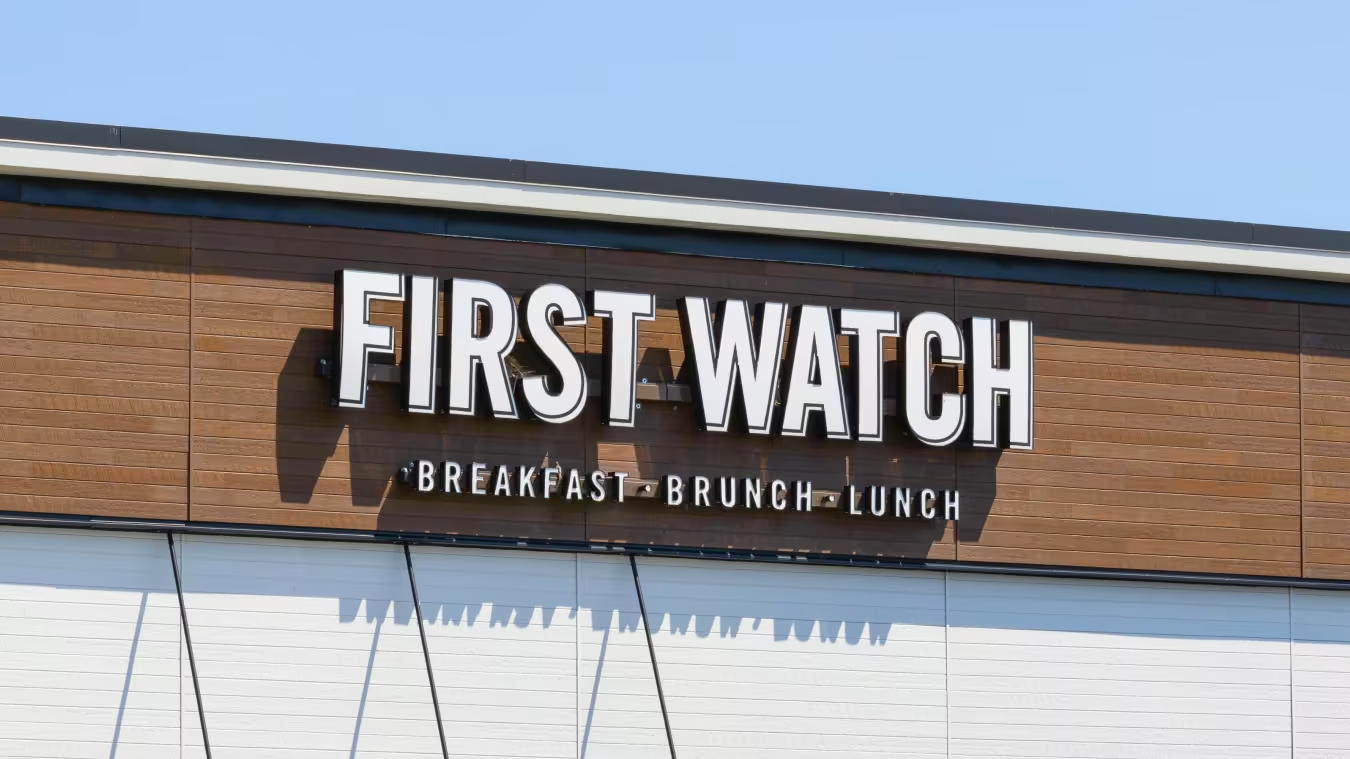
The decline also reflects heightened competition from upscale breakfast chains such as First Watch – a challenge shared by peers like IHOP and Waffle House. Against this backdrop, Denny’s ability to limit traffic losses to single digits highlights its underlying brand resilience. And together with traffic gains at Keke’s Breakfast Café – the fast-growing concept Denny’s acquired in 2022 – this resilience provides a strong foundation for Denny’s and its new ownership group to reinvigorate the company’s success.  

Same Table, Familiar Faces

Visitor loyalty at Denny’s remains another bright spot. Between November 2024 and October 2025, roughly one in six Denny’s visitors returned within the same month, giving it a 17.3% average monthly loyal visitor share – the second highest among major breakfast chains after Waffle House (24.0%). This depth of loyalty shows that even with fewer restaurants, Denny’s retains a solid base of habitual diners who see it as their go-to comfort food spot. That connection also gives Denny’s – and other traditional diner concepts – a meaningful point of differentiation from more upscale competitors as the brand’s new ownership works to reenergize its business.

What’s Next for America’s Diner

The data tells a clear story: Denny’s is in transition, not decline. Its loyal customer base provides stability, and its ability to limit traffic losses amid strategic rightsizing underscores real resilience. Now, as a privately held company, Denny’s has the flexibility to plan for the long term, positioning itself to evolve thoughtfully and make a comeback, one Grand Slam at a time.

For more data-driven dining analyses check out Placer.ai’s free industry trends tool.

Placer.ai leverages a panel of tens of millions of devices and utilizes machine learning to make estimations for visits to locations across the US. The data is trusted by thousands of industry leaders who leverage Placer.ai for insights into foot traffic, demographic breakdowns, retail sale predictions, migration trends, site selection, and more.

Reports
INSIDER
Report
3 Consumer Trends to Watch in 2025
Dive into the data to explore key trends shaping consumer behavior in 2025 and discover strategies helping top brands drive foot traffic to brick-and-mortar stores.
March 27, 2025
6 minutes

In today’s retail landscape, consumer behavior is influenced by a multitude of factors, directly impacting the success of products and brands. This report explores the latest trends in value perception, shopping behavior, and media consumption that impact which brands consumers are most likely to engage with – and how. 

Demand for Value and the Perfect Piece

In the apparel space, consumers continue to prioritize value and unique merchandise. 

Thrift and Off-Price Shopping Appeals to Diverse Audience Segments

Analysis of visits to various apparel categories reveals a steady increase in the share of visits going to off-price retailers and thrift stores at the expense of traditional apparel chains. 

And the popularity of off-price chains and thrift stores appears to be widespread across multiple audience segments. Analyzing trade area data with the Experian: Mosaic psychographic dataset reveals a clear preference for second-hand retailers among both younger (ages 25-30) and older (51+) consumer segments. Meanwhile, middle-class parents aged 36-45 with teenagers – the “Family Union” segment – are significantly more likely to shop at off-price apparel stores, highlighting their emphasis on buying new, while saving both time and money.

This suggests that the powerful blend of treasure-hunting and deep value, central to both the off-price and thrift experiences, is driving traffic from a variety of audiences, and that other industries could benefit from combining affordability with the allure of unique products.

Consumers Shop a Mix of High-End and Budget Retailers, Balancing Cost and Quality

Diving deeper into the location intelligence for the apparel space further highlights thrift and off-price’s broad appeal – and that a combination of quality and price motivates consumers to visit different retailers. 

Between 2019 and 2024, the share of Bloomingdale’s, Saks Fifth Avenue, Neiman Marcus, and Nordstrom visitors that also visited a Goodwill or Ross Dress for Less increased significantly. 

And while this could mean that the current economic climate is causing some higher-income consumers to trade down to lower-priced retailers, it could also be that consumers are prioritizing sustainability and seeking value in terms of  “bang for their buck” – shopping a combination of retailers depending on the cost versus quality considerations for each purchase.

Flexible Consumerism on the Rise

Consumers increasingly expect to shop on their own terms, opting for a more flexible shopping experience that blurs the lines between traditional retail channels and categories. 

Superstores as Quick-Visit Destinations

Superstores and warehouse stores, for example, often evoke the image of navigating aisle after aisle of nearly every product imaginable – a time-consuming endeavor given the sheer size of their stores. But the latest location intelligence shows that more consumers are turning to these retailers for super-quick shopping trips. 

Between 2019 and 2024, the share of visits lasting less than ten minutes at Target, Walmart, BJ’s Wholesale Club, Sam’s Club, and to a lesser extent Costco, rose steadily – perhaps due to increased use of flexible BOPIS (buy online, pick-up in-store) and curbside pick-up options. These stores may also be seeing a rise in consumers popping in to grab just a few items as-needed or to cherry-pick particular deals to complement their larger online shopping orders.

This trend highlights the demand for frictionless store experiences that allow visitors to conveniently shop or pick up orders even at large physical retailers. 

Finding Quick Eats Outside of the Quick-Service Category

And the breaking down of traditional retail silos isn’t limited to big-box chains. Diving into the data for quick service restaurants (QSR), fast casual chains, and grocery stores indicates that more consumers are also looking for new ways to grab a convenient bite. 

Since 2019, grocery stores have been claiming an increasingly large share of the midday short visit pie –  i.e. visits between 11:00 AM 3:00 PM lasting less than ten minutes – at the expense of QSR chains. This suggests that consumers seeking quick and affordable lunches are increasingly turning to grocery stores to pick up a few items or take advantage of self-service food bars. Notably, the rise in supermarket lunching hasn’t come at the expense of fast-casual restaurants, which have also upped their quick-service games – and have seen a small increase in their share of the quick lunchtime crowd over the past five years. 

While some of QSR’s relative decline in short lunchtime visits could be due to discontent with rising fast-food prices, it’s clear that an increasing share of consumers see grocery and fast-casual chains as viable options during the lunch rush.

Tapping into Trends Amplifies Brand Success

In 2025, tapping into hot trends and creating viral moments are among the most powerful tools for amplifying promotions and driving foot traffic to physical stores.  

Pop Culture Collabs Drive Customer Engagement

Retailers across categories have successfully harnessed the power of pop culture collaborations to generate excitement – and visits – by leaning into trending themes. On October 8th, 2024, for example, Wendy’s launched its epic Krabby Patty Collab, inspired by the beloved SpongeBob franchise. And during the week of the offering, the chain experienced a remarkable 21.5% increase in foot traffic compared to an average week that year. 

Similarly, Crumbl – adept at creating buzz through manufactured scarcity – sparked a frenzy with the debut of its exclusive Olivia Rodrigo GUTS cookie. Initially available only at select locations near the artist’s concert venues, the cookie was launched nationwide for a limited time from August 19th to 24th, 2024. This buzz-driven release resulted in a 27.7% traffic surge during the week of the launch, as fans rushed to get a taste of the star-studded treat. 

And it’s not just dining chains benefiting from these pop-culture moments. On February 16th, 2025, Bath & Body Works launched a Disney Princess-inspired fragrance line, perfect for fans of Cinderella, Ariel, Belle, Jasmine, Moana, and Tiana. The collaboration resonated, fueling a 23.2% visit spike for the chain. 

Trend-Setting Promotion Drives Visits to Cinemark

While tapping into existing pop-culture trends has the ability to drive traffic, so does creating a new one. Analysis of movie theater visits on National Popcorn Day (Sunday, January 19th, 2025) shows how initiating a trend can spur social media engagement and impact in-person traffic to physical retail spaces.

National Popcorn Day was a successful promotional holiday across the movie theater industry in 2025. Both Regal Cinemas and AMC Theatres offered popcorn-based promotions on the day, but Cinemark’s “Bring Your Own Bucket” campaign, in particular, appears to have spurred a significant foot traffic boost during the event. 

Visits to Cinemark on National Popcorn Day in 2025 increased 57.5% relative to the Sunday visit average for January and February 2025, as movie-goers showed off their out-of-the-bucket popcorn receptacles on social media. Clearly, by starting a trend that invited creativity and expression, Cinemark was able to amplify the impact of its National Popcorn Day promotion. 

The 2025 Consumer

Location intelligence illuminates some of the key trends shaping consumer behavior in 2025. The data reveals that value-driven shopping, demand for flexibility across touchpoints, and the power of unique retail moments have the power to drive consumer engagement and the success of retail categories, brands, and products.

INSIDER
Report
Hotels in the Heart of the City
Dive into the data to examine hotel visit trends across four major downtown cores: Miami, Chicago, New York, and Los Angeles.
March 10, 2025
6 minutes

Placer.ai observes a panel of mobile devices in order to extrapolate and generate visitation insights for a variety of locations across the U.S. This panel covers only visitors from within the United States and does not represent or take into account international visitors.

Downtown Occupancy On The Rise

Downtown districts in the nation’s major cities attract domestic travelers all year long with their iconic sights, lively entertainment, and diverse dining offerings. But each hub follows its own rhythm, shaped by distinct seasonal peaks and dips in visitor flow. 

This white paper examines downtown hotel visitation patterns in four of the nation’s most popular destinations for domestic tourists: Miami, Chicago, New York, and Los Angeles. Focusing on 20 downtown hotels in each city, the analysis explores seasonal variations in domestic travel, city-specific dynamics, and differentiating factors.

Miami and Chicago Take the Visit Growth Lead

Domestic tourism has rebounded strongly in recent years, and hotels in Miami and Chicago have been the biggest beneficiaries. In 2024, visits to analyzed hotels in each of these cities’ downtown areas grew by 8.9% and 7.4%, respectively, compared to 2023.  Meanwhile, hotels in downtown and midtown Manhattan saw a more modest 2.0% increase, while Los Angeles experienced a slight year-over-year (YoY) decline in downtown hotel visits. 

One factor that may be driving Miami and Chicago’s stronger performance is their higher proportion of long-distance visitors, defined as those visiting from over 250 miles away. Miami remains a top destination for snowbirds and spring breakers, while Chicago serves as a cultural and entertainment hub for the sprawling Midwest. These long-distance leisure travelers may be more likely to splurge on downtown hotel stays during their trips, helping drive hotel visit growth in the two cities. 

By contrast, hotels in the Los Angeles and Manhattan city centers drew lower shares of domestic travelers coming from less than 250 miles away. These shorter-haul domestic tourists may be less likely to splurge on downtown hotels than those taking longer vacations. Both cities are also surrounded by numerous regional getaway options that can draw long-haul leisure travelers away from their downtown cores.

Visits Peak At Different Points

Each of the four analyzed cities has its own unique ebbs and flows – and city center hotel visits reflect these patterns. Miami, with its warm, sunny climate, experiences influxes of tourists during the winter and spring, with March seeing the biggest jump in downtown hotel visits last year (13.0% above the monthly visit average). Chicago, which thrives in the summer with its many festivals and events, saw its biggest downtown hotel visit bump in August. Meanwhile, Manhattan experienced a major uptick in December, likely fueled by holiday tourism and New Year celebrations, and Los Angeles visits were highest in the summertime.

Feeling The Miami Heat

What drives these seasonal visit peaks? Miami has long been a top tourism destination, especially in early spring, when snowbirds and spring breakers flock to the city for sun and relaxation. In recent years, the city has seen a rise in short-term domestic tourism, suggesting that the city is becoming increasingly popular for weekend getaways. According to the Placer.ai Tourism Dashboard, the share of domestic tourists staying just one or two nights grew from 71.7% in March 2022 to 78.3% in March 2024.

This shift aligns with an impressive increase in the magnitude of downtown Miami’s springtime hotel visit peak: In March 2022, visits to downtown hotels were 5.0% above the monthly average for the year, a share that more than doubled by 2024 to 12.9%. 

These numbers may mean that more people are choosing to head to Miami for a quick break from the cold – and staying in downtown hotels to make the most of their short getaway.

A Taste of Chicago in the Summer

Chicago’s major August visit spike was likely driven by the Windy City’s impressive lineup of major summer festivals, from Lollapalooza to the Chicago Air and Water Show, which draw thousands of attendees from across the country. 

Lollapalooza fueled the largest visit spike to the city – between Thursday, August 1st and Sunday, August 4th, visits to downtown Chicago hotels surged between 51.1% and 63.8% above 2024 daily averages for those days of the week. The Air and Water Show and the Chicago Jazz Festival also generated significant hotel visit increases – highlighting the boost these events bring to the city’s tourism and hospitality sector.

Staying in The City That Never Sleeps

The Big Apple draws a diverse mix of visitors throughout the year. But in December – the city’s peak tourist season – visitors pour in from all over the country to skate in Rockefeller Center, browse Fifth Avenue’s festive window displays and experience the city’s unique holiday magic. 

And analyzing data from hotels in midtown and downtown Manhattan reveals a striking shift in the types of visitors who stay in the heart of NYC during the holiday season. While visitors from other urban centers dominated downtown hotel stays throughout most of the year – accounting for 47.9% of visits from January to November 2024 – their share dropped to 42.0% in December 2024. Meanwhile, the share of guests from suburban areas and small towns rose from 37.3% to 41.0%, and the share of guests from rural and semi-rural areas nearly doubled, from 3.5% to 6.1%. 

These patterns suggest that, though Manhattan typically attracts a wide range of visitors, the holiday season is uniquely appealing to tourists from smaller towns and suburban areas. Understanding these trends can provide crucial context for hotels and civic stakeholders alike as they work to maximize the opportunities presented by the city’s December visit surge. 

Tinseltown Tourism

Los Angeles hotels also experience significant demographic shifts during peak season. In July, visits to downtown LA hotels surged by 15.3% relative to the 2024 monthly visit average. And a closer look at audience segmentation data suggests a corresponding surge in the share of "Flourishing Families" – an Experian: Mosaic segment consisting of affluent, middle-aged households with children. Throughout the year, "Flourishing Families" comprised between 7.7% and 8.7% of the census block groups (CBGs) driving visits to downtown LA hotels. But in July, this share jumped to 9.9%.

These families may be taking advantage of summer vacations to enjoy Los Angeles’ cultural attractions and entertainment. Hotels and city stakeholders who understand the appeal the city holds for this demographic can better cater to them through family-friendly promotions and strategic marketing efforts to target these households.

Downtown Cores Continue to Drive Visits

Downtowns are making a comeback – and hotels in the heart of the nation’s major tourist hubs are reaping the benefits. By understanding who frequents these downtown hotels and when, local businesses and civic leaders can optimize their resource management and strategic planning to make the most of these opportunities.

INSIDER
Report
Blueprint for Recovery: Lessons From New York’s Office Comeback
Dive into the data to see how New York office visitation patterns evolved in 2024 - and uncover trends shaping Big Apple work routines heading into 2025.
February 27, 2025

Wall Street Wakeup

The New York office scene is buzzing once again, as companies from JPMorgan to Meta double down on return-to-office (RTO) mandates. But just how did New York office foot traffic fare in 2024? How did Big Apple office foot traffic compare to that of other major business hubs nationwide? And how is New York’s office recovery impacting post-COVID trends like the TGIF work week? Are office visits still concentrated mid-week, or are people coming in more on Fridays and Mondays? And how has Manhattan’s RTO affected local commuting patterns? 

We dove into the data to find out. 

Nationwide Recovery Leader

In 2024, New York City cemented its position as the nationwide leader in office recovery. Thanks in part to remote work crackdowns by banking behemoths like Goldman Sachs, Morgan Stanley, and JPMorgan, visits to NYC office buildings in 2024 were just 13.1% below pre-pandemic (2019) levels.

For comparison, Miami’s office foot traffic remained 16.2% below pre-pandemic levels, while Atlanta, Washington D.C., and Boston saw significantly larger gaps at 28.6%, 37.8%, and 43.9%, respectively.

No Slowing in Sight

Perhaps unsurprisingly given the Big Apple’s robust year-over-five-year (Yo5Y) recovery, the pace of year-over-year (YoY) visit growth to NYC office buildings was somewhat slower in 2024 than in other major East Coast business centers. Still, New York’s YoY office recovery rate of 12.4% outpaced the nationwide baseline, and came in just slightly below Washington, D.C.’s 15.2% and Atlanta’s 14.6%. 

Fridays Fizzle, Mondays Rebound, Tuesdays Surge

Interestingly, New York’s return to office has not led to a significant retreat from the TGIF work week that emerged during COVID. In 2024, just 11.9% of weekday (Monday to Friday) visits to NYC offices took place on Fridays – only slightly more than the 11.5% recorded in 2023 and significantly below the pre-pandemic baseline of 17.2%.

Meanwhile, Monday has quietly regained its footing as the dreaded start of the New York work week. After dropping significantly in 2022 and 2023, the share of weekday office visits taking place on Mondays rebounded to 18.2% in 2024 – just slightly below 2019’s 19.5%. Still, Tuesday remained the Big Apple’s busiest in-office day of the week last year, accounting for nearly a quarter (24.6%) of weekday NYC office foot traffic.

Tuesday Recovery (Nearly) Complete

And diving into Yo5Y data for each day of the work week shows just how much New York’s overall recovery is driven by mid-week visits – and especially Tuesday ones. In 2024, Friday visits to NYC office buildings were down 40.2% compared to 2019. But on Tuesdays, visits were essentially on par with pre-pandemic levels (-0.3%), even as nationwide office visits remained 24.6% below 2019.

The Office Next Door

Another post-COVID trend that has shown staying power in New York is the growing share of office visits coming from employees who live nearby. As hybrid schedules become the norm, it seems that those commuting more frequently are often just a short subway ride -or even a stroll- away.

A Steadily Growing Share of Nearby Workers

The share of NYC office workers coming from less than five miles away, for example, has risen steadily since COVID, reaching 46.0% in 2024. Over the same period, the share of workers coming from 5-10 miles, 10-15 miles, or 25+ miles away has declined.

Outpacing Other Markets in Short Commutes

Looking at commuting trends across the East Coast helps put New York City’s shift into perspective. In 2019, NYC’s share of nearby commuters was on par with Washington, D.C. and slightly below Boston. But while both cities experienced moderate increases in local commuters between 2019 and 2024, New York pulled ahead, outpacing all other analyzed cities in its share of nearby office workers last year.

Miami and Atlanta – two other standout cities in office recovery – also saw significant growth in the percentage of short-distance commuters over the past five years. This trend underscores a broader shift: As hybrid work reshapes commuting habits, employees across multiple markets are more likely to go into the office if they live nearby, reducing reliance on long-haul commutes.

A Big Apple Bellweather

As the nation’s office recovery leader, New York offers a glimpse into what other cities can expect as office visitation rates continue to improve. Even at just 13.1% below pre-pandemic levels, NYC office visit levels continue to rise. And as recovery nears completion, trends that took hold during COVID remain firmly entrenched.

Loading results...
We couldn't find anything matching your search.
Browse one of our topic pages to help find what you're looking for.
For more in-depth analyses on a variety of subjects, explore Reports.
INSIDER
Stay Anchored: Subscribe to Insider & Unlock more Foot Traffic Insights
Gain insider insights with our in-depth analytics crafted by industry experts
— giving you the knowledge and edge to stay ahead.
Subscribe