.png)
.png)

.png)
.png)

We dove into the data to check in with specialty discount chains Ollie’s Bargain Outlet and Five Below. How did they fare in early 2024? And what can the two brands’ recent performance tell us about what lies in store for them in the months ahead?
A quest for bargains and the promise of unexpected finds have kept Discount & Dollar Store shoppers coming so far in 2024. Despite lapping a strong 2023, foot traffic to Ollie’s Bargain Outlet and Five Below remained consistently above last year’s levels between January and April 2024, partly due to the chains’ continued expansions.
Though both chains draw Easter shoppers with special seasonal offerings, Five Below’s primary focus on low-ticket recreational merchandise makes it a natural destination for shoppers eager to fill their baskets with candy and other inexpensive holiday items. And Q1 2024 foot traffic to the chain appeared to be shaped by Easter shopping patterns. The brand’s YoY visits increased significantly in February with the roll-out of holiday wares, and the Saturday before Easter (March 30th, 2024) saw a sizable foot traffic boost that was 38.7% above the chainwide average for Saturdays in Q1 2024 – contributing to the month’s elevated visits overall. This pull-forward in demand, together with the comparison to an April 2023 that included Easter Sunday, at least partially explains Five Below’s more modest visit growth in April.
For both Ollie’s and Five Below, strong traffic since the beginning of the year indicates continued YoY gains may be expected in the months ahead.

In addition to YoY visit growth in the early months of 2024, Ollie’s and Five Below are seeing elevated weekend visits and an increase in longer visits, indicative of a robust treasure-hunting culture that is driving demand.
In Q1 2024, 37.8% of visits to Ollie’s and 37.4% of Five Below’s visits occurred on weekends, while weekend visits accounted for only 32.8% of visits to the wider Discount & Dollar Store category. This is likely due to Ollie’s and Five Below’s growing notoriety as destinations for treasure hunting – a pastime perhaps preferred at the end of the work week when schedules are more flexible.
Meanwhile, the share of visits lasting over 30 minutes in Q1 2024 increased for both brands YoY, even as it slightly declined for the category as a whole. This indicates that shoppers drawn to Ollie’s and Five Below’s recreational vibes spent even more time browsing the aisles in Q1 2024 than they did last year. Ollie’s closeout buying model and shifting array of steeply discounted brand name merchandise is especially conducive to the thrill of the hunt – and the chain saw a remarkable 41.3% of visits lasting more than half an hour in Q1.

Ollie’s Bargain Outlet and Five Below continue to demonstrate their consumer appeal in 2024. As the brands expand, holidays prove to be retail highlights while a culture of treasure hunting has shown its capacity to drive consistent traffic.
For more data-driven retail insights, visit Placer.ai.

In the spirit of retail quarterly earnings season, it has been eye-opening to see the disparity in performances, especially among specialty retailers. This week, Urban Outfitters, Inc. (URBN) reported first quarter earnings, with comparable dollar sales up 4.6%, a strong growth number compared to many in the industry. Urban Outfitters, Inc. benefitted from a diversified retail portfolio, with the growth stemming from its Anthropologie, Free People and Nuuly brands, both in-store and online, while its namesake brand continues to be challenged over the past few years. As far as specialty apparel retailers go, the company has done a fantastic job of creating retail experiences that are unique and irreplaceable for their customers, and finding true competitors of its brands proves difficult.
Looking at Q1 2024 traffic performance, Free People and Anthropologie led the way, echoing the earnings release. Free People visits, excluding FP Movement, grew 8% year-over-year and Anthropologie saw an increase in traffic of 5% year-over-year. Urban Outfitters, on the other hand, actually saw traffic levels beat sales performance, with traffic flat compared to Q1 2023.
Anthropologie, despite retail and economic headwinds, has tightened up its value proposition to consumers and has a clear vision of its target shopper. Using Spatial.ai’s PersonaLive segmentation (as shown below), Anthropologie attracted the most visits from Ultra Wealthy Families in Q1 2024, followed by Young Professionals and Sunset Boomers. Compared to the other portfolio brands, Anthropologie attracts a higher median income consumer and over indexes with more mature consumers, two groups that have higher levels of spending power in today’s economy and haven’t decidedly altered their retail habits as much as middle- and lower-income shoppers. Anthropologie has clearly benefited from the strength of its visitors, and its curated multi-category retail experience that has shielded the chain from the struggles of other home furnishing and apparel retailers. It will be interesting to watch if the brand is able to continue to maintain its success through the remainder of the year if economic conditions become further challenged.
Free People appeals to a consumer somewhat in the middle of both Anthropologie and Urban Outfitters, and has been able to capitalize on Anthropologie’s success and hedge against Urban Outfitters’ struggles. Free People’s design sense makes it a crowd-favorite but also a source for many “dupes” on other retail platforms; however, the influx of similar designs haven’t seen to slow their momentum. FP Movement, the brand’s athleisure line that also has stand alone retail locations, has been another lever for growth. Using Placer.ai to look at three FP movement locations compared to the Free People chain, FP movement grew visits faster than the parent brand, and also had a higher dwell time. Urban Outfitters, Inc. disclosed that dollar sales for Free People were up almost 18% in Q1 2024, but the company doesn't break out sales between FP Movement and Free People. There are some risks with the athleisure market, as brands face softening performance and consumers shift away from more discretionary apparel categories. FP movement has created core and in-demand silhouettes that drive traffic, but with fashion trends, that may not be enough to sustain long-term visit growth.
Finally, there’s the lackluster performance from the namesake brand. Younger adults have so many retail options at their fingertips that retailers who cater to these consumers can often be lost in the shuffle, especially with so much competition coming from online and offline retail. Urban Outfitters long curated a distinct look and feel, as well as a mix of national brands and private labels that differentiated it from competitors; with retailers in similar price bands like Abercrombie & Fitch staging a comeback, Urban Outfitters has lost its footing. Looking into the consumer segments using Spatial.ai’s PersonaLive, Educated Urbanites and Young Professionals top Urban Outfitters segmentation; price-sensitivity could be making younger shoppers more discerning in their apparel purchases. Off-price may also be a factor here and provide higher levels of competition for the customer base. Urban Outfitters holds a lot of brand value, and if the brand is able to right size assortments and value in the short term, there could be upside to bring it closer to its sister brands.
Compared to most of the specialty retail narratives out in the market, Urban Outfitters, Inc. has a lot of positive momentum with a few of its brands. Nuuly, its subscription rental service, was also called out as a positive highlight of the quarter, and learnings about consumer preferences through that service could help to inform the go-forward strategies at Anthropologie, Free People and Urban Outfitters. There is a lot to celebrate as it relates to its discretionary retail fleet, despite the challenges at the namesake brand, and proves that specialty retail that still feels “special” has consumers' lasting attention.

Earlier this week, we attended the National Restaurant Association show in Chicago and had the chance to speak with a wide range of restaurant owner/operators (large chains, small chains, independents, and franchisees) as well as their vendors, distributors, and other technology solutions. We’ve already seen some great recaps of the event (including one from Nation’s Restaurant News), but we thought we’d offer some of our own observations from the event.
Fierce Fight for Visits Amid New Sources of Competition
We discussed this during our trade show preview last week, but concerns about slowing foot traffic trends and increased competition with alternative food retail channels like grocery, dollar stores, and convenience stores was easily the number one topic of discussion at the event. Most operators we spoke with acknowledged flat or year-over-year declines in comparable visits, which is consistent with the year-to-date on most of the restaurant subcategories we monitor (below)
Most of the restaurant executives we spoke to at the event also noted the improvements of prepared food offerings in the grocery and c-store channels as a competitive headwind. One executive even told us that “C-stores have gone from copying QSR category innovations to setting the bar higher in many ways.” We’ve seen this in the channel shift taking place across the food retail category, which we touched upon last week.
As it pertains to competition in the months ahead, operators across all categories admitted that they were curious about the ripple effect of McDonald’s plans to launch a $5 value menu on June 25 (which will run for a month). We’re already starting to see competitors try to front-run McDonald’s $5 value menu, and there will likely be others who introduce similar promotions in the coming weeks. While these offers are likely to help QSR chains recapture some of the visits lost to other channels, these chains will likely need to continue with their value messaging in the back half of the year (especially with the rollbacks taking place at Walmart, Target, and other superstore chains) while also committing to more menu innovation than we’ve seen year-to-date.
Coffee’s Momentum Continues–With A Notable Outlier
One of the two subcategories that is seeing year-over-year increases is coffee. Some of this growth has been fueled by expansion plans of Dutch Bros, 7 Brew Coffee, 151 Coffee, Scooter’s Coffee, Philz Coffee, particularly in the South and Southeast U.S. (something we touched on late last year). Below, we’ve put together a custom chain of drive-thru focused chains versus the category average to put some context behind where the growth in the category is coming from (although the category itself as a whole continues to see healthy growth).
Starbucks–which reported a 7% decline in comparable transactions during its January-March 2024 quarter–is one of the key outliers from this category. Starbucks CEO Laxman Narasimhan called the company’s performance “disappointing” on its most recent update call. There have been no shortage of opinions on why the chain has underperformed, but our data continues to indicate that occasional visitors are the root of the softer visitation trends, much like they were last quarter. To reverse these trends, the company has already launched flavored pearls for a series of summer seasonal drinks and an improved blueberry muffin. Additionally, the company plans to launch more sugar-free customization options (including syrups) as well as a zero-to-low-calorie energy beverage.
Casual Dining’s Quiet Comeback
The other restaurant category posting seeing year-over-year growth may come as a surprise: casual-dining chains. After a slow start to the year due to weather, the category has generally seen low-single-digit growth on a year-over-year basis (something Placer’s blog team pointed out a few weeks ago). Several executives in the casual dining space we spoke with noted that they had started to see improving trends, with a few citing a narrowing price gap with QSR/fast casual chains (in other words, if consumers are going to pay the same price per entree, they’ll gravitate toward casual dining) as well as a continued propensity to spend for events/holidays (a theme we touched on repeatedly in the past).
Where is the growth coming from? There are a couple of expected categories, including steakhouses, breakfast-first concepts, and eatertainment. Asian concepts have also performed well this year, helped by growth from experiential concepts like Kura Sushi and GEN Korean BBQ.
On the other end of the spectrum, we see weakness in Mexican and Seafood concepts. Seafood should not come as a surprise given that one of other notable development in the restaurant industry this week was Red Lobster’s bankruptcy announcement. The company's Endless Shrimp promotion has been widely blamed for the company's bankruptcy filing--and our visitation data does show a spike in visits coinciding with the promotion--but there were certainly other factors such as unfavorable lease terms that played a part.

It’s been nicknamed the “Superbowl for Dealmakers” and this year’s packed ICSC Las Vegas conference paved the way for tons of pipelines. All had comfy shoes on, phones ready to scan badges, and everyone was eager to learn and network.
Based on the buzz in the booths, it’s clear that dealmakers were happy to be able to meet face-to-face. High-demand retail locations are staying strong and able to command higher rents. However, there are also landlords in areas with less demand willing to negotiate and toss in reduced rent or concessions. With higher costs for construction and borrowing and limited supply in hot areas, both landlord and tenants are getting creative with solutions. Some are carving up vacant anchors for non-traditional tenants or experimenting with smaller footprints and more curated merchandise. Kroger is launching new concepts within the ethnic grocery space. Meanwhile others are taking advantage of large spaces to create experiential flagships, as we noted in the panel on “Shifting Store Formats” that Placer participated in, along with Kohl’s, CBRE, and Colliers. Other fascinating panels included understanding the impact of influencer marketing and innovations that are revolutionizing the shopping experience.
In a panel on “The Office - The Effect of Flexible Work Models on Foot Traffic,” a panel including Avison Young, CBRE, and Placer discussed how shoppers are shifting their times and locations for shopping, dining, fitness, and entertainment as a result of migration and varying remote and hybrid work schedules.
Over the course of the conference, one city kept popping up in conversation and that city was Miami. Whether it was cocktail party conversation, pub crawl chit chat, or booth banter, people kept lauding how this city barely missed a beat during COVID, new residents kept flocking in, its vibrant and cosmopolitan feel, and the opportunity for new concepts and store openings here. Let’s unpack some of the things happening in Miami.
Migration
Using Placer’s Migration Dashboard and honing on our Migration Draw tool, we see that Miami’s coastal areas are extremely attractive to residents.

Some of the factors that most affect Miami’s desirability include weather, being pedestrian-friendly, and superior access to restaurants and nightlife.

There are of course some trade-offs as well, such as higher housing costs and overall cost of living than many transplants’ original locales.

Nightlife
If you want to party in the city where the heat is on, Miami's the place for you. Taking a look at the time period of 6pm- midnight, nightlife visits in Miami outnumber those in East Williamsburg, Capitol Hill, or Deep Ellum.
Return to Office
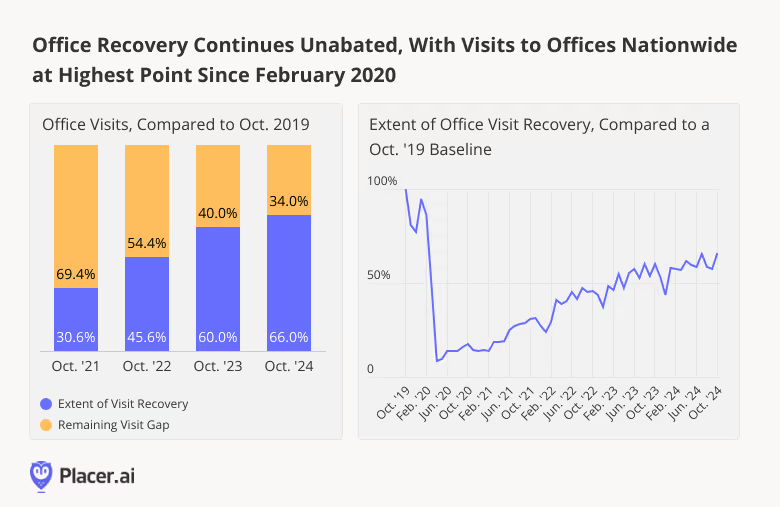
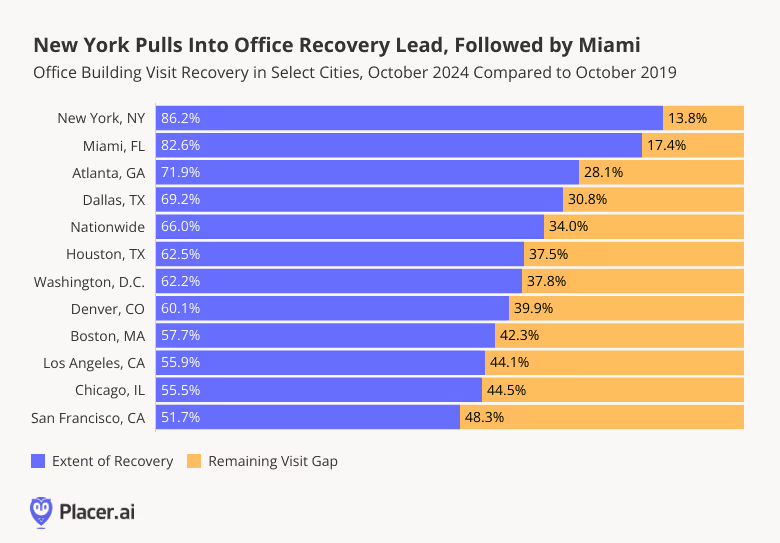
In an interesting twist, Miami also leads in having the highest rate of return-to-office. How do they manage to do that if they’ve been out partying? It’s likely a work hard/play harder mentality. Or, like many at ICSC mentioned, Miami never really closed down as much as other cities during Covid, hence there is less to recover from. Placer's Office Dashboard notes that Miami is in the lead with the highest recovery rate.

Shopping and Entertainment
For those who love all things retail, there are plenty of shopping centers and shopping areas to choose from. Brickell City Centre has seen some of the largest year-over-year increases. Meanwhile, Aventura’s April visits are up considerably compared to last year. The Miami Design District, which the Anchor has written about previously, has also been showing consistent year-over-year growth this year.

DICK’S Sporting Goods is one of the best-known names in the sportswear and sporting goods retail segment, with more than 700 stores across the country. The company, which also operates several smaller banners including its interactive House of Sport, has thrived in recent years, buoyed by a continued interest in health and wellness.
How is the chain faring into 2024? We took a look at the latest location intelligence to find out.
DICK'S was a major pandemic-era winner, sustaining visit gains through 2021 and 2022 and into early 2023. And though YoY visits slowed as 2023 wore on, DICK’s ended last year in a strong position, reporting the largest sales quarter of its history in Q4 2023.
And in early 2024, DICK’s largely held on to its gains. Like many retailers, DICK’S saw YoY foot traffic fall in January, as unusually cold and stormy weather kept many shoppers at home. But in February and March, the chain’s YoY visit gap narrowed considerably, with foot traffic hovering just under 2023 levels – no small feat for a discretionary chain in an environment marked by stubbornly elevated prices and flagging consumer confidence.
During most analyzed months, DICK’S outperformed both traditional Apparel and Sportswear & Athleisure retailers. And though the chain saw monthly YoY foot traffic drop once again in April, an analysis of weekly data shows that it entered May on an upswing.

Indeed, zooming into weekly visits to DICK’S shows that only during the week of April 8th, 2024 did the chain experience a large visit gap. And visits to the sportswear company began to trend upward towards the end of April and beginning of May – with YoY visits growing by 1.9% during the week of April 29th, and by 0.7% in the week of May 6th. The company also outperformed the Apparel and Sportswear segments in all but one of the analyzed weeks – Sportswear retailers had a slightly stronger showing than DICK’S did for the week of April 22.

Experiential retail has emerged as a significant success story in recent years, and DICK’S has enthusiastically embraced the trend. In 2021, the company introduced its House Of Sport concept, offering visitors the opportunity to browse athletic gear or try their hand at a climbing wall or a batting cage.
The concept quickly gained traction, expanding to fourteen locations, with several more slated to open in 2024 alone. And an analysis of visitation patterns at DICK’S House Of Sport locations shows why the model is such a powerful one.
In Q1 2024, YoY visits to the three original House of Sport locations in Victor, NY, Minnetonka, MN, and Knoxville TN – the only ones operational at the start of 2023 – increased by 4.8%. So as DICK’S continues to expand its portfolio of House of Sport locations, existing ones are also drawing bigger crowds.
The original House of Sport locations also drew more extended visits in Q1 2024 than other DICK’s locations – with a remarkable 40.7% of visits lasting more than 30 minutes. With the success of House of Sport under its belt, DICK’S has begun further diversifying its fleet with a new store format that brings an interactive retail experience to the chain’s traditional store type.

DICK’S continues to outperform the wider Apparel and Sportswear retail segments, and its expanding House of Sport concept is meeting healthy and growing demand. As the company continues to lean into its experiential offerings, will the chain’s positive momentum accelerate further?
Visit placer.ai for the latest data-driven retail insights.

As cars get more expensive, demand for repairs rises – and auto part chains are reaping the benefits. We analyzed the visit data for four leading auto part chains – AutoZone, O'Reilly Auto Parts, NAPA Auto Parts and Advance Auto Parts – and dove into O’Reilly Auto Parts’ recent growth to understand what may be driving success in this flourishing segment.
Auto parts chains are having a moment. With vehicle prices significantly higher than before COVID, many consumers would rather fix their cars than purchase new ones. At the same time, inflation has begun to subside, leaving people with more room in their budgets for non-essential maintenance and repairs.
Following a drop in December 2023, YoY visits to AutoZone, O’Reilly Auto Parts, Advance Auto Parts, and NAPA Auto Parts began to pick up in January 2024 – despite unusually cold and stormy weather that left many consumers hunkered down at home. And between February and April, YoY visits to the four chains remained nearly uniformly elevated.

On a quarterly basis, O’Reilly Auto Parts saw the biggest YoY visit increase, despite lapping a strong 2023. The chain, which drew 32.1% of total visits to the four brands in Q1, saw quarterly YoY foot traffic increase by 5.1%. AutoZone, which received 40.1% of quarterly visits to the four chains, saw quarterly YoY visits increase by 3.5%. And Advance Auto Parts and NAPA Auto Parts both saw quarterly YoY visits increase by 1.7%.
One strategy that has likely helped O’Reilly Auto Parts stay ahead of the pack is its much-touted loyalty program, recently ranked by Newsweek as one of the best in the nation.
Location intelligence shows that since COVID, O’Reilly Auto Parts has seen a steady increase in the loyalty of its customer base. And in April 2024, O’Reilly Auto Parts boasted the most loyal customer base of the four analyzed chains – with 52.0% of visits made by individuals that frequented the chain at least twice during the month. But other auto chains, including AutoZone, also enjoyed significant shares of visits by repeat customers – showing that there’s plenty of room at the top in the auto parts space.

The auto parts industry is poised for success in 2024, with leading chains like O'Reilly Auto Parts, AutoZone, Advance Auto Parts, and NAPA Auto Parts demonstrating resilience and growth. How will these chains continue to perform as the year wears on?
Visit placer.ai to find out.
.png)
1) Value Wins in 2025: Discount & Dollar Stores and Off-Price Apparel are outperforming as consumers prioritize value and the “treasure-hunt” experience.
2) Small Splurges Over Big Projects: Clothing and Home Furnishing traffic remains strong as shoppers favor accessible wardrobe updates and decor refreshes instead of major renovations.
3) Big-Ticket Weakness: Electronics and Home Improvement visits continue to lag, reflecting a continued deferment of larger purchases.
4) Bifurcation in Apparel: Visits to off-price and luxury segments are growing, while general apparel, athleisure, and department stores face ongoing pressures from consumer trade-downs.
5) Income Dynamics Shape Apparel: Higher-income shoppers sustain luxury and athleisure, while off-price is driving traffic from more lower-income consumers.
6) Beauty Normalizes but Stays Relevant: After a pandemic-driven surge, YoY declines likely indicate that beauty visits are stabilizing; shorter trips are giving way to longer visits as retailers deploy new tech and immersive experiences.
Economic headwinds, including tariffs and higher everyday costs, are limiting discretionary budgets and prompting consumers to make more selective choices about where they spend. But despite these pressures, foot traffic to several discretionary retail categories continues to thrive year-over-year (YoY).
Of the discretionary categories analyzed, fitness and apparel had the strongest year-over-year traffic trends – likely thanks to consumers finding perceived value in these segments.
Fitness and apparel (boosted by off-price) appeal to value-driven, experience seeking consumers – fitness thanks to its membership model of unlimited visits for an often low fee, and off-price with its discount prices and treasure-hunt dynamic. Both categories may also be riding a cultural wave tied to the growing use of GLP-1s, as more consumers pursue fitness goals and refresh their wardrobes to match changing lifestyles and sizes.
Big-ticket categories, including electronics, also faced significant challenges, as tighter consumer budgets hamper growth in the space. Traffic to home improvement retailers also generally declined, as lagging home sales and consumers putting off costly renovations likely contributed to the softness in the space.
But home furnishing visits pulled ahead in July and August 2025 – benefitting from strong performances at discount chains such as HomeGoods – suggesting that consumers are directing their home-oriented spending towards more accessible decor.
The beauty sector – typically a resilient "affordable luxury" category – also experienced declines in recent months. The slowdown can be partially attributed to stabilization following several years of intense growth, but it may also mean that consumers are simplifying their beauty routines or shifting their beauty buying online.
> Traffic to fitness and apparel chains – led by off-price – continued to grow YoY in 2025, as value and experiences continue to draw consumers.
> Consumers are shopping for accessible home decor upgrades to refresh their space rather than undertaking major renovations.
> Shoppers are holding off on big-ticket purchases, leading to YoY declines in the electronics and home improvement categories.
> Beauty has experienced softening traffic trends as the sector stabilizes following its recent years of hypergrowth as shoppers simplify routines and shift some of their spending online.
After two years of visit declines, the Home Furnishings category rebounded in 2025, with visits up 4.9% YoY between January and August. By contrast, Home Improvement continued its multi-year downward trend, though the pace of decline appears to have slowed.
So what’s fueling Home Furnishings’ resurgence while Home Improvement visits remain soft? Probably a combination of factors, including a more affluent shopper base and a product mix that includes a variety of lower-ticket items.
On the audience side, this category draws a much larger share of visits from suburban and urban areas, with a median household income well above that of home improvement shoppers. The differences are especially pronounced when analyzing the audience in their captured markets – indicating that the gap stems not just from store locations, but from meaningful differences in the types of consumers each category attracts.
Home improvement's larger share of rural visits is not accidental – home improvement leaders have been intentionally expanding into smaller markets for a while. But while betting on rural markets is likely to pay off down the line, home improvement may continue to face headwinds in the near future as its rural shopper base grapples with fewer discretionary dollars.
On the merchandise side, home improvement chains cater to larger renovations and higher-cost projects – and have likely been impacted by the slowdown in larger-ticket purchases which is also impacting the electronics space. Meanwhile, home furnishing chains carry a large assortment of lower-ticket items, including home decor, accessories, and tableware.
Consumers are still spending more time at home now than they were pre-COVID, and investing in comfortable living spaces is more important than ever. And although many high-income consumers are also tightening their belts, upgrading tableware or even a piece of furniture is still much cheaper than undertaking a renovation – which could explain the differences in traffic trends.
Traditional apparel, mid-tier department stores, and activewear chains all experienced similar levels of YoY traffic declines in 2025 YTD, as shown in the graph above. But analyzing traffic data from 2021 shows that each segment's dip is part of a trajectory unique to that segment.
Traffic to mid-tier department stores has been trending downward since 2021, a shift tied not only to macroeconomic headwinds but also to structural changes in the sector. The pandemic accelerated e-commerce adoption, hitting department stores particularly hard as consumers seeking one-stop shopping and broad assortments increasingly turned to the convenience of online channels.
Traffic to traditional apparel chains has also not fully recovered from the pandemic, but the segment did consistently outperform mid-tier department stores and luxury retailers between 2021 and 2024. But in H1 2025, the dynamic with luxury shifted, so that traffic trends at luxury apparel retailers are now stronger than at traditional apparel both YoY and compared to Q1 2019. This highlights the current bifurcation of consumer spending also in the apparel space, as luxury and off-price segments outperform mid-market chains.
In contrast, the activewear & athleisure category continues to outperform its pre-pandemic baseline, despite experiencing a slight YoY softening in 2025 as consumers tighten their budgets. The category has capitalized on post-lockdown lifestyle shifts, and comfort-driven wardrobes that blur the line between work, fitness, and leisure remain entrenched consumer staples several years on.
The two segments with the highest YoY growth – off-price and luxury – are at the two ends of the spectrum in terms of household income levels, highlighting the bifurcation that has characterized much of the retail space in 2025. And luxury and off-price are also benefiting from larger consumer trends that are boosting performance at both premium and value-focused retailers.
In-store traffic behavior reveals that these two segments enjoy the longest average dwell times in the apparel category, with an average visit to a luxury or off-price retailer lasting 39.2 and 41.3 minutes, respectively. This suggests that consumers are drawn to the experiential aspect of both segments – treasure hunting at off-price chains or indulging in a sense of prestige at a luxury retailer. Together, these patterns highlight that – despite appealing to different consumer groups – both ends of the market are thriving by offering shopping experiences that foster longer engagement.
> Off-price and luxury segments are outperforming, while general apparel, athleisure, and department store visits lag YoY under tariff pressures and consumer trade-downs.
> Looking over the longer term reveals that athleisure is still far ahead of its pre-pandemic baseline – even if YoY demand has softened.
> Luxury and off-price both are thriving by offering shopping experiences that foster longer engagement.
The beauty sector has long benefitted from the “lipstick effect” — the tendency for consumers to indulge in small luxuries even when discretionary spending is constrained. And while the beauty category’s softening in today’s cautious spending environment could suggest that this effect has weakened, a longer view of the data tells a more nuanced story.
Beauty visits grew significantly between 2021 and 2024, fueled by a confluence of factors including post-pandemic “revenge shopping,” demand for bolder looks as consumers returned to social life, and new store openings and retail partnerships. Against that backdrop, recent YoY traffic dips are likely a sign of stabilization rather than true declines. Social commerce, and minimalist skincare routines may be moderating in-store traffic, but shoppers are still engaged, even as they blend online and offline shopping or seek out lower-cost alternatives to maximize value.
Analysis of average visit duration for three leading beauty chains – Ulta Beauty, Bath & Body Works, and Sally Beauty Supply – highlights the shifting role but continued relevance of physical stores in the space.
Average visit duration decreased post-pandemic – likely due to more purposeful trips and increased online product discovery. But that trend began to reverse in H1 2025, signaling the changing role of physical stores. Enhanced tech for in-store product exploration and rich experiences may be helping drive deeper engagement, underscoring beauty retail’s staying power even in a more measured spending environment.
Bottom Line:
> Beauty’s slight YoY visit declines point to a period of normalization following a post-pandemic boom, while longer-term trends show the category remains stronger than pre-pandemic levels.
> Visits grew shorter post-pandemic, driven by more purposeful trips and increased online product discovery – but dwell time is now lengthening again, signaling renewed in-store engagement driven by tech-enabled discovery and immersive experiences.
Foot traffic data highlight major differences in the recent performance of various discretionary apparel categories. Off-price, fitness, and home furnishings are pulling ahead, well-positioned to keep capitalizing on shifting priorities. Luxury also remains resilient, likely thanks to its higher-income visitor base.
At the same time, beauty’s normalization and the slowdown in mid-tier apparel, electronics, and home improvement show that caution persists across discretionary budgets. Moving forward, retailers that align with consumers’ demand for value, accessible upgrades, and immersive experiences may be best placed to thrive in this era of selective spending.
1) Broad-based growth: All four grocery formats grew year-over-year in Q2 2025, with traditional grocers posting their first rebound since early 2024.
2) Value grocers slow: After leading during the 2022–24 trade-down wave, value grocer growth has decelerated as that shift matures.
3) Fresh formats surge: Now the fastest-growing segment, fueled by affluent shoppers seeking health, wellness, and convenience.
4) Bifurcation widens: Growth concentrated at both the low-income (value) and high-income (fresh) ends, highlighting polarized spending.
5) Shopping missions diverge: Short trips are rising, supporting fresh formats, while traditional grocers retain loyal stock-up customers and value chains capture fill-in trips through private labels.
6) Traditional grocers adapt: H-E-B and Harris Teeter outperformed by tailoring strategies to their core geographies and demographics.Bifurcation of Consumer Spending Help Fresh Format Lead Grocery Growth
Grocery traffic across all four major categories – value grocers, fresh format, traditional grocery, ethnic grocers – was up year over year in Q2 2025 as shoppers continue to engage with a wide range of grocery formats. Traditional grocery posted its first YoY traffic increase since Q1 2024, while ethnic grocers maintained their steady pattern of modest but consistent gains.
Value grocers, which dominated growth through most of 2024 as shoppers prioritized affordability, continued to expand but have now ceded leadership to fresh-format grocers. Rising food costs between 2022 and 2024 drove many consumers to chains like Aldi and Lidl, but much of this “trade-down” movement has already occurred. Although price sensitivity still shapes consumer choices – keeping the value segment on an upward trajectory – its growth momentum has slowed, making it less of a driver for the overall sector.
Fresh-format grocers have now taken the lead, posting the strongest YoY traffic gains of any category in 2025. This segment, anchored by players like Sprouts, appeals to the highest-income households of the four categories, signaling a growing influence of affluent shoppers on the competitive grocery landscape. Despite accounting for just 7.0% of total grocery visits in H1 2025, the segment’s rapid gains point to a broader shift: premium brands emphasizing health and wellness are emerging as the primary engine of growth in the grocery sector.
The fact that value grocers and fresh-format grocers – segments with the lowest and highest median household incomes among their customer bases – are the two categories driving the most growth underscores how the bifurcation of consumer spending is playing out in the grocery space as well. On one end, price-sensitive shoppers continue to seek out affordable options, while on the other, affluent consumers are fueling demand for premium, health-oriented formats. This dual-track growth pattern highlights how widening economic divides are reshaping competitive dynamics in grocery retail.
1) Broad-based growth: All four grocery categories posted YoY traffic gains in Q2 2025.
2) Traditional grocery rebound: First YoY increase since Q1 2024.
3) Ethnic grocers: Continued steady but modest upward trend.
4) Value grocers: Still growing, but slowing after most trade-down activity already occurred (2022–24).
5) Fresh formats: Now the fastest-growing segment, driven by affluent shoppers and interest in health & wellness.
6) Market shift: Premium, health-oriented brands are becoming the new growth driver in grocery.
7) Bifurcation of spending: Growth at both value and fresh-format grocers highlights a polarization in consumer spending patterns that is reshaping grocery competition.
Over the past two years, short grocery trips (under 10 minutes) have grown far more quickly than longer visits. While they still make up less than one-quarter of all U.S. grocery trips, their steady expansion suggests this behavioral shift is here to stay and that its full impact on the industry has yet to be realized.
One format particularly aligned with this trend is the fresh-format grocer, where average dwell times are shorter than in other categories. Yet despite benefiting from the rise of convenience-driven shopping, fresh formats attract the smallest share of loyal visitors (4+ times per month). This indicates they are rarely used for a primary weekly shop. Instead, they capture supplemental trips from consumers looking for specific needs – unique items, high-quality produce, or a prepared meal – who also value the ability to get in and out quickly.
In contrast, leading traditional grocers like H-E-B and Kroger thrive on a classic supermarket model built around frequent, comprehensive shopping trips. With the highest share of loyal visitors (38.5% and 27.6% respectively), they command a reliable customer base coming for full grocery runs and taking time to fill their carts.
Value grocers follow a different, but equally effective playbook. Positioned as primary “fill-in” stores, they sit between traditional and fresh formats in both dwell time and visit frequency. Many rely on limited assortments and a heavy emphasis on private-label goods, encouraging shoppers to build larger baskets around basics and store brands. Still, the data suggests consumers reserve their main grocery hauls for traditional supermarkets with broader selections, while using value grocers to stretch budgets and stock up on essentials.
1) Short trips surge: Under-10-minute visits have grown fastest, signaling a lasting behavioral shift.
2) Fresh formats thrive on convenience: Small footprints, prepared foods, and specialty items align with quick missions.
3) Traditional grocers retain loyalty: Traditional grocers such as H-E-B and Kroger attract frequent, comprehensive stock-up trips.
4) Value grocers fill the middle ground: Limited assortments and private label drive larger baskets, but main hauls remain with traditional supermarkets.
5) Fresh formats as supplements: Fresh format grocers such as The Fresh Market capture quick, specialized trips rather than weekly shops.
While broad market trends favor value and fresh-format grocers, certain traditional grocers are proving that a tailored strategy is a powerful tool for success. In the first half of 2025, H-E-B and Harris Teeter significantly outperformed their category's modest 0.6% average year-over-year visit growth, posting impressive gains of 5.6% and 2.8%, respectively. Their success demonstrates that even in a polarizing environment, there is ample room for traditional formats to thrive by deeply understanding and catering to a specific target audience.
These two brands achieve their success with distinctly different, yet equally focused, demographic strategies. H-E-B, a Texas powerhouse, leans heavily into major metropolitan areas like Austin and San Antonio. This urban focus is clear, with 32.6% of its visitors coming from urban centers and their peripheries, far above the category average. Conversely, Harris Teeter has cultivated a strong following in suburban and satellite cities in the South Atlantic region, drawing a massive 78.3% of its traffic from these areas. This deliberate targeting shows that knowing your customer's geography and lifestyle remains a winning formula for growth.
1) Traditional grocers can still be competitive: H-E-B (+5.6% YoY) and Harris Teeter (+2.8% YoY) outpaced the category average of +0.6% in H1 2025.
2) H-E-B’s strategy: Strong urban focus, with 32.6% of traffic from major metro areas like Austin and San Antonio.
3) Harris Teeter’s strategy: Suburban and satellite city focus, with 78.3% of traffic from South Atlantic suburbs.