Skip to Main Content
Thank you! Your submission has been received!
Oops! Something went wrong while submitting the form.
0
0
0
0
----------
0
0
Articles
Article
Placer.ai April 2026 Mall Index: Back to Growth 
Shira Petrack
May 8, 2026
2 minutes

Mall Traffic Returns to Growth

April data indicates positive momentum for the mall sector, with year-over-year (YoY) traffic increases across all three formats analyzed – indoor malls, open-air shopping centers, and outlet malls. This performance is particularly notable given the strong April baseline last year, when traffic rose between 3.7% and 4.3% across formats compared to April 2024.

Open-Air Centers Lead, Indoor Malls Follow

Open-air centers came out on top, extending a trend in place since December 2025, with visits rising 3.5% YoY. This marks a return to the top growth position after ceding the lead to indoor malls for much of 2025. Indoor malls followed with a 2.2% increase, while outlet malls lagged behind, posting a modest 0.5% YoY gain in April 2025 – potentially reflecting greater sensitivity to elevated gas prices in recent weeks.

Shifting Visit Lengths Underscore Malls’ Dual Role

At the same time, the average visit duration declined YoY, with all formats experiencing a shift toward shorter visits (under 30 minutes) and a corresponding drop in longer visits (45+ minutes). 

This divergence between rising traffic and shorter dwell times suggests that a growing share of consumers are engaging in more mission-driven trips – visiting with a specific purpose in mind rather than for extended browsing. As a result, malls may be seeing more targeted, efficiency-oriented behavior that could concentrate spend within fewer stores per trip. 

Still, this shift does not signal a wholesale move away from malls as destinations: across formats, over 40% of visits continue to last more than 60 minutes, indicating that a significant segment of consumers remains engaged in longer, more experiential visits even as quick trips become more prevalent.

Malls Balance Convenience and Experience

April’s data suggests that malls are evolving to meet a wider range of consumer needs. The combination of rising traffic and varied visit lengths suggests that malls are successfully functioning both as convenient, mission-driven retail hubs and as destinations for longer, experiential outings. This dual role may ultimately prove to be a strength, enabling operators and tenants to capture multiple trip types and occasions. If sustained, these trends position the sector for continued resilience, with opportunities to further optimize tenant mix, merchandising strategies, and on-site experiences to align with increasingly dynamic consumer behavior.

Placer.ai leverages a panel of tens of millions of devices and utilizes machine learning to make estimations for visits to locations across the US. The data is trusted by thousands of industry leaders who leverage Placer.ai for insights into foot traffic, demographic breakdowns, retail sale predictions, migration trends, site selection, and more.

Article
Home Improvement's Long Winter May Be Thawing
Lila Margalit
May 7, 2026
3 minutes

The home improvement category has faced sustained headwinds in recent years – from elevated mortgage rates to sluggish existing-home sales and a consumer base hesitant to take on major remodeling projects. But after a prolonged stretch of year-over-year (YoY) visit declines, both Home Depot and Lowe’s have returned to growth – and the foot traffic data suggests this shift is more than just a seasonal uptick.

A Turn Long in the Making

Both home improvement leaders closed Q1 2026 with YoY visit gains – Home Depot up 1.9% and Lowe’s up 2.0% – building on the stabilization seen in Q4 2025. This improvement aligns with their latest financial results: Home Depot reported U.S. comparable sales growth of 0.3%, while Lowe’s posted a stronger 1.3%. And for both chains, the return to positive territory suggests a long-awaited recovery may finally be underway.

Continued Resilience Into April

Monthly data also suggests that while inclement weather contributed to the segment's strong performance in January, the underlying recovery is genuine. Home improvement benefits from unusual weather events, and January's strong gains for both chains – Home Depot +2.5%, Lowe's +3.9% – were partly fueled by Winter Storm Fern, which impacted communities across more than thirty states. But the momentum carried into February, and while growth moderated in March – and for Home Depot again in April – neither brand slipped into negative territory. 

That resilience is an encouraging signal for the category during the critical spring home improvement season, particularly given renewed headwinds like rising gas prices and softening consumer sentiment. Lowe's stronger performance in April 2026, supported by easier comparisons, may also reflect its greater exposure to DIY customers tackling smaller repairs and at-home projects as consumers redirect spending closer to home.

The Thaw Begins

Interest rates remain elevated and the housing market sluggish – but those same forces may now be working in the category's favor, as homeowners staying put begin to tackle a growing backlog of deferred repairs and maintenance. The bigger question is whether that momentum eventually unlocks the large discretionary projects both retailers say consumers are still holding back on – especially amid continued tariff uncertainty and elevated prices at the pump.

For more data-driven retail insights, follow Placer.ai/anchor.

 Placer.ai leverages a panel of tens of millions of devices and utilizes machine learning to make estimations for visits to locations across the US. The data is trusted by thousands of industry leaders who leverage Placer.ai for insights into foot traffic, demographic breakdowns, retail sale predictions, migration trends, site selection, and more.

Article
In-Person Entertainment Audiences in Dallas and LA – Market Trends and Venue-Level Nuance
Ezra Carmel
May 6, 2026
4 minutes

There may be more digital entertainment than ever before, but consumers still seek out places to socialize and have fun in the physical world. And in-person entertainment venues – from stadiums to experiential viewing concepts – are attracting unique audiences that span a range of psychographic segments. 

A closer look at venues in the Dallas and Los Angeles areas reveals how this diversity plays out across markets, and what it could signal for stakeholders in the business of out-of-home entertainment.

A Suburban Skew in Dallas

In-person entertainment includes a variety of venues and formats. In the Dallas area, legacy venues AT&T Stadium, American Airlines Center, and Globe Life Field – and eatertainment concepts, movie theaters, and “shared reality” experiences such as Cosm – are just some of the in-person entertainment options.

And in the Dallas region, AI-powered trade area analysis reveals that affluent and suburban families dominate the out-of-home entertainment scene. Across every analyzed venue and entertainment category, either Ultra Wealthy Families or Wealthy Suburban Families ranks as the top audience segment – reflecting the region's family-oriented, suburban fabric.

That said, each venue or category attracts a distinct audience mix. Cosm Dallas and the American Airlines Center over-index on Ultra Wealthy Families and draw a relatively higher share of Young Professionals than other venues. This likely reflects their premium positioning: Cosm as a novelty experience, and the AAC as an upscale urban destination where higher costs may skew attendance toward more affluent consumers.

By contrast, Wealthy Suburban Families lead at Globe Life Field (home to the Texas Rangers) and AT&T Stadium (home to the Dallas Cowboys), both of which also attract meaningful shares of blue-collar suburban audiences. 

And there is clear demand for in-person entertainment among Dallas’s up-and-coming and working-class consumers. Blue Collar Suburbs and Young Urban Singles segments tend to favor eatertainment venues and movie theaters – more affordable options for going out.

Los Angeles – Diversity Within Density

Greater Los Angeles offers a similarly diverse mix of entertainment anchors: SoFi Stadium, Dodger Stadium, Angel Stadium, and Crypto.com Arena – as well as a Cosm location, eatertainment chains, and movie theaters.

However, audience segmentation for in-person entertainment in the region shows a distinct profile compared to Dallas – shaped by SoCal’s urban density and demographic diversity. Near-Urban Diverse Families represent the largest segment across every analyzed venue and entertainment category, while Wealthy Suburban Families also account for a significant share of visitors across formats – particularly at Angel Stadium, likely due to its suburban Orange County location. The prevalence of these two segments suggests that urban, middle-class family audiences are the backbone of entertainment demand in the region while higher-income, suburban households play a strong supporting role in out-of-home entertainment consumption. 

Two other patterns also jump out from the data. 

First, Cosm Los Angeles and Crypto.com Arena’s audiences draw more heavily from the Educated Urbanites and Ultra Wealthy Families segments, which could point to a somewhat more premium-leaning audience mix at these destinations. 

Second, the Young Urban Singles segment accounts for a relatively consistent audience share across all categories – suggesting broad-based entertainment preferences. With no single entertainment format commanding outsized engagement from this young cohort, operators in the Los Angeles market have an opportunity to further tailor experiences and potentially shape future demand among this audience.

Converging Trends, Distinct Market Expressions

In both Dallas and Los Angeles, the composition of out-of-home entertainment audiences reflects each market’s underlying demographics and urban structure. 

And yet, certain consumer segments prefer particular entertainment venues or formats over others, and understanding who shows up is critical. Operators and advertisers that tailor their offerings to the dominant segments – whether through pricing or programming – may be better positioned to capture sustained demand and attain better ROI within their market. 

For more insights, visit Placer.ai/anchor.

Placer.ai leverages a panel of tens of millions of devices and utilizes machine learning to make estimations for visits to locations across the US. The data is trusted by thousands of industry leaders who leverage Placer.ai for insights into foot traffic, demographic breakdowns, retail sale predictions, migration trends, site selection, and more.

Article
The Reinvention of the Breakfast-First Restaurant Category
R.J. Hottovy
May 5, 2026
4 minutes

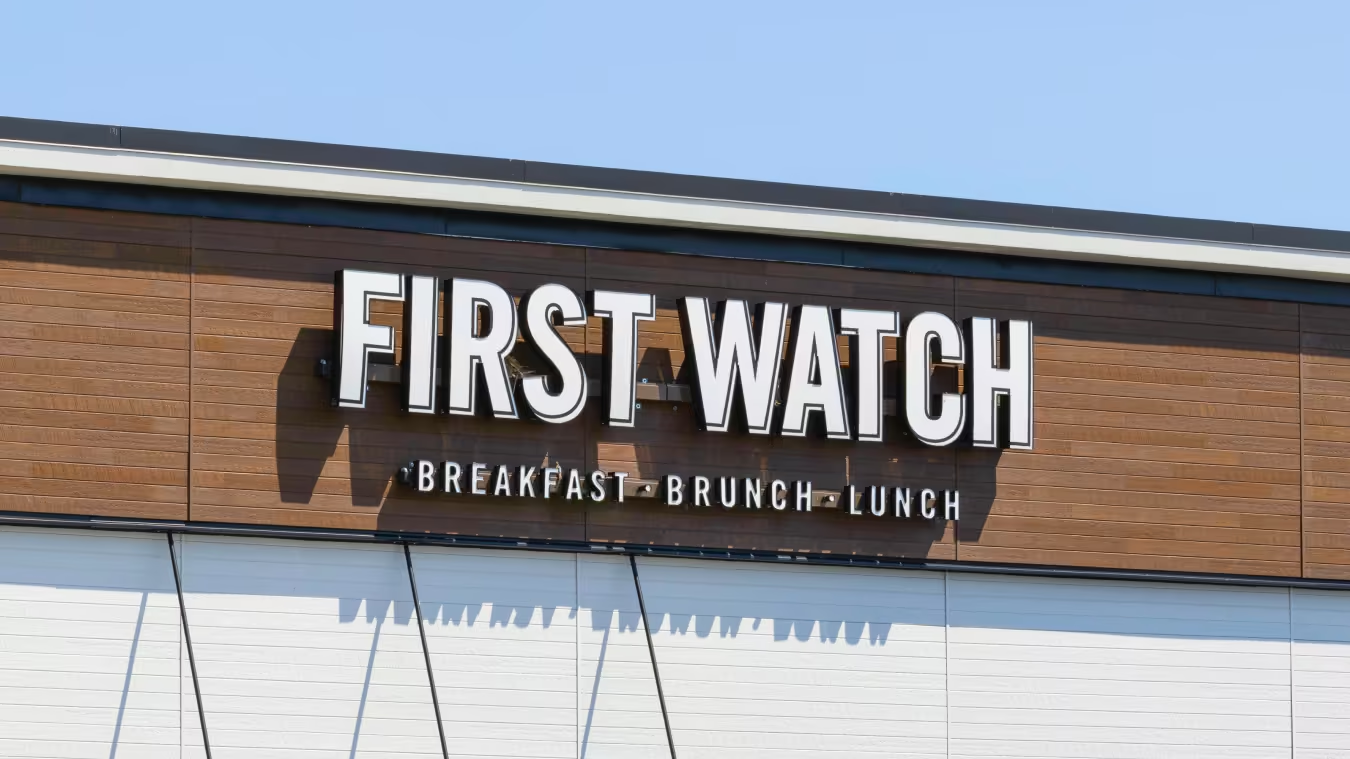
The U.S. restaurant industry navigated a challenging first quarter in 2026, marked by macroeconomic headwinds, unfavorable weather, and cautious consumer spending. Yet, within the breakfast-first sector, a clear narrative is emerging: The era of the traditional legacy diner is fading, making way for premium, experience-driven concepts. And at the forefront of this shift is First Watch. Armed with a differentiated culinary menu, rapid but disciplined expansion, and a highly resilient consumer base, the brand is not only defying broader casual dining trends but is fundamentally rewriting the playbook for daytime dining.

The Breakfast Divide: How Premium Concepts Are Outpacing Legacy Diners

Over the past few years, the breakfast-first restaurant category has bifurcated into two distinct camps: premium and experience-driven concepts capturing visit share, and legacy diner-style chains, many of which are struggling to keep up. While Q1 2026 proved to be a tighter traffic environment overall amid macroeconomic uncertainty and unfavorable weather conditions across the U.S., several experience-focused brands and resilient fan-favorites continued growing their footprints – and their audiences. 

First Watch led the pack in overall visit growth as it continued expanding its store count, while average visits per location held steady – demonstrating its ability to scale without diluting demand at existing locations – while Snooze saw a 1.1% increase in visits per location.

Conversely, the steepest laggards in the segment were legacy diner chains IHOP, Denny’s, and Huddle House, all of which saw overall visits decline as they continued rightsizing their footprints, with visits per location also modestly down. These brands are increasingly tracking closer to casual dining peers like Applebee’s and Outback Steakhouse, which have faced significant headwinds in recent months.

Still, among legacy diners, Waffle House stood out as a clear outperformer in Q1 2026, likely due in part to its status as a regional institution across much of the South. And the chain’s operational resilience may have also played a role: While Winter Storm Fern pushed the so-called “Waffle House Index” into the red across much of the region in late January, the brand’s unique disaster-readiness appears to have enabled some locations to reopen quickly or avoid closure entirely.

Ultimately, despite a challenging macroeconomic environment, brands that leverage a differentiated culinary menu, high-touch customer service, or fierce brand loyalty are successfully navigating the highly fragmented daypart much better than their traditional diner counterparts. 

Sustained Momentum: The Power of First Watch’s Unit Growth and Model Portability

While several premium concepts have successfully carved out a lucrative niche in breakfast-first dining, First Watch has redefined the category. By blending the elevated, chef-driven culinary experience of a localized brunch spot with the operational efficiency of a national powerhouse, First Watch has created a model that sees success across multiple regions of the U.S. This unique positioning provides the brand with a massive structural advantage, fueling a physical growth trajectory that far outpaces its competitors.

Importantly, visitation data also reinforces that First Watch’s restaurant classes from 2024 and 2025 have consistently kept pace with the maturity curve of recent openings. An analysis of visit-per-location trends for First Watch locations opened in 2024 and 2025 versus the chain’s nationwide fleet reveals that the class of 2024 outpaced nationwide trends, while the 2025 cohort – even when factoring in the high volume of openings that took place in Q3 2025 – has also kept pace. These are incredibly positive indicators for a brand rapidly scaling its national footprint.

First Watch has set a long-term goal of reaching more than 2,200 restaurants across the United States – an ambitious target that would more than triple its current size. Reaching this milestone is achievable, but it will require the brand to meaningfully deepen its penetration in large coastal and Sun Belt metros, where it remains under-penetrated relative to its proven suburban strongholds. Placer.ai foot traffic data across more than 100 Core Based Statistical Areas (CBSAs) reveals that First Watch's unit economics are remarkably consistent, confirming the model works across multiple geographies. While newer markets like New York, Chicago, Boston, and Las Vegas currently generate lower visits per capita than the chain's core Sun Belt and Midwest suburban markets, there are significant opportunities for expansion. First Watch's breakfast-first model, strong unit-level economics, and growing brand recognition give it a credible platform to aggressively capture market share in these new territories.

Looking Ahead: Redefining Leadership in Daytime Dining

Despite slowing early-spring trends, First Watch remains well-positioned to hit its 2026 same-store sales growth target of 1% to 3%. This confidence is rooted in a few key factors. First, the brand benefits from a resilient core consumer who is materially less sensitive to macroeconomic pressures than the traditional diner customer, providing a much higher floor for baseline traffic. Second, First Watch leverages reliable pricing power, as its premium positioning and highly anticipated seasonal menu rotations consistently drive check growth. Finally, the company's commitment to operational excellence through its company-owned model ensures that execution remains strong and the guest experience is uncompromised, even during slower traffic periods. By driving outsized performance from its newest units and maintaining a highly loyal customer base, the brand is not merely surviving the breakfast category's headwinds; it is actively redefining what leadership in daytime dining looks like.

For more data-driven dining insights, follow Placer.ai/anchor.

Placer.ai leverages a panel of tens of millions of devices and utilizes machine learning to make estimations for visits to locations across the US. The data is trusted by thousands of industry leaders who leverage Placer.ai for insights into foot traffic, demographic breakdowns, retail sale predictions, migration trends, site selection, and more.

Article
Diverging Paths: What the Data Reveals About CAVA and Sweetgreen
R.J. Hottovy
May 4, 2026
3 minutes

CAVA Building Momentum in the Premium Fast-Casual Space

The fast-casual sector has long been defined by its sweet spot within the restaurant industry, combining the convenience of fast food and the quality of casual dining. For years, CAVA and sweetgreen have stood as the standard-bearers of the health-forward movement, expanding their store footprint while building fiercely loyal followings among affluent consumers. However, Q1 2026 foot traffic data suggests that these two brands are now on diverging trajectories. While overall visits to both chains grew – thanks in part to ongoing expansions – CAVA saw its average visits per venue grow as well, while sweetgreen's per-location traffic remained flat YoY. 

Same-Store Visit Trends Diverge 

The contrast between same-store visit trends is even more striking. Over the past six months, same-store visits to CAVA have been uniformly positive – and 2026 traffic was particularly strong. Meanwhile, sweetgreen has seen consistently negative same-store visit declines, with March 2026 same-store visits down 7.6% compared to CAVA's 6.8% increase. This represents a meaningful spread between two brands competing for the same premium consumer.

CAVA’s Menu Strategy Expands Appeal and Strengthens Value Perception

This divergence is the result of structural differences in menu mix and value perception. Over the past six months, CAVA has rolled out strategic menu enhancements designed to reengage with middle-income consumers who may have turned away from fast-casual options in recent months and elevate its overall value perception. 

Leaning heavily into its warm, protein-forward architecture, the brand has introduced additions like premium glazed salmon as a protein option alongside new variations of its highly successful spicy chicken and steak offering. Alongside these protein upgrades, CAVA has refreshed its seasonal roasted vegetable lineups and also introduced smaller items like harissa pita chips, sides, and dips. This ensures that the menu remains dynamic enough to drive incremental visits and avoid customer fatigue while maintaining the highly customizable, assembly-line efficiency that protects its strong unit economics. The diversity of CAVA’s menu – both in terms of innovation and pricing – have helped to drive down the chain’s captured trade area median household income the past four quarters, according to data from STI: Popstats combined with Placer data.

Sweetgreen Expands into New Formats to Strengthen Value Perception

To close this widening gap, Sweetgreen has also planned several menu changes in 2026 focused on operational simplicity, value perception, and a major new category expansion. The brand kicked off the year by highlighting its health-forward roots through a limited-time menu collaboration with Dr. Mark Hyman that utilized existing ingredients, followed by the launch of the seasonal Winter Harvest Bowl and the highly requested return of shredded cheese to the core menu. However, the most significant news is Sweetgreen's planned mid-2026 rollout of wraps. 

Currently undergoing rigorous stage-gate testing in Los Angeles, the Midwest, and Manhattan, the wrap platform – featuring accessible price points starting at $10.95 and capping below $15 for in-store pickup – is designed to aggressively target consumer value sensitivity. Management noted that wraps are intended to build upon their 2025 efforts (which included increased protein portions and $12 Daily Greens) to prove to budget-conscious, quality-driven diners that Sweetgreen can deliver a compelling, high-value meal without compromising its premium brand identity.

An Inflection Point in the Premium Fast-Casual Landscape

Ultimately, the Q1 2026 data serves as a critical inflection point. CAVA is actively gaining share in a contracting category by mastering geographic diversification, daypart breadth, and perceived value. Sweetgreen has the brand identity, the affluent customer base, and the regional runway to recover, but the strategic decisions made over the next 12 to 18 months will dictate whether this current slump is a temporary setback or a permanent competitive reality.

For more data-driven dining insight, visit placer.ai/anchor 

Placer.ai leverages a panel of tens of millions of devices and utilizes machine learning to make estimations for visits to locations across the US. The data is trusted by thousands of industry leaders who leverage Placer.ai for insights into foot traffic, demographic breakdowns, retail sale predictions, migration trends, site selection, and more.

Guest Contributor
Inside New Orleans’ Event-Driven Economy 
Jeremy Cooker
May 1, 2026
4 minutes

Events are foundational to New Orleans’ identity and economic model. From the Sugar Bowl to Jazz Fest and Mardi Gras, to conferences, conventions, exhibitions and meetings of all sizes, the city operates on a year-round cycle of large-scale gatherings that drive consistent visitor inflows. Over the past 12 months, 64.6% of weekend visitors to New Orleans’ downtown, including the French Quarter, Central Business District (CBD), and Arts District, were domestic tourists coming from more than 250 miles away. And as travel behavior continues to evolve post-COVID – making it more difficult to predict attendance patterns from prior-year trends – the complexity of hosting at scale requires increasingly sophisticated, data-driven operational coordination.

Mardi Gras’ Growing, Regional Pull 

Perhaps no event demonstrates this model – and this need – more clearly than Mardi Gras. Running from January 6th through Mardi Gras Day, the carnival season culminates in a surge of parades and celebrations that bring major crowds downtown (French Quarter, CBD, Arts District) and all along the uptown parade route. 

Crucially, many of those visitors come from within Louisiana, making the festival a powerful vehicle for strengthening ties between the city and surrounding communities: During the final 12 days of Mardi Gras 2026, 54.2% of them came from within Louisiana, compared to 23.5% during the rest of the year.  

And despite an uncertain macroeconomic environment, Mardi Gras’ audience continues to expand. From the Krewe of Cleopatra on February 6 through Mardi Gras Day on February 17, out-of-market visits to downtown New Orleans (French Quarter, CBD, Arts District) increased 10% year over year, reaching their highest level since 2020. 

Something for Everyone 

Data also shows that Mardi Gras draws a surprisingly diverse audience. To be sure, young revelers are a big part of the story – on Mardi Gras Day, the French Quarter sees an influx of “Contemporary Households”, a young-skewing segment that includes singles, couples without children, and non-family households. The median household income of the Quarter’s trade area also declines on the big day, as students and early-career professionals crowd into the neighborhood to party. 

But some of the season's more family-friendly parades – like the Krewe of Bacchus which took place this year on Sunday, February 15th – have a decidedly different vibe.  

On the day of the parade, families gather early along St. Charles Avenue, setting up tents and picnic tables and sharing traditional local food ahead of the evening procession. And surrounding neighborhoods such as the Garden District experience a measurable rise in affluent family segments and median household income, highlighting Mardi Gras’ broad and diverse appeal. 

Data as Essential Infrastructure 

Of course, managing an event of this magnitude requires coordination across agencies, stakeholders, and neighborhoods. And in a post-pandemic environment where past attendance patterns cannot always serve as reliable benchmarks, data has become a critical tool for decision-making. 

Audience insights now play a central role in operational planning – identifying where visitors congregate, estimating crowd volumes, and informing preparation by law enforcement, city officials, and other city stakeholders. When large gatherings are anticipated in specific corridors or blocks, recent visitation trends provide actionable context that helps partners allocate resources efficiently and prepare accordingly. 

A Blueprint for Hosting at Scale 

Few cities are as synonymous with celebration as New Orleans. And by combining tradition, diversity, and data-driven operational precision, the city has built the capacity to host complex, high-volume gatherings with consistency and coordination year after year. 

Reports
INSIDER
Report
How Stadiums and Arenas Engage Fans
Dive into the data to explore how sports venues drive fan engagement with superstar athletes, winning teams, and audience-centric initiatives.
February 3, 2025
8 minutes

Stadiums and arenas – and the communities they call home – have a stake in cultivating engaged team fanbases eager to participate in live events. And venues and teams can employ a variety of strategies to strengthen their connection with fans and draw crowds to the stands. 

In this report, we leverage location analytics and audience segmentation to uncover some of the ways that sports franchises and venues are driving engagement – attracting visitors from farther away and appealing to fans more likely to splurge on stadium fare. How does the signing of a star athlete impact arena visitor profiles? What happens to stadium visitation trends when a team’s performance improves dramatically? And how can teams and venues tailor their offerings to more effectively cater to visitor preferences? 

We dove into the data to find out.

Superstars on the Squad

In sports, the signing of a star athlete can have a ripple effect across the organization, hometown, and league. In addition to driving up overall attendance at games, star power can impact everything from visit frequency to audience profile – and the buying power of stadium attendees. 

Lionel Messi: A Footballer’s Foot Traffic Impact

Lionel Messi’s move to Inter Miami CF after decades of European play brought a foot traffic boost to Chase Stadium (formerly DRV PNK Stadium). But it also shifted the demographics of stadium visitors and increased the distance they traveled to attend a game.

At Inter Miami’s 2022 and 2023 home openers without Messi (he joined the team mid-season in 2023), only 6.4% and 5.3% of visitors to Chase Stadium came from over 250 miles away. But for the 2024 home opener with Messi on the squad, 31.3% of stadium visitors traveled more than 250 miles to attend. 

The demographics of visitors at the home opener also changed with Messi on the team. Trade area data combined with the Spatial.ai: PersonaLive dataset reveals that the 2024 home opener received a smaller share of households in the “Near-Urban Diverse Families” (11.2%) and “Young Urban Singles” (7.2%) segments than the two previous years. Meanwhile, shares of “Sunset Boomers” (13.0%) and “Ultra Wealthy Families” (20.1%) increased, indicating that Messi brought an older and more affluent demographic of visitors to the stadium compared to previous years. Messi’s arrival has generated increased revenue for Inter Miami CF, Major League Soccer, and Apple TV+, which has exclusive streaming rights for MLS games. And an influx of affluent out-of-town visitors also has the potential to drive positive outcomes for tourism and employment in the Miami area.

Caitlin Clark: The WNBA Catches Superstar Fever 

Caitlin Clark’s WNBA debut was another star-powered game changer – this time for women’s basketball. After dazzling the sports world during her college basketball career, Caitlin Clark was drafted first overall to the Indiana Fever before the 2024 WNBA season. The superstar’s arrival has had a staggering economic impact on the city of Indianapolis and the Fever franchise, highlighting the benefit of a top athlete within the local community. However, Clark’s stardom also had a far-reaching impact on the league as a whole, adding tremendous value to the WNBA. Trade area analysis reveals that several WNBA arenas saw an uptick in visitor affluence when hosting the Fever with Clark in the lineup – likely driven in part by the elevated ticket prices associated with her appearances.

When the Minnesota Lynx hosted the Fever on July 14th, 2024, for example, the median HHI of Target Center’s captured market shot up to just over $93K/year, well above the median HHIs for the games immediately before and after that event. (A venue’s captured market refers to the census block groups (CBGs) from which it draws its visitors, weighted to reflect the share of visits from each one – and thus reflects the profile of the venue’s visitor base.)  Similarly, the Fever’s away game against the Connecticut Sun on May 14th, 2024 at Mohegan Sun Arena drove a higher audience median HHI ($103.6K/year) than either of the Sun’s next two home games.

Teams for the Win

Having a superstar on the roster can drive positive outcomes locally and league-wide – but overall team success is the ultimate goal for any franchise. So it may come as no surprise that stadiums and arenas can drive engagement when their home teams perform well on the field or court. And teams that reverse their fortunes often spark even greater excitement, boosting visitor loyalty, visit duration, and other key metrics.

Baltimore Orioles: Fans Flock to On-Field Success

The Baltimore Orioles had one of the worst records in baseball just a few years ago. But since 2022, the team has flipped the script – stringing together winning seasons and postseason berths. And location intelligence shows that as the team finds success, fans are becoming more engaged with their hometown stadium. 

During the 2019 regular season, one of the worst for the club in recent history, stadium attendance suffered, with only 8.3% of visitors to Oriole Park at Camden Yards visiting the stadium at least three times. But during the 2024 regular season, Oriole Park’s share of repeat visitors (those who visited at least three times) was almost double 2019 levels (16.3%) – consistent with a sharp increase in sales of multi-game ticket packages.

In addition to attending games more often, visitors to Oriole Park also appear to be spending more time at the ballpark. During the 2019 regular season, visitors spent an average of 150 minutes at the stadium, but in 2024, the average time at the park increased to 178 minutes – potentially boosting ancillary spending and in-stadium advertising exposure. The increased dwell time of visitors is particularly noteworthy when considering that MLB’s rule changes have significantly shortened average game time.  

The more engaged fandom engendered by team success not only impacts stadium visitor behavior, but also has the potential to drive revenue. The Orioles added 20 new corporate sponsors before the 2024 season, likely due to the attention garnered by the well-performing club.

Detroit Lions: The Pride of the Region

The NFL’s Detroit Lions provide another example of team success that has driven visitor engagement. As the franchise has improved its record in recent years, the trade area size of its stadium – Ford Field – has also increased, indicating elevated attendance from fans living further away. 

The Lions finished the regular season with losing records from 2019 to 2021, but finished over .500 in 2022 (9-8), 2023 (12-5), and 2024 (15-2). And with the team’s increasing wins each consecutive season, the size of its stadium's trade area has also increased steadily – reaching 81.3% above 2019 levels in 2024. 

This underscores just how much team success matters to fans, who may be more inclined to travel longer distances if they believe their team is likely to win. Ultimately, broader fan engagement across a wider trade area also increases a team’s growth potential beyond in-stadium attendance – driving merchandise sales, increasing viewership, and benefitting both the team and the league as a whole. 

Catering to Hometown Audiences

While stadium attendance and visitor behavior is often correlated to the performance of the sports teams that play in the arena, sporting venues can also drive fan engagement in ways that aren’t solely tied to team success or big-name athletes. By adapting their concessions and venue operations to visitor preferences, stadiums and arenas can better serve their audiences and strengthen their community presence. 

Phoenix Suns: The Dawn of Value Dining

Consumers have been feeling the pinch of rising food costs for quite some time, but at least one NBA team has responded to make concessions at the game more affordable for fans. In December 2024, the Phoenix Suns announced a $2 value menu for all home games at Footprint Center – delivering steep discounts on hot dogs, water, soda, and snacks. 

Location analytics suggest that since the value menu launch, more fans who would have otherwise waited until after leaving the venue to grab a bite are now enjoying food and drinks inside the arena. Analysis of five Suns home games just before the value menu launch – between November 26th and December 15th, 2024 – reveals that between 7.0% and 9.3% of stadium visitors visited a dining establishment after leaving the arena. But following the value menu launch before the December 19th, 2024 home game, post-game dining decreased to under 6.0% through the end of the year. 

Suns owner Mat Ishbia’s announcement of the new menu called out the need for affordable food options for families at Suns games. As the season progresses, the new menu may drive a larger share of family households to Suns games, which could provide opportunities for advertisers and other stadium partners. 

Lumen Field, Seattle, WA: Hawkish About the Environment

Consumers in Washington – and especially Seattle – are known for their affinity for plant-based diets and environmentally-friendly lifestyles. And that goes for local football fans as well: Audience segmentation provided by the AGS: Behavior & Attitudes dataset combined with trade area data reveals that during September to December 2024, households within Lumen Field’s potential visitor base were 36% more likely to be “Environmentally Conscious Buyers” and “Environmental Contributors” and 39% more likely to be “Vegans” compared to the nationwide average. By contrast, across all NFL stadiums, potential visiting households were 2%, 1%, and 3% less likely, respectively, to belong to these segments.

And Lumen Field has been actively catering to these consumer preferences. The stadium, which has been experimenting with plant-based culinary options for quite some time, was recently recognized as one of the most vegan-friendly stadiums in the NFL. And in December 2024, Lumen became the second stadium in the league to achieve TRUE precertification for its efforts to become a zero-waste venue.

By remaining aligned with its visitor base – including both football fans and people that visit the stadium for other events – Lumen Field encourages visitors to feel at home at their local stadium. And fans may be more connected to their team knowing the club shares their values and respects their lifestyle. 

Winners All Around

Stadiums and arenas can leverage a variety of strategies to engage visitors in attendance as well as wider audiences. Signing a star athlete, putting together a winning club, or adapting to local preferences are just some of the ways that sports franchises and athletic venues can find success. 

INSIDER
Report
The Return to Office: Recovery Still Underway
Dive into the data to explore the state of office recovery in 2024 and see how evolving office visit patterns are impacting ground transportation hubs, fast-casual dining, and more.
January 31, 2025
8 minutes

Starbucks. Amazon. Barclays. AT&T. UPS. These are just some of the major corporations that have made waves in recent months with return-to-office (RTO) mandates requiring employees to show up in person more often – some of them five days a week. 

But how are crackdowns like these taking shape on the ground? Is the office recovery still underway, or has it run its course? And how are evolving in-office work patterns impacting commuting hubs and dining trends? This white paper dives into the data to assess the state of office recovery in 2024 – and to explore what lies ahead for the sector in 2025.

A Marathon, Not a Sprint

In 2024, office foot traffic continued its slow upward climb, with visits to the Placer.ai Office Index down just 34.3% compared to 2019. (In other words, visits to the Placer.ai Office Index were 65.7% of their pre-COVID levels). And zooming in on year-over-year (YoY) trends reveals that office visits grew by 10.0% in 2024 compared to 2023 – showing that employee (and manager) pushback notwithstanding, the RTO is still very much taking place.

Indeed, diving into quarterly office visit fluctuations since Q4 2019 shows that office visits have been on a slow, steady upward trajectory since Q2 2020, following – at least since 2022 – a fairly consistent seasonal pattern. In Q1, Q2, and Q3 of each year, office visit levels increased steadily before dipping in holiday-heavy Q4 – only to recover to an even higher start-of-year baseline in the following Q1. 

Between Q1 and Q3 2022, for example, the post pandemic office visit gap (compared to a Q4 2019 baseline) narrowed from 63.1% to 47.5%. It then widened temporarily in Q4 before reaching a new low – 41.4% – in Q1 2023. The same pattern repeated itself in both 2023 and 2024. So even though Q4 2024 saw a predictable visit decline, the first quarter of Q1 2025 may well set a new RTO record – especially given the slew of strict RTO mandates set to take effect in Q1 at companies like AT&T and Amazon. 

The Stubborn Staying Power of the TGIF Workweek

Despite the ongoing recovery, the TGIF work week – which sees remote-capable employees concentrating office visits midweek and working remotely on Fridays – remains more firmly entrenched than ever. 

Low Friday Visit Share

In 2024, just 12.3% of office visits took place on Fridays – less than in 2022 (13.3%) and on par with 2023 (12.4%). Though Fridays were always popular vacation days – after all, why not take a long weekend if you can – this shift represents a significant  departure from the pre-COVID norm, which saw Fridays accounting for 17.3% of weekday office visits.

Unsurprisingly, Tuesdays and Wednesdays remained the busiest in-office days of the week, followed by Thursdays. And Mondays saw a slight resurgence in visit share – up to 17.9% from 16.9% in 2023 – suggesting that as the RTO progresses, Manic Mondays are once again on the agenda. 

Tuesday Visit Gap Just 24.3%

Indeed, a closer look at year-over-five-year (Yo5Y) visit trends throughout the work week shows that on Tuesdays and Wednesdays, 2024 office foot traffic was down just 24.3% and 26.9%, respectively, compared to 2019 levels. The Thursday visit gap registered at 30.3%, while the Monday gap came in at 40.5%. 

But on Fridays, offices were less than half as busy as they were in 2019 – with foot traffic down a substantial 53.2% compared to 2019. 

Hybrid Travel Trends

Before COVID, long commutes on crowded subways, trains, and buses were a mainstay of the nine-to-five grind. But the rise of remote and hybrid work put a dent in rush hour traffic – leading to a substantial slowdown in the utilization of public transportation. As the office recovery continues to pick up steam, examining foot traffic patterns at major ground transportation commuting hubs, such as Penn Station in New York or Union Station in Washington, D.C., offers additional insight into the state of RTO.

A Not-So-Rush Hour 

Rush hour, for one thing – especially in the mornings – isn’t quite what it used to be. In 2024, overall visits to ground transportation hubs were down 25.0% compared to 2019. But during morning rush hour – weekdays between 6:00 AM and 9:00 AM – visits were down between 44.6% and 53.0%, with Fridays (53.0%) and Mondays (49.7%) seeing the steepest drops. Even as people return to the office, it seems, many may be coming in later – leaning into their biological clocks and getting more sleep.  And with today’s office-goers less likely to be suburban commuters than in the past (see below), hubs like Penn Station aren’t as bustling first thing in the morning as they were pre-pandemic.

Evening rush hour, meanwhile, has been quicker to bounce back, with 2024 visit gaps ranging from 36.4% on Fridays to 30.0% on Tuesdays and Wednesdays. Office-goers likely form a smaller part of the late afternoon and evening rush hour crowd, which may include more travelers heading to a variety of places. And commuters going to work later in the day – including “coffee badgers” – may still be apt to head home between four and seven.

An Urban Shift

The drop in early-morning public transportation traffic may also be due to a shift in the geographical distribution of would-be commuters. Data from Placer.ai’s RTO dashboard shows that visits originating from areas closer to office locations have recovered faster than visits from farther away – indicating that people living closer to work are more likely to be back at their desks. 

And analyzing the captured markets of major ground transportation hubs shows that the share of households from “Principal Urban Centers” (the most densely populated neighborhoods of the largest cities) rose substantially over the past five years. At the same time, the share of households from the “Suburban Periphery” dropped from 39.1% in 2019 to 32.7% in 2024. (A location’s captured market refers to the census block groups (CBGs) from which it draws its visitors, weighted to reflect the share of visits from each one – and thus reflects the profile of the location’s visitor base.) 

This shift in the profile of public transportation consumers may explain the relatively slow recovery of morning transportation visits: City dwellers , who seem to be coming into the office more frequently than suburbanites, may not need to get as early a start to make it in on time. 

Dining Ripple Effects

While the RTO debate is often framed around employer and worker interests, what happens in the office doesn’t stay in the office. Office attendance levels leave their mark on everything from local real estate markets to nationwide relocation patterns. And industries from apparel to dining have undergone significant shifts in the face of evolving work routines. 

Out to Lunch

Within the dining space, for example, fast-casual chains have always been workplace favorites. Offering quick, healthy, and inexpensive lunch options, these restaurants appeal to busy office workers seeking to fuel up during a long day at their desks. 

Traditionally, the category has drawn a significant share of its traffic from workplaces. And after dropping during COVID, the share of visits to leading fast-casual brands coming from workplaces is once again on the rise.

In 2019, for example, 17.3% of visits to Chipotle came directly from workplaces, a share that fell to just 11.6% in 2022. But each year since, the share has increased – reaching 16.0% in 2024. Similar patterns have emerged at other segment leaders, including Jersey Mike’s Subs, Panda Express, and Five Guys. So as people increasingly go back to the office, they are also returning to their favorite lunch spots.

More Coffee Please!

For many Americans, coffee is an integral part of the working day. So it may come as no surprise that shifting work routines are also reflected in visit patterns at leading coffee chains. 

In 2019, 27.5% of visits to Dunkin’ and 20.1% of visits to Starbucks were immediately followed by a workplace visit, as many employees grabbed a cup of Joe on the way to work or popped out of the office for a midday coffee break. In the wake of COVID, this share dropped for both coffee leaders. But since 2022, it has been steadily rebounding – another sign of how the RTO is shaping consumer behavior beyond the office. 

A Developing Story

Five years after the pandemic upended work routines and supercharged the soft pants revolution, the office recovery story is still being written. Workplace attendance is still on the rise, and restaurants and coffee chains are in the process of reclaiming their roles as office mainstays. Still, office visit data and foot traffic patterns at commuting hubs show that the TGIF work week is holding firm – and that people aren’t coming in as early or from as far away as they used to. As new office mandates take effect in 2025, the office recovery and its ripple effects will remain a story to watch.

INSIDER
Report
Quarterly Retail Review: Q4 2024
See how major retail categories fared during the all-important fourth quarter of 2024.
January 20, 2025
Loading results...
We couldn't find anything matching your search.
Browse one of our topic pages to help find what you're looking for.
For more in-depth analyses on a variety of subjects, explore Reports.
The Anchor Logo
INSIDER
Stay Anchored: Subscribe to Insider & Unlock more Foot Traffic Insights
Gain insider insights with our in-depth analytics crafted by industry experts
— giving you the knowledge and edge to stay ahead.
Subscribe